






















Capturing Earth’s Wonders: A Glimpse of the Bassac River from Space
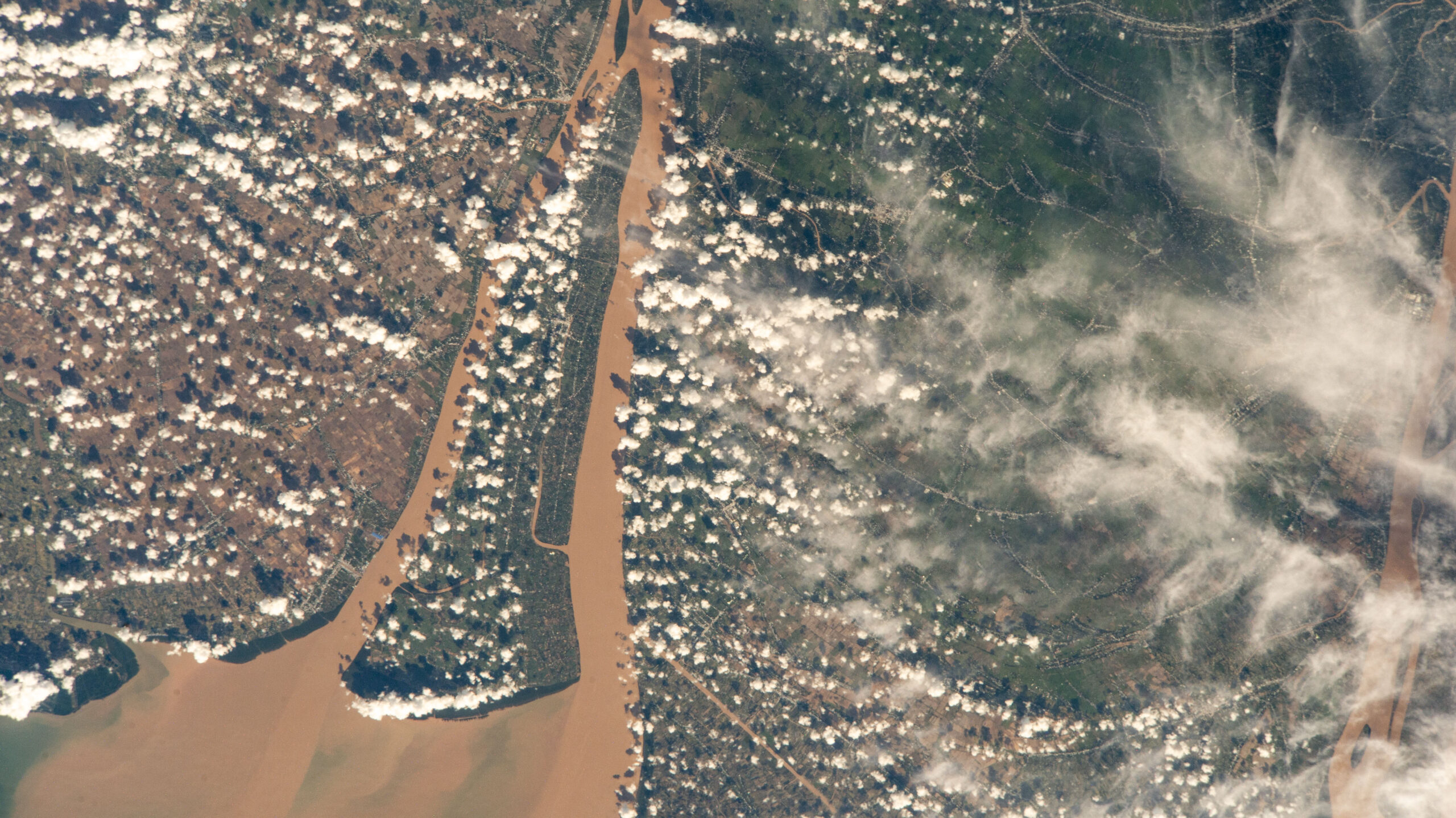
In a remarkable feat of modern technology and exploration, the International Space Station (ISS) has once again delivered an awe-inspiring view of our planet from 260 miles above the Earth’s surface. On October 2, 2025, a camera aboard the ISS captured a stunning photograph of the Bassac River, located in the Cù Lao Dung district of southern Vietnam. This river is a significant tributary of the Mekong River, and the image offers a unique perspective on its natural beauty and ecological significance.
Understanding the Bassac River’s Geography
The Bassac River, also known locally as the Hậu River, is an essential waterway in the Mekong Delta region. It is one of the two branches of the Mekong River that traverse through Vietnam, with the other being the Tiền River. The Bassac River plays a crucial role in the region’s agriculture, transportation, and ecosystem. As it winds through the Cù Lao Dung district, it eventually flows into the South China Sea, impacting the lives and livelihoods of the communities along its banks.
The Science Behind the River’s Brown Waters
One of the most striking features of the photograph is the river’s distinct brown coloration at its mouth. This phenomenon is primarily due to the massive amounts of silt, clay, and organic matter that the river carries from the upstream regions of the Mekong River Basin. The Mekong River itself originates in the Tibetan Plateau and travels through several countries before reaching Vietnam, picking up various sediments along its course.
As the river approaches the South China Sea, tidal forces from the sea further contribute to the stirring of these sediments, resulting in the visible brown hue. This natural process is a vital part of the river’s ecological cycle, as it deposits nutrients that support the diverse flora and fauna in the delta region.
The Role of Satellite Imaging in Environmental Monitoring
The ability to capture such detailed images from space is a testament to the advancements in satellite technology and remote sensing. Cameras on the ISS and other satellites provide invaluable data that help scientists and researchers monitor environmental changes, study river dynamics, and assess the health of ecosystems. These images are instrumental in understanding the impacts of climate change, human activity, and natural processes on our planet.
Satellite imagery is particularly useful in regions like the Mekong Delta, which is highly susceptible to environmental changes. Rising sea levels, increased salinity, and changes in sediment flow patterns are some of the challenges faced by this region. By analyzing images taken from space, scientists can track these changes over time and develop strategies to mitigate their effects.
The Cultural and Economic Importance of the Bassac River
Beyond its environmental significance, the Bassac River holds cultural and economic value for the communities it serves. The river is a lifeline for many people, providing water for irrigation, transportation routes, and a source of fish and other aquatic resources. The fertile lands of the Mekong Delta, nourished by the river’s sediments, are known for their agricultural productivity, particularly in rice cultivation.
The river also supports a rich cultural heritage, with numerous festivals, traditions, and livelihoods centered around its waters. For centuries, the people of the Mekong Delta have adapted to the rhythms of the river, developing a deep connection with its ebb and flow.
Looking Ahead: The Future of River Monitoring
As the world continues to grapple with the effects of climate change, monitoring river systems like the Bassac becomes increasingly important. Continued advancements in satellite technology will enhance our ability to observe and understand these complex ecosystems. By leveraging data from space, scientists can make informed decisions to protect and preserve vital waterways for future generations.
In conclusion, the photograph of the Bassac River taken from the International Space Station is more than just a beautiful image; it is a reminder of the intricate connections between our planet’s natural systems and human life. It underscores the importance of continued exploration and observation in safeguarding our environment and ensuring a sustainable future for all.
For more information and to view the original image, you can visit NASA’s official website.
For more Information, Refer to this article.