




















NASA’s Airborne Science Missions in Greenland: Advancing Space Weather Understanding
In recent developments, NASA’s airborne science missions in Greenland have provided valuable insights into space weather, enhancing our understanding of radiation exposure for air travelers and validating global radiation maps crucial for flight path planning. These missions, while primarily focused on Earth’s atmosphere, also hold potential significance for future space explorations, including those to Mars and lunar expeditions.
Understanding Cosmic Radiation and Its Impact
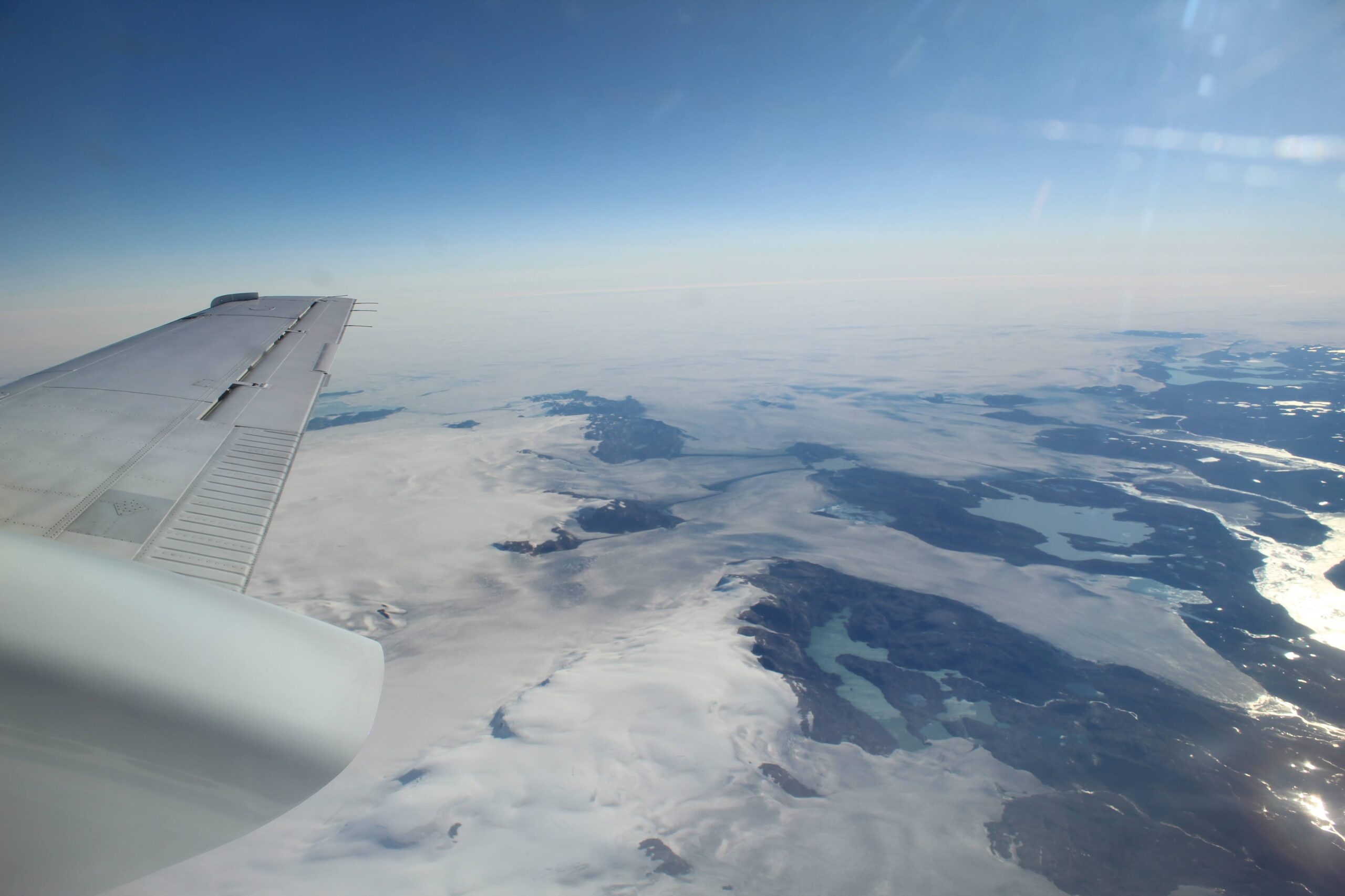
The recent mission, known as the Space Weather Aviation Radiation (SWXRAD) campaign, took place from August 25-28. It involved two five-hour flights over Nuuk, Greenland, with NASA’s Langley Research Center in Virginia serving as the base of operations. During these flights, researchers collected dosimetry measurements, which quantify the levels of radiation exposure that air travelers may experience. Cosmic radiation, the primary focus of these measurements, originates from high-energy particles in outer space. These particles are emitted by the Sun during solar flares and also stem from distant events like supernova explosions within our Milky Way galaxy and beyond.
According to Jamie Favors, the director of NASA’s Space Weather Program, the mission aims to support critical research that will enable scientists to understand and eventually predict the effects of space weather throughout the solar system. Although the current project is centered around aviation applications on Earth, it could become a key component in future tools supporting Artemis missions to the Moon and human missions to Mars.
Enhancing NASA’s Radiation Models
The SWXRAD flights contribute to the enhancement of NASA’s Nowcast of Aerospace Ionizing Radiation System (NAIRAS). This modeling system provides real-time global maps of hazardous atmospheric radiation and predicts exposure levels for both aircraft and spacecraft. Chris Mertens, the principal investigator of the SWXRAD project at NASA Langley, explains that radiation exposure is highest at the poles and lowest at the equator due to Earth’s magnetic field. In polar regions, the magnetic field lines direct into or out of the Earth, offering no deflection or shielding from cosmic radiation, unlike other parts of the planet. This phenomenon means that flight crews and travelers on polar routes between the U.S. and Asia or Europe are subjected to elevated radiation levels.
The data collected from flights over Greenland will be compared with the NAIRAS model, which relies on a variety of global sources such as neutron monitors, solar wind measurements, magnetic field data, and spaceborne instruments like NOAA’s GOES satellites. If discrepancies arise between the new data and the model’s predictions, researchers will investigate further to understand the underlying reasons. By focusing on Earth’s magnetic field’s influence, the mission aims to eliminate uncertainties in the model and allows scientists to concentrate on other aspects, such as characterizing the space particles entering Earth’s atmosphere and their interactions with it.
Ensuring Data Accuracy and Future Implications
The SWXRAD science team conducted their research aboard NASA’s B200 King Air aircraft, which included five researchers and crew members. In the upcoming months, the team will prioritize ensuring the quality of measurement data, conducting quantitative modeling comparisons, and performing validation studies between current NAIRAS data and the newly acquired aircraft dosimeter measurements.
This research seeks to protect pilots and passengers from health risks associated with radiation exposure while leveraging NASA’s existing scientific capabilities to safely transport astronauts to the Moon and Mars. Jamie Favors highlights that as humanity ventures to Mars, there will be periods without data sets to fully understand the environmental conditions on the Red Planet. Therefore, current efforts are not only focused on preparing for human presence on Mars but also on identifying the necessary data to accompany them. This data will be integrated into models like NAIRAS, which are adapting to consider Mars’s environment similarly to Earth’s.
NASA’s Commitment to Space Weather Research
The SWXRAD flight mission is funded by NASA’s Science Mission Directorate Heliophysics Division. NASA’s Space Weather Program Office at Langley supports researchers in developing new tools to forecast space weather and understand its effects on Earth’s infrastructure, technology, and society. This initiative aligns with NASA’s broader commitment to advancing our understanding of space weather and its implications for both Earth-based and extraterrestrial explorations.
For more information on NASA’s space weather research and related models, you can visit the following resources:
- NASA Space Weather
- NASA’s Nowcast of Aerospace Ionizing Radiation System
In conclusion, NASA’s recent missions in Greenland are a testament to its ongoing efforts to enhance our understanding of cosmic radiation and space weather. These studies not only aim to ensure the safety of air travelers on Earth but also prepare humanity for future space explorations. As we continue to explore the universe, understanding and predicting space weather will remain a crucial aspect of our journey beyond our home planet.
For more Information, Refer to this article.