














![[Video] Samsung Color E-Paper: A Smarter Alternative to Traditional Posters](https://www.hawkdive.com/media/samsung-tvs-and-displays-samsung-color-e-paper-samsung-vxt-digital-signage_thumb932-218x150.jpg "Samsung introduces Color E-Paper as innovative poster alternative.")







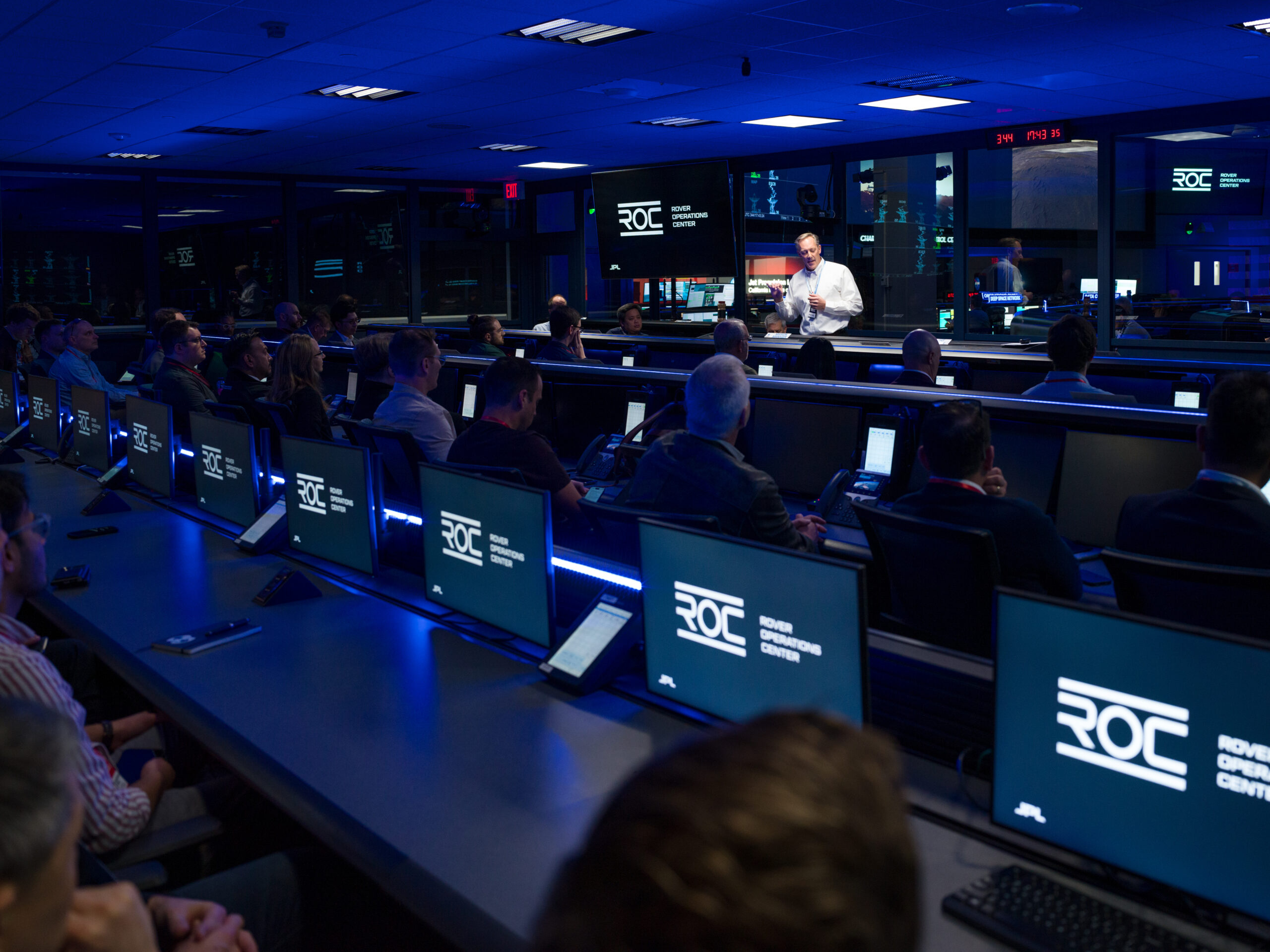
NASA’s Rover Operations Center: A New Frontier for Lunar and Martian Exploration
In an exciting development for space exploration enthusiasts and industry insiders alike, NASA’s Jet Propulsion Laboratory (JPL) in Southern California has unveiled its state-of-the-art Rover Operations Center (ROC). This facility is poised to become a pivotal hub for current and future surface missions targeting the Moon and Mars. With a focus on fostering partnerships and technology exchange, ROC aims to drive forward the next generation of extraterrestrial missions. This article delves into the details of this groundbreaking initiative, explaining its significance and potential impact on the future of space exploration.
Harnessing AI and JPL’s Expertise
The ROC is not just another addition to NASA’s facilities; it represents a strategic integration of advanced artificial intelligence (AI) technologies with JPL’s unparalleled infrastructure and decades of operational expertise. The center is set to support industry partners in developing innovative planetary surface missions. This is made possible by JPL’s extensive experience, spanning over three decades, in developing and managing Mars surface missions. Notably, JPL is responsible for humanity’s only helicopter flight on Mars, a feat accomplished by the Ingenuity Mars Helicopter.
Fostering Strategic Partnerships
The inauguration of the ROC was marked by a significant event on Wednesday, where leaders from the commercial space and AI sectors were given an exclusive tour of the facilities. They engaged in collaborative sessions with JPL mission teams and were introduced to the pioneering use of generative AI by NASA’s Perseverance Mars rover team. This AI technology is instrumental in plotting future routes for the robotic explorer, showcasing the potential of AI in enhancing mission efficiency and safety.
A Catalyst for US Space Interests
The ROC is designed to be more than just an operational center; it is a catalyst for innovation and strategic collaboration. By integrating the latest technologies and forming alliances with industry and academia, the ROC aims to advance U.S. interests in the rapidly growing space economy. The center builds upon JPL’s rich history of success in Mars missions and is committed to pushing the boundaries of what is possible in planetary exploration.
Enhancing Rover Autonomy
Rovers used in space exploration are becoming increasingly sophisticated, with extended lifespans and enhanced capabilities. A prime example is the Perseverance rover, which recently discovered a potential biosignature in Jezero Crater. This discovery underscores the high scientific stakes of these missions. As Matt Wallace, head of JPL’s Exploration Systems Office, emphasized, the coming decade promises unprecedented civil and commercial exploration of the Moon. This will necessitate robotic systems to assist astronauts and support lunar infrastructure, highlighting the importance of the ROC’s mission.
Integrating AI into Surface Missions
A key objective of the ROC is to accelerate the integration of advanced AI into surface missions. This is achieved through partnerships with the commercial space and AI industries. The goal is to drive innovation and deliver next-generation scientific and exploration capabilities for NASA and the nation. JPL has been at the forefront of vehicle autonomy since the 1990s, with the development of the Sojourner rover, the first rover to explore another planet.
Pioneering Autonomy in Exploration
Over the years, JPL has continuously refined autonomy in various aspects, including sampling, navigation, and scientific target selection. Most recently, Perseverance has demonstrated the ability to autonomously schedule and execute energy-intensive activities, such as maintaining warmth during cold Martian nights. This autonomy allows the rover to conserve energy, enabling it to conduct more scientific research or travel longer distances.
Harnessing AI for Future Efficiencies
The ROC team is committed to exploring every possible efficiency through AI advancements. Jennifer Trosper, the ROC program manager at JPL, shared insights from a recent "three-week challenge" where generative AI was applied to several operational use cases. The challenge revealed numerous opportunities for AI integration, which can significantly enhance the capabilities of future missions.
Engaging with JPL’s Legacy and Future Opportunities
During the ROC’s inauguration, attendees had the opportunity to tour JPL’s historic facilities, including the iconic Mars Yard, which simulates Martian terrain to test rover capabilities. They also visited the 25-Foot Space Simulator, a facility that has tested numerous spacecraft, from the Voyager missions to the latest lunar landers. A panel discussion highlighted the value of rovers and aerial systems, such as the Ingenuity Mars Helicopter, in planetary exploration.
Expanding Public-Private Partnerships
The event also explored new opportunities for public-private partnerships in exploring a virtual network of operational missions. Attendees were briefed on various engagement options for partners, ranging from mission architecture support to autonomy integration, testing, and operations. These partnerships extend to both scientific and human precursor robotic missions, as well as human-robotic interactions and spacewalks for future lunar and Martian missions.
Showcasing AI’s Potential in Route Planning
One of the event’s highlights was the demonstration of how ROC’s generative AI can assist rover planners in devising future routes. By analyzing high-resolution orbital images of Jezero Crater and other pertinent data, the AI was able to generate waypoints that help the Perseverance rover avoid hazardous terrain, thereby enhancing safety and efficiency.
Conclusion
Managed by Caltech for NASA, JPL’s Rover Operations Center is a testament to the relentless pursuit of innovation in space exploration. It serves as a beacon of collaboration, integrating advanced technologies and fostering partnerships to advance the frontiers of human knowledge. As the ROC continues to evolve, it promises to be a critical player in the quest to explore the Moon, Mars, and beyond. For more information about the ROC, interested readers are encouraged to visit JPL’s official website.
For more Information, Refer to this article.