



















NASA and NOAA Launch Ambitious Missions to Understand the Sun’s Influence
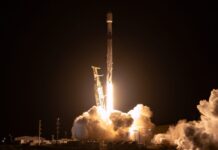
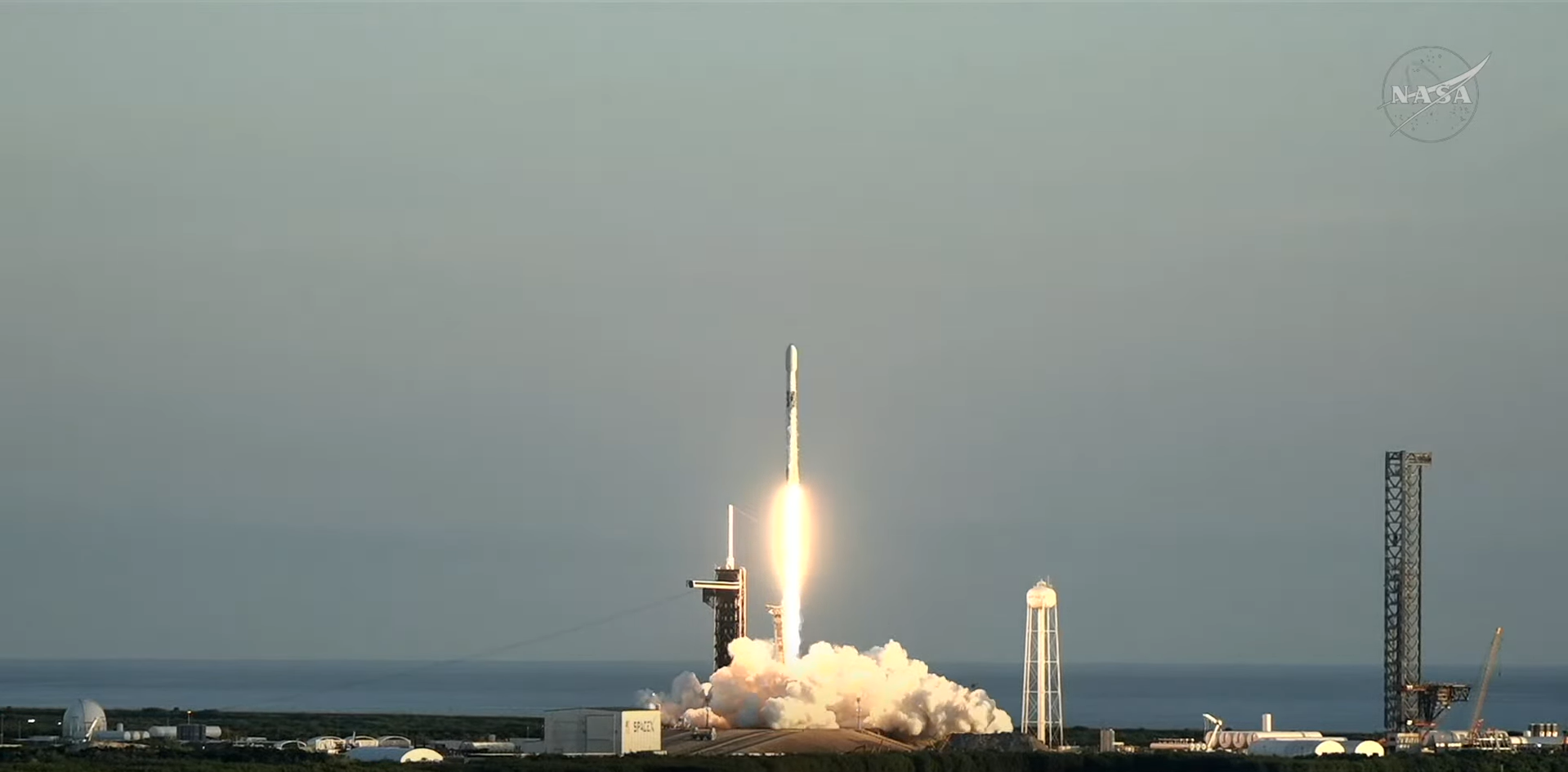
In a significant advancement in space exploration, NASA and the National Oceanic and Atmospheric Administration (NOAA) have embarked on a groundbreaking project to delve into the far-reaching effects of the Sun across our solar system. On a recent Wednesday morning at precisely 7:30 a.m. EDT, a SpaceX Falcon 9 rocket ascended from Kennedy Space Center’s Launch Complex 39A in Florida. This remarkable launch carried three pivotal missions: the Interstellar Mapping and Acceleration Probe (IMAP) and the Carruthers Geocorona Observatory, both managed by NASA, alongside NOAA’s Space Weather Follow-On Lagrange 1 (SWFO-L1) spacecraft.
Sean Duffy, NASA’s acting administrator, expressed the importance of these missions, stating, “This successful launch significantly enhances our country’s preparedness against space weather conditions, providing better protection for our satellites, interplanetary missions, and astronauts from the challenges posed by space weather throughout the solar system.” He emphasized that this data will be invaluable as preparations for future Moon and Mars missions progress, ensuring the United States remains a leader in space exploration.
Ensuring Safety in Space and on Earth
With these missions, both space-based and terrestrial technologies will receive enhanced protection against the adverse effects of space weather. Nicola Fox, the associate administrator for NASA’s Science Mission Directorate in Washington, highlighted the vital role these missions play as the United States gears up to send humans back to the Moon and eventually to Mars. She remarked, “NASA and NOAA are providing the ultimate interplanetary survival guide to support this epic journey of humanity. Our scientific discoveries and technical innovations are directly integrated into our ‘know-before-you-go’ action plan, ensuring a well-prepared, safe, and sustained human presence on other worlds.”
New Scientific Insights to Safeguard Society
Each of the three missions has a distinct focus, investigating various aspects of space weather and the solar wind—a continuous stream of charged particles emanating from the Sun. Joe Westlake, director of NASA’s Heliophysics Division, highlighted the significance of these missions, stating, “These three unique missions will enhance our understanding of the Sun and its impacts on Earth like never before. This knowledge is crucial as solar activity directly affects our daily lives, from power grids to GPS systems. These missions will help ensure the safety and resilience of our interconnected world.”
The IMAP mission will chart the boundaries of the heliosphere, a protective bubble inflated by the solar wind that shields our solar system from harmful galactic cosmic rays. This natural barrier plays a critical role in maintaining Earth’s habitability. The spacecraft will also analyze and measure solar wind particles flowing outward from the Sun, as well as energetic particles streaming inward from the outer reaches of our solar system and beyond. Principal Investigator David McComas from Princeton University explained, “IMAP will enhance our understanding of how the space environment can affect us and our technologies, uncovering the science of our solar neighborhood.”
The Carruthers Geocorona Observatory marks the first mission dedicated to studying changes in the outermost layer of Earth’s atmosphere, the exosphere. This mission holds significance in understanding how Earth responds to space weather. By examining the geocorona—the ultraviolet glow emitted by the exosphere when illuminated by sunlight—the Carruthers mission will reveal how the exosphere reacts to solar storms and shifts with the seasons. This mission builds upon the legacy of the first instrument to capture images of the geocorona, which journeyed to the Moon aboard Apollo 16 and was designed by the esteemed scientist, inventor, engineer, and educator Dr. George Carruthers.
Lara Waldrop, the principal investigator of the mission from the University of Illinois in Urbana-Champaign, emphasized the mission’s importance, stating, “The Carruthers mission will provide insights into the workings of the exosphere, enhancing our ability to predict the effects of solar activity on Earth.”
Enhancing Space Weather Forecasting
NOAA’s SWFO-L1 spacecraft, the first of its kind, is designed to function as a full-time space weather observatory. By continuously monitoring solar activity and space conditions near Earth, SWFO-L1 aims to deliver faster and more precise space weather forecasts than ever before. Richard Ullman, deputy director of NOAA’s Space Weather Observations Office, highlighted the significance of this mission, stating, “This is the first in a new generation of NOAA space weather observatories dedicated to uninterrupted operations, ensuring no gaps in continuity. Real-time observations from SWFO-L1 will provide operators with reliable data necessary for issuing early warnings so decision-makers can take proactive measures to protect critical infrastructure, economic interests, and national security on Earth and in space. It’s about safeguarding society from the dangers of space weather.”
Looking Ahead
In the hours following the launch, the three spacecraft successfully deployed from the rocket and transmitted signals back to Earth, confirming their activation and proper functioning. Over the coming months, the satellites will journey to their intended destination, a location approximately 1.6 million kilometers from Earth between our planet and the Sun, known as Lagrange Point 1 (L1). They are expected to reach L1 in January, and once their instruments have undergone checks and calibrations, their missions to advance our understanding of space weather and protect humanity will commence.
David McComas of Princeton University leads the IMAP mission, working with an international team of 27 partner institutions. The Johns Hopkins University Applied Physics Laboratory in Laurel, Maryland, constructed the spacecraft and will oversee the mission’s operations.
The Carruthers Geocorona Observatory mission is directed by Lara Waldrop from the University of Illinois Urbana-Champaign. The mission’s execution is managed by the University of California, Berkeley’s Space Sciences Laboratory, which also designed and built the two ultraviolet imagers. BAE Systems was responsible for designing and constructing the Carruthers spacecraft.
NASA’s Goddard Space Flight Center in Greenbelt, Maryland, manages the IMAP and Carruthers Geocorona Observatory missions for NASA’s Science Mission Directorate. The SWFO-L1 mission is managed by NOAA and developed in partnership with NASA’s Goddard Space Flight Center and commercial partners. NASA’s Launch Services Program, based at Kennedy Space Center, oversees the launch service for these missions.
For further information about these missions, please visit [NASA’s official website](https://ciencia.nasa.gov/sol).
This ambitious endeavor marks a significant step forward in our quest to understand and mitigate the effects of space weather, ensuring that both our technology and future explorers remain safe as we continue to explore the vastness of space.
For more Information, Refer to this article.