






















NASA is set to explore the capabilities of SpaceX’s Starshield satellite network, aiming to bolster the operations of its renowned Deep Space Network (DSN). This strategic move, primarily targeting national security customers, is outlined in NASA’s recent procurement plans, which suggest that Starshield could play a crucial role in enhancing the agency’s communication systems.
In a procurement filing released on December 11, NASA announced its intention to award a sole-source contract to SpaceX. This contract will provide Starshield terminals and essential data services to NASA. While the exact financial details of the contract remain undisclosed, the document serves as an invitation for other companies capable of offering similar services to express their interest.
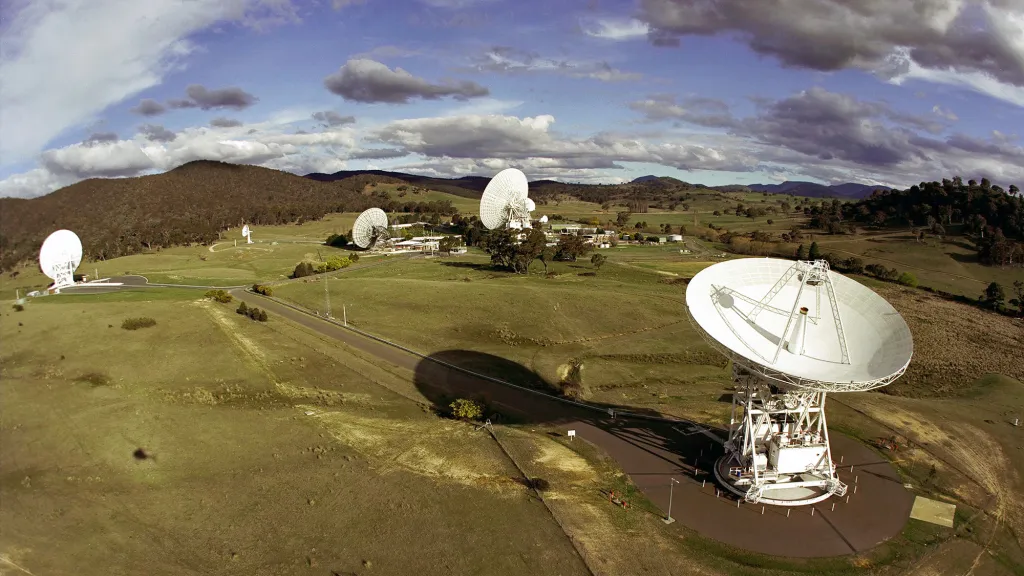
The upcoming contract includes the installation of seven Starshield terminals at NASA’s three DSN sites located in Australia, California, and Spain. Alongside these installations, the contract encompasses eight data subscriptions, each offering a generous five terabytes of data transfer per month. This data will be transmitted via a continuous, government-exclusive encrypted service, ensuring a high level of security and confidentiality.
This initiative is part of a six-month pilot program administered by NASA’s Space Communications and Navigation (SCaN) program. The primary objective of this pilot is to establish redundant communication links between the three DSN sites. According to the statement of work, the SCaN program requires secure satellite-based data transport services to enhance the resilience and diversity of the DSN. The pilot will demonstrate Starshield’s ability to augment existing terrestrial fiber networks with a secure, flexible, and redundant communication path.
Starshield is an extension of SpaceX’s well-known Starlink satellite constellation. While Starlink focuses on providing global internet coverage, Starshield aims to deliver communication, imaging, and other services, particularly for national security clients. Although SpaceX has been relatively tight-lipped about the specifics of the Starshield network, it emphasizes the importance of secure communications on its website. SpaceX highlights that Starlink already offers exceptional end-to-end user data encryption, and Starshield takes this a step further by incorporating additional high-assurance cryptographic capabilities. These enhancements enable the hosting of classified payloads and the secure processing of data, meeting even the most stringent government requirements.
This emphasis on security appears to be a significant factor in NASA’s decision to utilize Starshield for this pilot program. The statement of work specifies the need for data integrity and encryption utilizing AES 128 encryption or better. AES, or Advanced Encryption Standard, is a widely used federal encryption standard. Additionally, the contract requires adherence to government-controlled unclassified information and export control requirements to safeguard NASA’s data.
Until now, NASA has not publicly discussed the use of Starshield to support the DSN or other agency operations. Recent discussions within the agency have primarily focused on managing the growing demand for communication services. This challenge is exacerbated by outages, such as the damage to one of the network’s largest antennas, a 70-meter dish in California, which temporarily took it offline in September.
In a parallel effort, NASA is collaborating with SpaceX and several other companies on the Communications Services Project. This initiative seeks to employ commercial space systems to augment or replace agency-owned communication assets for spacecraft in Earth’s orbit. SpaceX’s role in this project involves demonstrating an optical relay network in low Earth orbit using Starlink satellites, with no mention of Starshield in this context.
The potential integration of Starshield into NASA’s Deep Space Network marks a significant development in the agency’s quest to enhance its communication infrastructure. The pilot program offers a unique opportunity to explore how commercial satellite networks can complement and augment traditional communication systems, ultimately improving the reliability and resilience of NASA’s operations.
For those unfamiliar with the technical jargon, the Deep Space Network (DSN) is NASA’s international array of giant radio antennas that supports interplanetary spacecraft missions. It also provides radar and radio astronomy observations for the exploration of the solar system and the universe. The network consists of three facilities located around the world, strategically positioned approximately 120 degrees apart. This configuration allows for continuous communication with spacecraft as the Earth rotates.
Starshield, as a branch of Starlink, aims to provide specialized services tailored for national security purposes. The focus on secure communications makes it an attractive option for government agencies like NASA, which require robust data protection measures.
As NASA and SpaceX embark on this collaborative endeavor, the implications for the future of space communications are profound. By leveraging commercial satellite networks like Starshield, NASA can potentially reduce costs, increase redundancy, and improve the overall efficiency of its communication systems. This pilot program represents a step forward in the evolution of space-based communication technologies, paving the way for more resilient and versatile networks to support the ever-expanding realm of space exploration.
The outcome of this pilot program could have far-reaching effects, influencing how NASA and other space agencies approach communication infrastructure in the future. As technology continues to advance, the integration of commercial satellite networks into government operations may become more commonplace, enabling a new era of cooperation between public and private entities in the field of space exploration.
For more information on Starshield and its capabilities, you can visit SpaceX’s official website here. Additionally, details about NASA’s procurement filing can be accessed through the government’s official procurement portal here.
As the pilot program unfolds, it will be interesting to see how Starshield performs in supporting NASA’s Deep Space Network. The collaboration between NASA and SpaceX showcases the potential for innovative solutions in addressing the challenges of space communication, ultimately contributing to the success of future space missions.
For more Information, Refer to this article.