












![[Video] Samsung Hotel TV: Personalized In-Room Experiences Made Simple](https://www.hawkdive.com/media/samsung-tvs-and-displays-samsung-hotel-tv-lynk-cloud-google-cast-and-airplay-in-room-experiences_thu-218x150.jpeg "Samsung Hotel TV: Streamlined Personalized Room Experiences Simplified")








NASA Launches Live Coverage of Artemis II Mission
NASA will be providing live coverage of the pre-launch events, launch, and mission activities for the upcoming manned test flight around the Moon: Artemis II. The agency is targeting a launch date of no earlier than Wednesday, April 1, within a two-hour window that will open at 6:24 p.m. EDT. There will be additional launch opportunities until Monday, April 6.
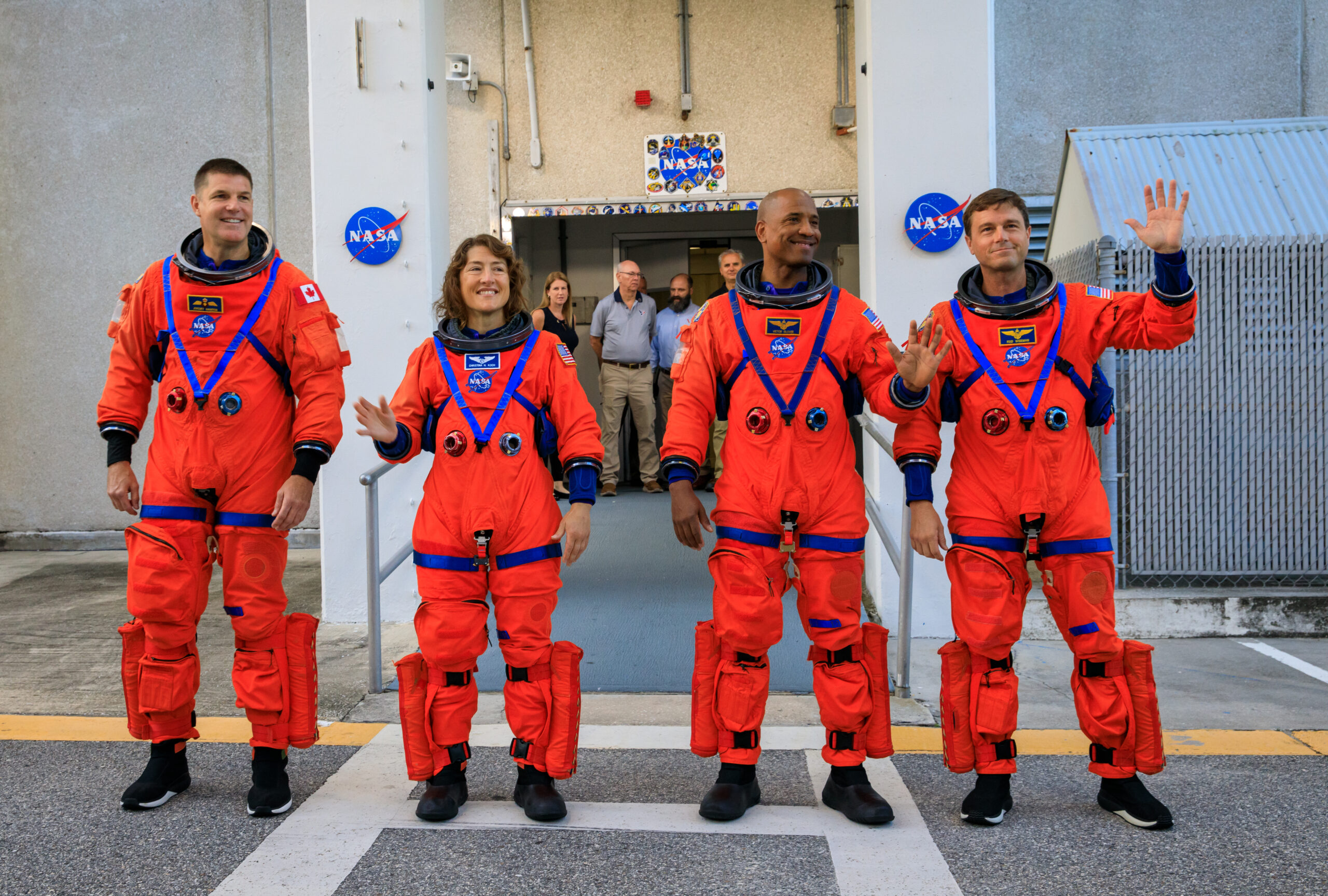
Artemis II marks NASA’s first manned mission under the Artemis program and will take off from the agency’s Kennedy Space Center in Florida. This mission will carry NASA astronauts Reid Wiseman, Victor Glover, and Christina Koch, along with Canadian Space Agency astronaut Jeremy Hansen, on a approximately 10-day journey around the Moon. By launching aboard NASA’s Space Launch System (SLS) rocket, the agency will test the life support systems of the Orion spacecraft with humans on board for the first time, laying the groundwork for future manned missions under the Artemis program.
The briefings, events, and continuous mission coverage will be streamed in English on the agency’s YouTube channel. Each event will have its own separate stream as its start time approaches.
Follow the agency’s coverage of the launch, lunar flyby, and splashdown through NASA+ and Amazon Prime. Learn how to watch NASA content through various online platforms, including social media.
For information on accessing the streams, email nasa-dl-nasaplus-programming@mail.nasa.gov.
Media accreditation deadline for in-person coverage of launch events and the mission has passed. The agency’s media accreditation policy is available online. For media accreditation inquiries at NASA’s Kennedy Space Center, email ksc-media-accreditat@mail.nasa.gov. For inquiries at the agency’s Johnson Space Center in Houston, email jsccommu@mail.nasa.gov.
A limited number of seats within the Kennedy auditorium will be available during pre-launch briefings for accredited journalists on a first-come, first-served basis. To participate via phone, media must confirm their attendance at least two hours before each briefing by emailing ksc-newsroom@mail.nasa.gov.
Starting Thursday, April 2, briefings will be held from NASA’s Johnson Space Center. To participate via phone in these briefings, media must confirm their attendance at least two hours before each briefing by contacting the Johnson Space Center press room via email at jsccommu@mail.nasa.gov.
The date and time of events are subject to change. All events are listed in Eastern Daylight Time (EDT).
Friday, March 27
2:30 p.m.: Artemis II crew arrives at Kennedy Space Center and answers questions. Agency officials, including NASA Administrator Jared Isaacman and CSA President Lisa Campbell, will also be present to respond to questions from:
– Reid Wiseman, NASA astronaut, Commander
– Victor Glover, NASA astronaut, Pilot
– Christina Koch, NASA astronaut, Mission Specialist
– Jeremy Hansen, CSA astronaut, Mission Specialist
Sunday, March 29
9:30 a.m.: Artemis II crew virtually answers questions from journalists from their quarantine center.
2:00 p.m.: NASA press conference to provide updates on launch preparations with:
– Lori Glaze, Acting Associate Administrator, Exploration Systems Development Mission Directorate
– Shawn Quinn, Exploration Ground Systems Program Manager
– Howard Hu, Orion Program Manager
– Chris Cianciola, SLS Program Deputy Manager
Monday, March 30
5:00 p.m.: NASA press conference after a key mission meeting to provide an update on launch preparations with:
– Associate Administrator Amit Kshatriya
– John Honeycutt, Mission Management Team Chairman
– Charlie Blackwell-Thompson, Launch Director
– Emily Nelson, Lead Flight Director
Tuesday, March 31
1:00 p.m.: NASA pre-launch press conference to provide a countdown status update with:
– Launch team representative
– Mark Burger, Launch Weather Officer, 45th Space Wing’s 45th Weather Squadron
Wednesday, April 1
7:45 a.m.: Coverage begins for SLS rocket fueling operations, including rocket views and narrator commentary.
12:40 p.m.: Launch coverage begins on NASA+. Coverage will continue on YouTube once the Orion spacecraft’s solar panels deploy in space.
4:45 p.m.: Launch coverage begins in Spanish on NASA’s Spanish YouTube channel and on NASA+. Coverage will continue for approximately 15 minutes after liftoff.
Approximately two and a half hours after launch, NASA will hold a post-launch press conference once the SLS rocket’s upper stage performs an orbital maneuver to take Orion and its crew to a high Earth orbit. The start time is subject to change depending on the exact launch time. This post-launch press conference will feature:
– Administrator Jared Isaacman
– Associate Administrator Amit Kshatriya
– Lori Glaze, Acting Associate Administrator, Exploration Systems Development Mission Directorate
– John Honeycutt, Mission Management Team Chairman
– Norm Knight, Flight Operations Directorate Director
Mission Coverage
Real-time NASA coverage will continue throughout the mission on YouTube. The agency will also offer an independent live stream with views from the Orion spacecraft, subject to available bandwidth.
NASA will provide daily mission status reports from NASA’s Johnson Space Center starting April 2 (except on April 6, due to lunar flyby activities). Timings are subject to change based on the exact launch time and mission operations.
The crew will engage in live conversations during the mission, known as “downlinks.” NASA will communicate the exact timings of each of these ground-to-air events on the Artemis blog and the agency’s launch events page, both in English.
The timings listed below are subject to change based on the exact launch time and mission operations.
Thursday, April 2
8:30 p.m.: Media briefing on mission status after the translunar injection orbital maneuver to take the Orion crew to the Moon.
10:24 p.m.: Live stream event
Friday, April 3
3:30 p.m.: Mission status briefing
8:44 p.m.: Live stream event
Saturday, April 4
12:59 a.m.: Live stream event with CSA
4:34 p.m.: Live stream event
5:15 p.m.: Mission status briefing
Sunday, April 5
12:14 a.m.: Live stream event with CSA
3:30 p.m.: Mission status briefing
Monday, April 6
12:45 p.m.: NASA+ lunar flyby coverage begins.
1:45 p.m.: If the launch takes place on April 1, the crew is expected to surpass the record for the farthest distance from Earth reached by humans, previously set by Apollo 13 at 400,171 kilometers (248,655 miles) from Earth.
Additionally, if the launch takes place on April 1, video transmission during the lunar flyby may be limited as the spacecraft passes through an eclipse. The crew is also expected to experience a loss of communications with Earth as the Orion spacecraft flies behind the far side of the Moon.
10:39 p.m.: Live stream event
Tuesday, April 7
2:29 p.m.: Artemis II crew will communicate with astronauts aboard the International Space Station in an audio-only communication.
4:00 p.m.: Mission status briefing
Wednesday, April 8
3:30 p.m.: Mission status briefing
7:09 p.m.: Live stream event with CSA
Thursday, April 9
3:30 p.m.: Mission status briefing
5:59 p.m.: Crew press conference
7:54 p.m.: Live stream event
Friday, April 10
6:30 p.m.: NASA+ coverage begins for the crew’s return to Earth.
8:06 p.m.: Pacific Ocean splashdown. NASA and Department of Defense personnel are expected to assist the crew in exiting the Orion spacecraft and transport them by air to a waiting recovery ship.
10:35 p.m.: Post-splashdown press conference at NASA’s Johnson Space Center.
Details on the astronauts’ return to Houston will be announced at a later date.
NASA Launch and Mission Coverage on Website
NASA will provide updates during the launch countdown and throughout the mission on the Artemis blog.
For the latest images throughout the mission, visit Artemis II Multimedia.
To track Orion’s journey in space, visit Nasa.gov/trackartemis.
Virtual Launch Attendance
The general public can register to virtually attend the launch. NASA’s virtual guest program for this mission includes selected resources about the launch, notifications about related opportunities or changes, and a virtual guest passport stamp from NASA after the launch.
Launch Coverage in Audio Only
Media can listen to fueling and launch coverage, broadcast in audio only, by dialing +1-256-715-9946 and entering access code 682-040-632. For those in Brevard County, on the Space Coast, launch audio will also be available on VHF radio frequency 146.940 MHz through the Launch Information Service and Amateur Television System, and on UHF radio frequency 444.925 MHz from the Kennedy Space Center Amateur Radio Club in FM mode.
As part of a new era of innovation and exploration, NASA will send Artemis astronauts on increasingly complex missions to explore more of the Moon for scientific discovery, economic benefits, and to lay the groundwork for the first manned missions to Mars.
For more information on NASA’s Artemis program, visit:
– https://www.nasa.gov
– https://ciencia.nasa.gov/artemis
For more Information, Refer to this article.