













![[Interview] Framing Space Through the Human Experience: Michael Najjar x Samsung Art Store](https://www.hawkdive.com/media/samsung-tvs-and-displays-samsung-art-tv-samsung-art-store-art-basel-in-hong-kong-michael-najjar-inte-218x150.jpeg "Michael Najjar Discusses Human Experience in Samsung Art Store Collaboration")






Unusual Snowfall Blankets Southern Argentina’s Patagonian Desert
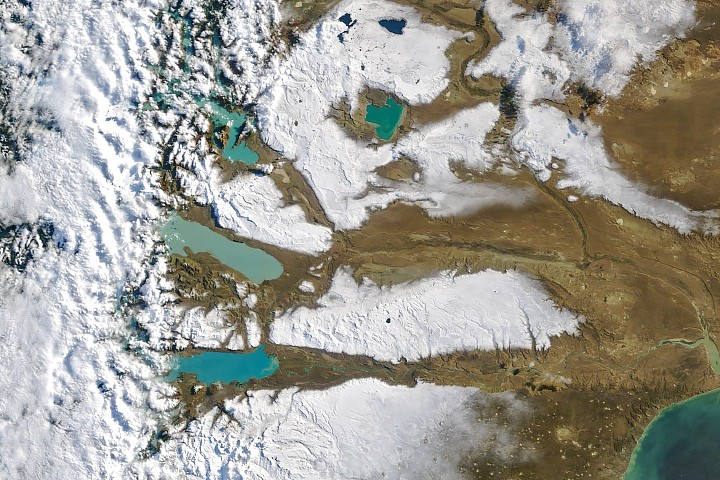
In early April 2026, a rare storm transformed the arid landscapes of southern Argentina, blanketing the Patagonian Desert in snow. Captured by NASA’s Moderate Resolution Imaging Spectroradiometer (MODIS) on the Terra satellite, the stunning imagery reveals a stark contrast between the white snow and the typically dry, brown terrain. This unusual weather phenomenon has sparked interest among scientists and environmentalists alike.
Wetter Than Normal Early Fall
The early fall season in southern Patagonia has been notably wetter than average, according to atmospheric scientist René Garreaud from the Universidad de Chile. Satellite-based estimates indicate above-average precipitation levels from late March through early April, particularly affecting the windward side of the Andes mountain range. Garreaud explained that while most precipitation usually falls on this western side, strong winds can carry some snow across to the eastern plains of Argentina, as illustrated in the MODIS imagery.
This unexpected weather pattern has raised questions about climate variability in the region. The Patagonian Desert is known for its dry conditions, making this snowfall a significant event. The images captured show not only widespread snow cover but also highlight how climatic changes may be influencing weather patterns in this part of South America.
Visual Contrast: Snow and Glacial Lakes
The stark visual differences between snow-covered areas and bare valleys are particularly striking in detailed Landsat images. For instance, a prominent snow line is visible along the outlet of Lago Argentino, one of several glacial lakes in the region. These lakes are characterized by their milky blue or turquoise hues due to high concentrations of fine sediment known as glacial flour—particles created by glaciers grinding against rock.
This sediment gives the lakes their distinctive colors and is an essential component of Patagonia’s unique ecosystem. The presence of glacial flour indicates that glaciers are actively eroding rock and contributing to lake sedimentation processes. As such, these lakes serve not only as beautiful natural landmarks but also as indicators of glacial activity and climate health.
Transient Nature of Snow Cover
The beauty of this wintry scene was short-lived. Satellite observations taken on April 4 showed that most of the newly fallen snow had melted away except for areas at higher elevations. This rapid melting underscores the transient nature of weather patterns in Patagonia, where conditions can shift dramatically within days.
The fleeting nature of this snowfall raises concerns about water availability in a region already facing challenges related to climate change. With fluctuating precipitation patterns becoming more common, understanding these dynamics is crucial for managing water resources effectively.
Implications for Climate Research
This unusual snowfall event serves as a reminder of how interconnected global weather systems can influence local climates. As scientists continue to study these phenomena, they aim to better understand how changing weather patterns might affect ecosystems and human activities in southern Argentina and beyond.
The MODIS data collected during this event will contribute valuable insights into ongoing climate research efforts focused on understanding precipitation variability and its implications for arid regions like Patagonia.
What This Means
The recent snowfall in southern Argentina highlights significant shifts in weather patterns that could have far-reaching implications for both local ecosystems and water resource management strategies. Understanding these changes is vital as they may signal broader climatic trends influenced by global warming. For residents and policymakers alike, adapting to these evolving conditions will be essential for ensuring sustainable practices in agriculture, tourism, and conservation efforts across Patagonia.
For more information, read the original report here.