













![[Video] Samsung Color E-Paper: A Smarter Alternative to Traditional Posters](https://www.hawkdive.com/media/samsung-tvs-and-displays-samsung-color-e-paper-samsung-vxt-digital-signage_thumb932-218x150.jpg "Samsung introduces Color E-Paper as innovative poster alternative.")







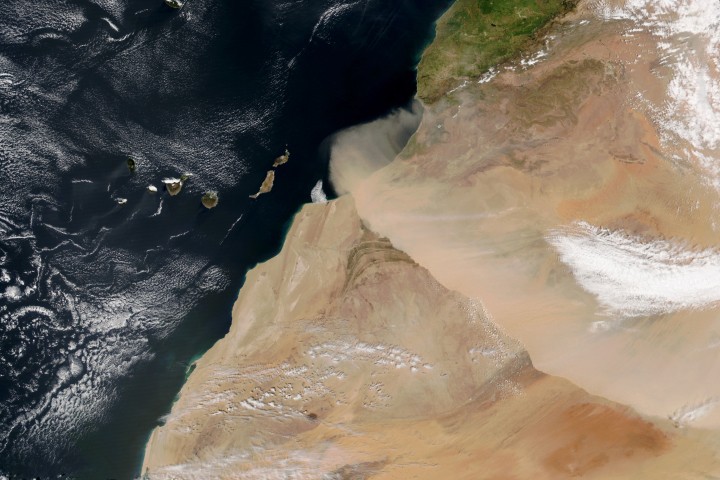
In early spring 2026, a dry, dusty wind known as the harmattan swept across northwestern Africa, causing officials to issue an alert for several regions of Morocco. The harsh conditions, including low visibility and high winds, were a result of the cold temperatures and blowing dust brought by the harmattan.
Satellites tracked the movement of the dust storm on March 30 as it traveled southwest from the Sahara Desert towards the Atlantic Ocean. Images captured by NASA’s Terra and NOAA-21 satellites showed the progression of the dust over the course of the day. Additionally, the Meteosat-12 satellite operated by EUMETSAT provided a view of the dust storm as it approached the Canary Islands.
The harmattan winds, which blow from the northeast between November and April, often result in dust storms as they lift dust particles from the Sahara. Spain’s state meteorological agency (AEMET) noted that the conditions on March 30 were conducive to a harmattan surge, characterized by stronger winds near the ground following the passage of a cold front. As a result, winds converged perpendicular to the High Atlas mountain range before shifting southwest.
Forecasts indicated that the Saharan dust would eventually reach the Canary Islands, triggering what locals refer to as “calima.” This dust episode was expected to impact air quality and visibility across the islands through April 1. A previous dust storm in March had also sent dust towards the Canaries, along with another plume that dispersed across Europe.
Researchers utilizing NASA data have previously reported that the most intense Saharan dust storms occur in the spring, with dust typically lifted from the sand seas of central North Africa and areas along the Mediterranean coast. In the warmer months, another peak in dust storms occurs in the central Sahara.
It is important to monitor and study these dust storms to better understand their impacts on air quality, visibility, and atmospheric conditions. By utilizing satellite imagery and meteorological data, scientists can track the movement of dust storms and provide valuable information to aid in forecasting and preparedness efforts for regions affected by these events.
Overall, the recent harmattan dust storm in northwestern Africa serves as a reminder of the dynamic nature of Earth’s atmosphere and the importance of monitoring and studying these natural phenomena for a better understanding of our planet’s climate system.
For more Information, Refer to this article.