






























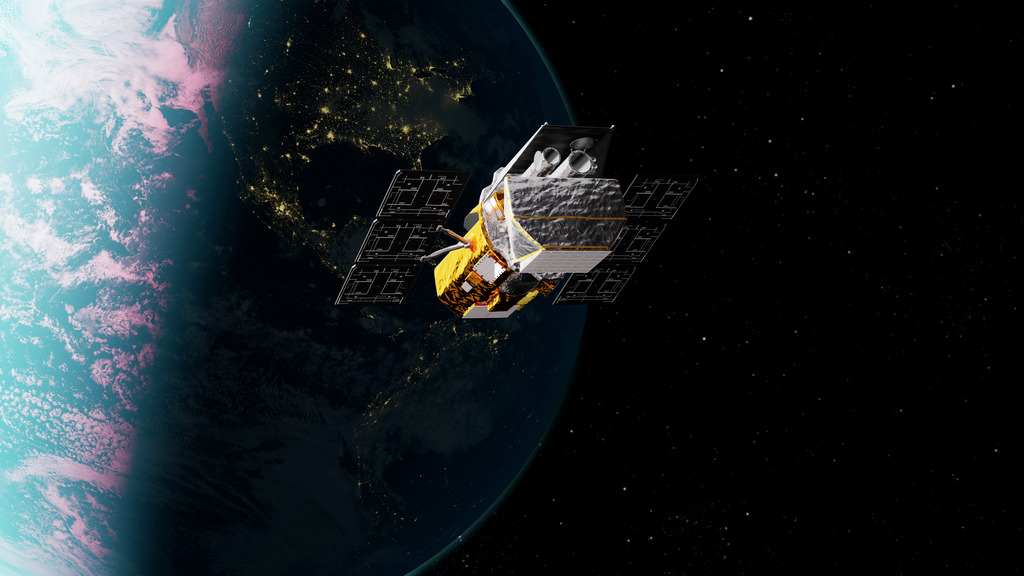
Pioneering Innovation: NASA’s Collaboration with Katalyst Space Technologies
In a remarkable stride towards fostering innovation within the American space industry, NASA has awarded a pivotal contract to Katalyst Space Technologies, based in Flagstaff, Arizona. This collaboration aims to elevate the orbit of a spacecraft, marking a significant step forward in the realm of space exploration. The primary objective of this mission is to utilize Katalyst’s robotic servicing spacecraft to rendezvous with NASA’s renowned Neil Gehrels Swift Observatory and propel it to a higher altitude. This endeavor is not only expected to extend the scientific lifespan of the Swift mission but also to demonstrate a crucial capability for the future of space exploration.
The Genesis of Swift
Launched in 2004, NASA’s Swift mission was designed to explore some of the universe’s most formidable explosions, known as gamma-ray bursts. Positioned in a low Earth orbit, the spacecraft has been gradually descending due to orbital decay, a natural phenomenon that affects satellites over time. This decay has been exacerbated by an unexpected increase in solar activity, which has accelerated the atmospheric drag on Swift. While many missions conclude with the spacecraft re-entering Earth’s atmosphere, Swift’s current predicament has paved the way for advancing American spacecraft servicing technologies.
The Importance of Industry Collaboration
Nicky Fox, the associate administrator of NASA’s Science Mission Directorate, emphasized the significance of this industry collaboration. "This effort to boost Swift’s orbit exemplifies how NASA works tirelessly for the nation," Fox stated. By tapping into innovative commercial solutions, NASA is not only nurturing the space industry but also reinforcing American leadership in space. This mission, which is expected to transition from concept to implementation in under a year, underscores the importance of rapid-response capabilities as humanity prepares to return to the Moon under the Artemis program and eventually venture to Mars and beyond.
The Technical Challenge
The planned orbit boost is scheduled for the spring of 2026, although NASA will continue to monitor solar activity that might impact this timeline. If successful, the Swift boost will be a groundbreaking achievement, marking the first instance of a commercial robotic spacecraft capturing a government satellite that was not initially designed for in-space servicing.
Shawn Domagal-Goldman, the acting director of NASA’s Astrophysics Division, highlighted the urgency and innovation of this mission. "Swift’s orbit decay poses a unique challenge, but by leveraging commercial technologies already in development, we’re tackling this head-on," Domagal-Goldman explained. This approach is seen as both cost-effective and beneficial, offering a more affordable alternative to replacing Swift’s capabilities with a new mission.
Swift’s Legacy and Contribution
Swift has been a cornerstone of NASA’s fleet of space telescopes, dedicated to observing changes in the high-energy universe. When sudden, rapid events occur in the cosmos, Swift acts as a "dispatcher," relaying critical information that enables other missions to delve deeper into these cosmic phenomena. Over its two-decade-long mission, Swift has provided invaluable insights into a range of events, from exploding stars and stellar flares to eruptions in active galaxies and even high-energy lightning events on Earth.
Funding and Support
To propel this innovative mission forward, NASA has allocated $30 million to Katalyst under a Phase III award. This initiative is part of NASA’s Small Business Innovation Research (SBIR) Program, managed by the Space Technology Mission Directorate. This program is a crucial component of America’s Seed Fund, the nation’s largest source of early-stage funding for groundbreaking technologies. It offers entrepreneurs, startups, and small businesses with fewer than 500 employees the financial and non-monetary support needed to develop, mature, and commercialize their technologies, thereby advancing NASA missions and addressing critical challenges facing the nation.
Clayton Turner, associate administrator of NASA’s Space Technology Mission Directorate, expressed enthusiasm for the collaboration. "Opportunities like this allow NASA to leverage cutting-edge solutions within America’s vibrant space economy," Turner remarked. He noted that orbital decay is a common challenge for satellites, and this partnership may pave the way for extending the lifespan of more spacecraft in the future.
Collaborative Efforts
The Swift mission is managed by NASA’s Goddard Space Flight Center in Greenbelt, Maryland, in collaboration with Penn State University, the Los Alamos National Laboratory in New Mexico, and Northrop Grumman Space Systems in Dulles, Virginia. The mission also involves significant contributions from international partners, including the UK Space Agency, the University of Leicester, and the Mullard Space Science Laboratory in the United Kingdom, as well as the Brera Observatory and the Italian Space Agency in Italy.
For those interested in learning more about the Swift mission and its contributions to space exploration, further information is available on NASA’s official website.
In conclusion, this groundbreaking mission represents a significant step forward in the field of space exploration, showcasing the potential of industry collaboration and innovative technology. As NASA continues to push the boundaries of what is possible, the collaboration with Katalyst Space Technologies serves as a testament to the power of partnership and innovation in overcoming the challenges of space exploration.
For more Information, Refer to this article.





![[Video] Samsung Color E-Paper: A Smarter Alternative to Traditional Posters](https://www.hawkdive.com/media/samsung-tvs-and-displays-samsung-color-e-paper-samsung-vxt-digital-signage_thumb932-218x150.jpg "Samsung introduces Color E-Paper as innovative poster alternative.")
