





















Exploring the Potential for Life in Titan’s Lakes: NASA’s Groundbreaking Research
NASA’s recent study has sparked significant interest in the scientific community by revealing the potential formation of cell-like structures, known as vesicles, in the hydrocarbon-rich lakes of Saturn’s moon, Titan. This discovery opens up new possibilities about the conditions necessary for the emergence of life beyond Earth.
Titan: A Unique Celestial Body
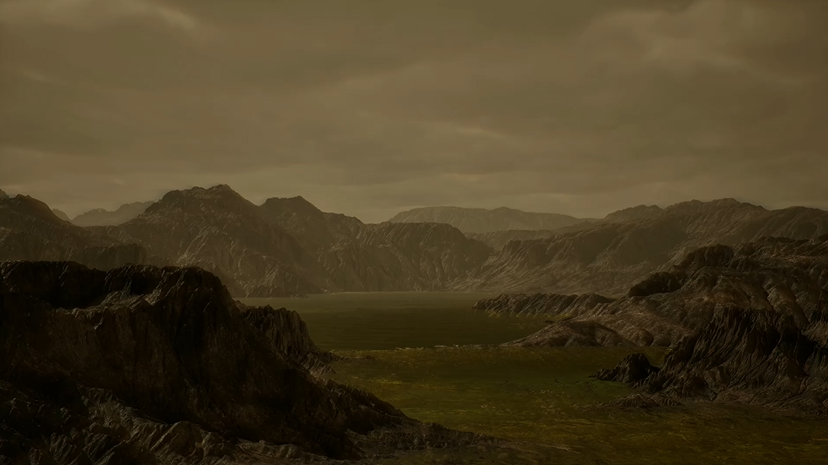
Saturn’s moon Titan stands out as a fascinating subject for scientific exploration. It is the only celestial body, other than Earth, known to have stable liquid bodies on its surface. However, unlike Earth’s water-based lakes and seas, Titan harbors lakes and seas filled with liquefied hydrocarbons such as methane and ethane. This distinct composition presents a unique environment that challenges our understanding of life’s prerequisites.
The Role of Liquid Water in Life’s Emergence
On Earth, liquid water is a fundamental component for life as we know it. It acts as a solvent, enabling chemical reactions that are crucial for the formation of life-sustaining molecules. This has led astrobiologists to ponder if Titan’s liquid hydrocarbons could similarly support the formation of life’s building blocks, potentially leading to life forms that are either similar to Earth’s or entirely novel.
NASA’s New Research Findings
NASA’s study, published in the International Journal of Astrobiology, delves into the possibility of vesicle formation on Titan. Vesicles are small, encapsulated compartments that serve as precursors to living cells, or protocells. The study suggests a mechanism by which stable vesicles could naturally form on Titan, based on its atmospheric and chemical characteristics.
Understanding Vesicle Formation
Vesicles are formed from molecules called amphiphiles. These molecules have two distinct ends: a hydrophobic (water-repelling) end and a hydrophilic (water-attracting) end. On Earth, amphiphiles can self-assemble into spherical structures in water, where the hydrophilic ends interact with the surrounding water, protecting the hydrophobic ends within the sphere. This organization can lead to the formation of a bilayer membrane, much like a cell membrane, encapsulating a pocket of water.
Titan’s Unique Environment
Titan’s environment is notably different from early Earth. The moon is Saturn’s largest and the second-largest in our solar system, possessing a thick atmosphere primarily composed of nitrogen, with a significant presence of methane. This atmosphere is responsible for Titan’s complex weather patterns, including methane clouds and rain, which shape its surface through erosion and form lakes and seas.
NASA’s Cassini spacecraft, which arrived at Saturn in 2004, has provided invaluable insights into Titan’s atmosphere and surface. Cassini’s observations revealed Titan’s dynamic meteorological cycles, where methane evaporates and condenses into clouds, initiating a cycle of precipitation and evaporation similar to Earth’s water cycle.
The Process of Vesicle Formation on Titan
The new research explores how vesicles might form in Titan’s frigid hydrocarbon lakes through sea-spray droplets. These droplets, propelled by raindrops, could be coated with amphiphile layers. When these droplets land on lake surfaces, the amphiphile layers could interact to form bilayer vesicles, enclosing the droplet. Over time, these vesicles could disperse throughout Titan’s lakes, potentially engaging in evolutionary processes that might lead to protocell development.
Implications for the Search for Life
The potential existence of vesicles on Titan would mark a significant increase in molecular complexity, a crucial condition for the emergence of life. Conor Nixon of NASA’s Goddard Space Flight Center highlights the excitement surrounding these findings, as they pave the way for new research directions and may reshape future strategies in the search for extraterrestrial life on Titan.
Future Exploration: The Dragonfly Mission
NASA is preparing for its first mission to Titan with the Dragonfly rotorcraft, set to explore the moon’s surface. While Dragonfly’s mission does not include Titan’s lakes due to its design and instrumentation limits, it will gather vital data on the moon’s surface composition, atmospheric conditions, and potential habitability. These investigations will enhance our understanding of Titan as a potential habitat for life.
Conclusion
NASA’s research into vesicle formation on Titan’s lakes represents a remarkable step forward in astrobiology. It challenges our traditional notions of life’s requirements and expands the scope of environments considered potentially habitable. As we continue to explore the cosmos, discoveries like these remind us of the vast possibilities that await beyond our planet.
For more detailed insights and developments on this topic, you can refer to the original publication in the International Journal of Astrobiology.
For more Information, Refer to this article.


![[Interview] Inside Spatial Signage: How Samsung Brought Glasses-Free 3D Displays to Life](https://www.hawkdive.com/media/samsung-tvs-and-displays-spatial-signage-interview_thumb932-218x150.jpg "Samsung’s Glasses-Free 3D Displays: The Inside Story [Interview]")