




















Exploring 5G Technology for the Future of Aviation
In an innovative move, NASA engineers are investigating how existing cellphone network technology could be harnessed to support the evolving landscape of aviation. With the rapid advancements in the field, NASA is exploring whether the robust capabilities of fifth-generation cellular network technology, commonly known as 5G, could meet the communication demands of emerging air taxi services.
During April and May, researchers stationed at NASA’s Glenn Research Center in Cleveland embarked on building two specialized radio systems. The primary goal was to assess the efficacy of 5G technology in handling the unique communication requirements of air taxis. This research is spearheaded by Casey Bakula, a lead researcher at Glenn, who emphasizes that the findings could lay the groundwork for future aviation communication networks. This initiative aims to guide telecommunication companies and satellite navigation providers, as well as inform the Federal Aviation Administration (FAA) on setting future network requirements for advanced air mobility in urban settings.
Instead of crafting entirely new communication standards for air taxis, NASA is contemplating leveraging the vast expertise and technological infrastructure already established by the cellular industry. By doing so, they aim to utilize the reliable, secure, and scalable nature of existing networks. If 5G networks can address around 80% of the communication challenges, NASA can then concentrate on the remaining 20% that requires customization to specifically cater to the air taxi sector.
One of the remarkable attributes of 5G networks is their ability to process large volumes of data swiftly with minimal signal delay. This attribute renders them an ideal candidate for providing precise location data to aircraft navigating bustling city skies. In urban environments, ground antennas and networks could ensure continuous connectivity for air taxis as they maneuver over buildings, enhancing the safety and efficiency of urban flights.
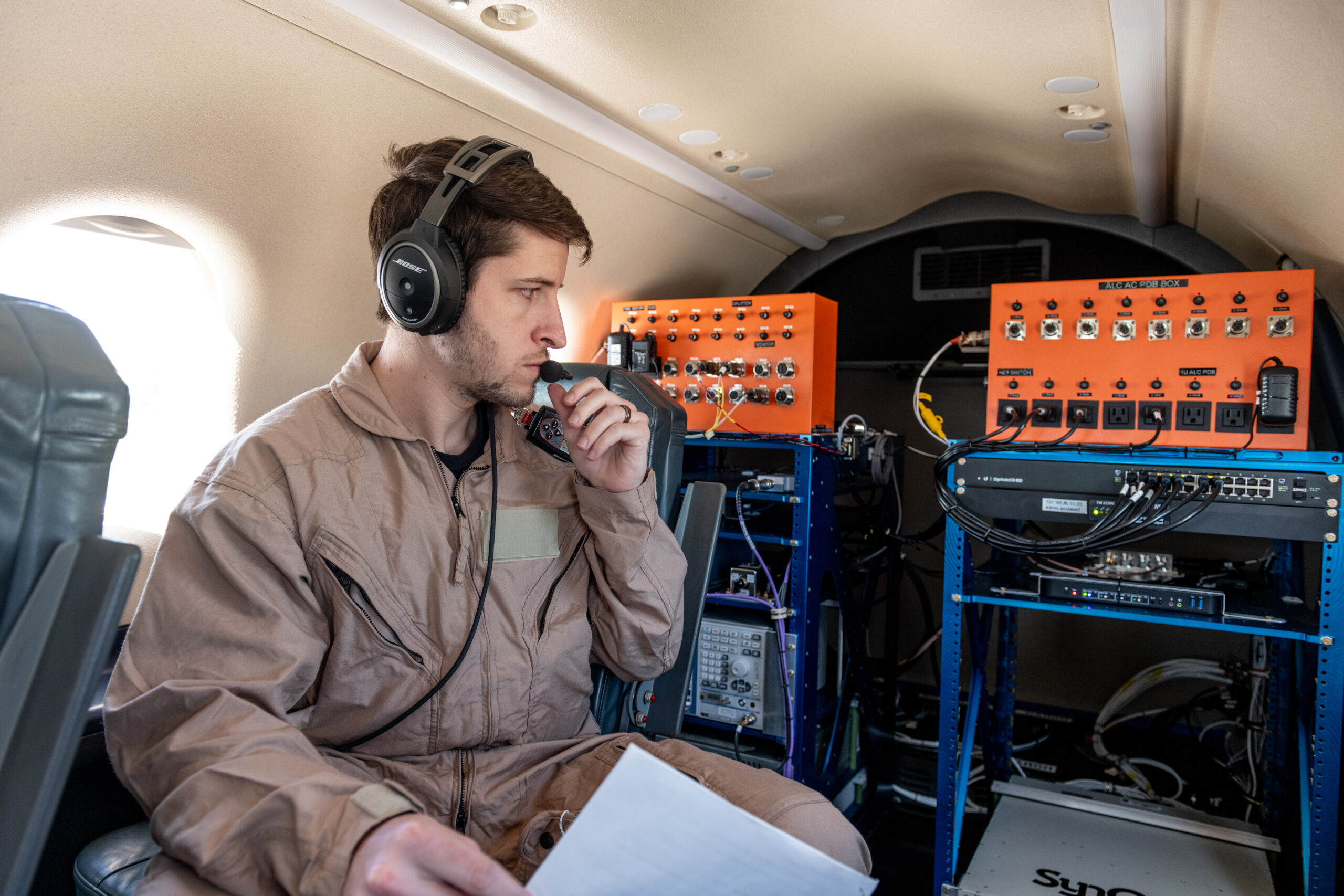
To put their theories to the test, NASA researchers established a system that aligns with current 5G standards while allowing room for future enhancements. They installed one radio in the agency’s Pilatus PC-12 aircraft and another on the rooftop of Glenn’s Aerospace Communications Facility. With an experimental license from the FAA, they conducted flights to test signal transmissions using a radio frequency band reserved by the Federal Communications Commission (FCC) for the safe testing of drones and other uncrewed aircraft systems.
The PC-12 aircraft performed various flight patterns in proximity to Glenn, allowing the team to observe how the signal deteriorates as the aircraft distances itself from the ground station. They also evaluated how nearby structures might obstruct signals, potentially creating interference or dead zones. Furthermore, they examined how the aircraft’s angle and position relative to the ground station influenced the connection quality.
These initial trials offered NASA invaluable insights into integrating their new C-Band radio testbed onto the aircraft, verifying its functionality, as well as ensuring the smooth operation of the ground station. The successful completion of these initial objectives paves the way for further exploration into how 5G standards and technologies can be adapted to existing aviation bands, facilitating communication both from air-to-ground and between aircraft.
Additionally, the team documented and confirmed the presence of propeller modulation, a phenomenon where the propeller blades partially block radio signals as they rotate, leading to signal degradation. This effect becomes more prominent at the lower altitudes where air taxis are expected to operate. With airframe configurations and the number of propellers possibly intensifying these effects in new air taxi models, NASA plans to delve deeper into studying this aspect.
NASA’s research endeavors will yield baseline performance data that they intend to share with the FAA and the advanced air mobility sector within the aviation industry. This sector is actively exploring fresh air transportation options. Future investigations will delve into issues such as maximum data speeds, signal-to-noise ratios, and synchronization between aircraft and ground systems. The baseline data gathered by NASA will serve as a benchmark for evaluating the potential of new modifications or innovations in communication systems.
As we look to the future, aircraft will need to be equipped with essential communication systems to ensure command and control, passenger safety, and coordination with other aircraft to avert collisions. Reliable wireless networks could facilitate the safe operation of air taxis, especially in densely populated urban areas.
This groundbreaking work is being conducted under NASA’s Air Mobility Pathfinders project, which is part of the Airspace Operations and Safety Program. It supports NASA’s overarching mission to advance air mobility, ushering in a new era of aviation that is not only innovative but also seamlessly integrated into the fabric of our daily lives.
For more insights and updates, visit the NASA official website.
For more Information, Refer to this article.