





















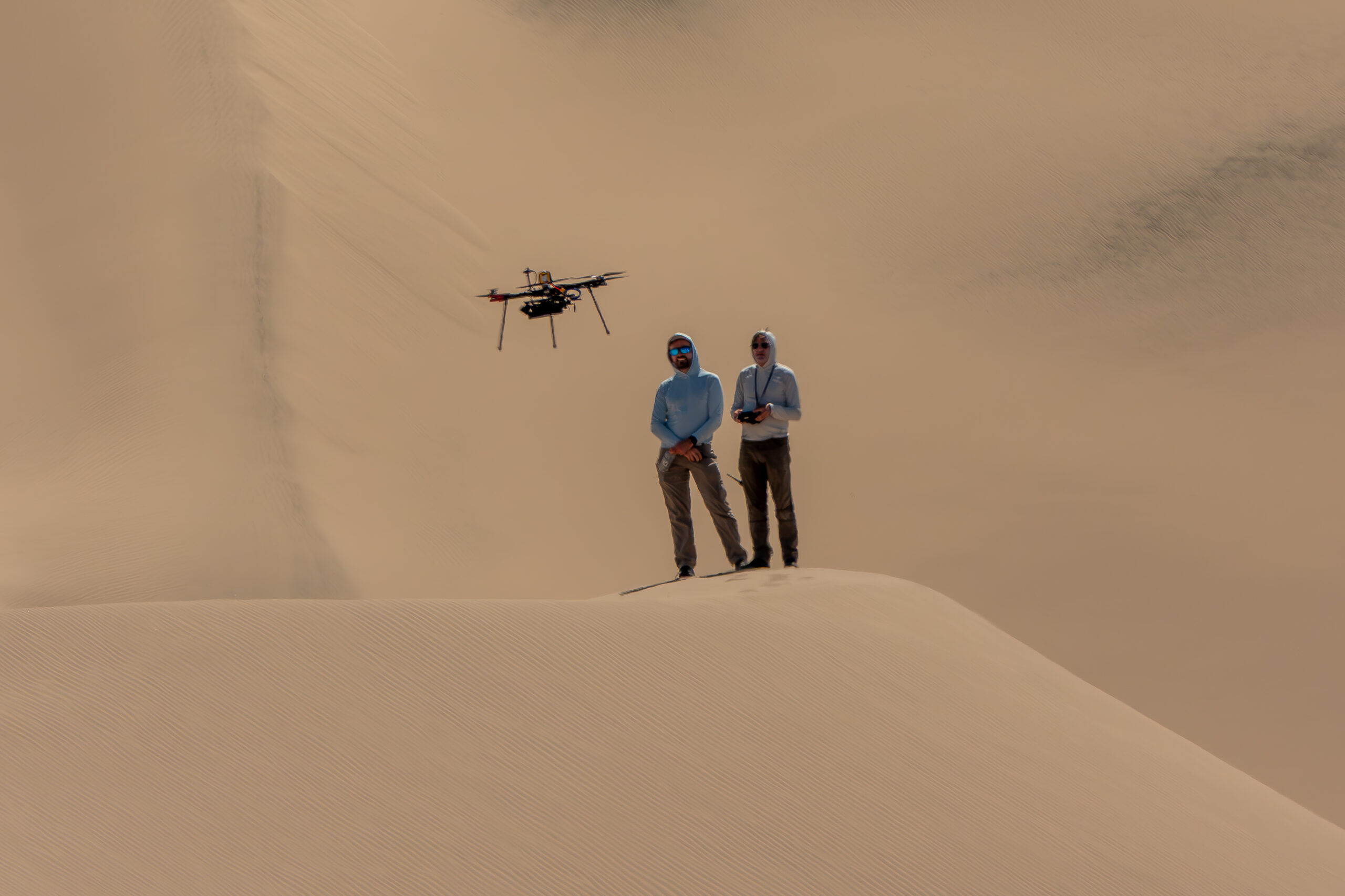
In an exciting development from NASA, researchers at the Jet Propulsion Laboratory (JPL) have been conducting tests on a research drone as part of a broader initiative aimed at advancing navigation software for future Mars rotorcraft. This particular flight test took place in the challenging terrain of Dumont Dunes in the Mojave Desert, a location chosen for its similarity to the Martian landscape. This endeavor is one of 25 innovative projects funded by NASA’s Mars Exploration Program over the past year, all designed to push the boundaries of technology that could transform our understanding and exploration of Mars.
Advancements in Mars Exploration Technology
NASA’s Mars Exploration Program is at the forefront of developing cutting-edge technology that aims to revolutionize the way we explore the Red Planet. The program is focused on a diverse range of technological advancements, including new navigation software, robotic scouts capable of scaling steep Martian slopes, and gliders designed to travel long distances across the planet’s surface.
These technologies are not just about improving our ability to explore Mars remotely. They are laying the groundwork for a future where robots can operate autonomously, conducting scientific research and reconnaissance without the need for constant human oversight. This autonomy will be crucial if we are to fully explore Mars and utilize its resources effectively. Moreover, these robotic systems can assist astronauts, making human missions to Mars safer and more efficient.
The Role of Navigation Software
The navigation software being tested at Dumont Dunes is a pivotal part of this technological leap forward. On Mars, navigation presents unique challenges due to its rugged terrain and thin atmosphere. The software is designed to enable rotorcraft to navigate these challenges autonomously, making decisions in real-time without waiting for instructions from Earth. This is essential because the vast distance between Mars and Earth means that communication can be delayed by several minutes.
By improving the ability of rotorcraft to navigate independently, NASA is ensuring that these machines can explore areas of Mars that were previously inaccessible, such as deep canyons or steep cliffs. This could lead to discoveries about the planet’s geology and climate history, providing valuable insight into its past and potential for future human habitation.
Robotic Scouts and Gliders
In addition to navigation software, NASA is developing robotic scouts that can traverse the steep slopes found on Mars. These scouts are designed to operate in areas where wheeled rovers may not be able to go, providing a new perspective on the planet’s geological features. Their ability to scale inclines and navigate rocky terrain will prove invaluable in exploring Martian landscapes in greater detail.
Long-distance gliders are another exciting development. Unlike traditional spacecraft or rovers, these gliders can soar over vast distances, covering more ground in less time. This capability will enable scientists to study larger areas of Mars and gather data from diverse locations, enhancing our understanding of the planet’s environment and potential for supporting life.
Implications for Future Mars Missions
The technologies being developed under NASA’s Mars Exploration Program have far-reaching implications for future missions. By enabling more autonomous exploration, these advancements will allow for more comprehensive data collection and analysis. This is particularly important as NASA and other space agencies plan for human missions to Mars in the coming decades.
The ability to send robots to conduct preliminary research and prepare sites for human arrival could significantly reduce the risks associated with manned missions. Furthermore, autonomous robots could perform tasks such as building habitats, setting up life support systems, or even mining resources, paving the way for sustainable human presence on Mars.
The Vision for Autonomous Exploration
NASA’s vision for the future of space exploration hinges on the development of autonomous systems. By leveraging artificial intelligence and machine learning, these systems can adapt to the unpredictable conditions of space and make decisions without human intervention. This autonomy is crucial not only for exploring distant planets but also for establishing permanent human settlements beyond Earth.
As we continue to push the boundaries of technology and exploration, the work being conducted by NASA’s Mars Exploration Program serves as a testament to human ingenuity and our relentless pursuit of knowledge. The advancements being made today will shape the future of space exploration, opening new frontiers and expanding our understanding of the universe.
Conclusion
The ongoing research and development efforts by NASA and its partners are essential in paving the way for future exploration of Mars and beyond. By investing in technologies that enhance our ability to explore autonomously, we are not only preparing for future missions but also ensuring that we can continue to unlock the mysteries of the Red Planet. As these projects progress, they will undoubtedly yield discoveries that deepen our understanding of Mars and inspire future generations of explorers and scientists.
For more information about the Mars Exploration Program and its initiatives, you can visit NASA’s official website here.
For more Information, Refer to this article.