






















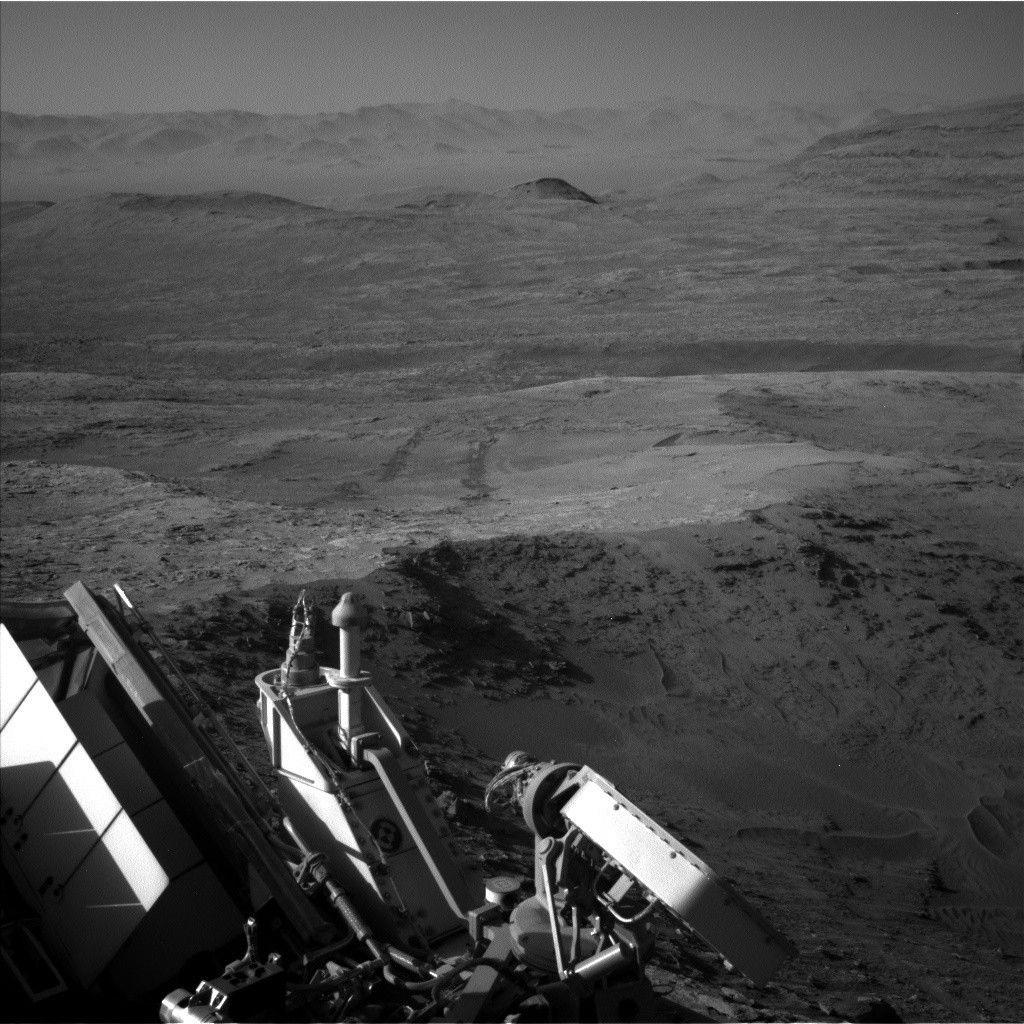
In an exciting update from Mars, the recent activities of NASA’s Curiosity rover have provided significant insights into the Martian terrain and atmosphere. As the rover continues its exploration on the Red Planet, it has been navigating through fascinating geological formations known as boxwork structures. This marscape exploration is not only shedding light on the planet’s geological history but also offering breathtaking views of the Martian landscape.
### The Current Mission Update: A Successful Drive
On Monday, July 28, 2025, Curiosity concluded a successful weekend drive, confirming its stable positioning on the Martian surface. This accomplishment allowed the team to deploy the rover’s robotic arm effectively, which is crucial for examining the site’s geology. The current workspace is particularly intriguing due to a large, sand-filled fracture that promises rich geological data. The visual experience from this vantage point is nothing short of spectacular, offering clear views of the distant Gale crater rim and the upper slopes of Mount Sharp, which have recently become visible again after being obscured by the walls of Gediz Vallis.
### Atmospheric Conditions: A Dust-Free Period
At this time of year, Gale Crater’s atmosphere is relatively clear of dust, which contrasts with conditions expected later in the Martian calendar. This clarity allows for extensive visibility, enhancing both scientific observations and the overall scenic quality of the images being captured. The rover’s tracks are also visible, marking its journey across the sandy Martian surface.
### Focused Study on Boxwork Structures
Curiosity’s current mission involves a detailed study of the boxwork structures it is navigating. These formations, characterized by their intricate, lattice-like appearance, are believed to provide valuable information about the planet’s geological processes. The rover’s scientific instruments, including the Alpha Particle X-ray Spectrometer (APXS), Dust Removal Tool (DRT), and Mars Hand Lens Imager (MAHLI), are focused on examining a particular section of bedrock named “Cañón de Palca,” situated close to the large fracture.
Additionally, the Mast Camera (Mastcam) and Chemistry and Camera complex (ChemCam) are collaborating to capture images of boxwork ridges at a site called “Caine.” They are also analyzing a target acquired by Autonomous Exploration for Gathering Increased Science (AEGIS) over the weekend, alongside a Laser-Induced Breakdown Spectroscopy (LIBS) target known as “Doña Ines.” Mastcam is conducting solo activities as well, such as examining the stratification at “Paniri Butte” and inspecting a speck of dust on the MAHLI lens.
### Preparations for the Next Phase
The team plans to drive the rover away from the current location along one of the boxwork ridges. These formations are sufficiently wide, about 5 meters or 16 feet, to accommodate the rover’s size. Post-drive activities will focus predominantly on environmental monitoring. This includes utilizing the Navigation Camera (Navcam) for line-of-sight surveys and dust-devil surveys, which help assess dust levels. Navcam will also capture cloud movies to study atmospheric conditions.
The ChemCam will continue to participate in post-drive activities with additional AEGIS observations. Alongside these, environmental monitoring will be augmented by the Rover Environmental Monitoring Station (REMS), the Radiation Assessment Detector (RAD), and the Dynamic Albedo of Neutrons (DAN), which together provide comprehensive data about the Martian environment.
### Understanding Boxwork Structures
The term “boxwork” refers to mineral formations that create a framework-like appearance in rock, often resulting from the dissolution of original minerals and subsequent infilling by secondary minerals. On Earth, these structures are typically associated with limestone caves, where they form through processes of chemical weathering. The discovery of such structures on Mars is particularly significant, as they may reveal insights into past water activity and the planet’s climate history.
### The Importance of Environmental Monitoring
Continuous environmental monitoring by Curiosity is vital for understanding Mars’ current atmospheric conditions and potential habitability. Instruments like REMS, RAD, and DAN provide critical data on temperature, humidity, radiation levels, and subsurface hydrogen concentrations, all of which are crucial for assessing the planet’s ability to support life.
### A Glimpse into the Future
The success of Curiosity’s ongoing mission is a testament to the remarkable capabilities of robotic exploration. As the rover continues its journey across the Martian surface, each new discovery brings humanity one step closer to unraveling the mysteries of Mars. The study of geological formations like boxwork structures not only enhances our understanding of Mars’ past but also aids in the preparation for future human exploration.
In conclusion, the current activities of the Curiosity rover are providing invaluable insights into both the geological and atmospheric characteristics of Mars. The mission’s progress underscores the importance of continued exploration, and the data gathered will undoubtedly contribute to the broader understanding of our neighboring planet. As we look to the future, the findings from Curiosity’s mission will serve as a foundation for further exploration and potential human habitation on Mars.
For more Information, Refer to this article.