





















Exploration of Martian Spherules: Perseverance Rover’s Latest Discovery
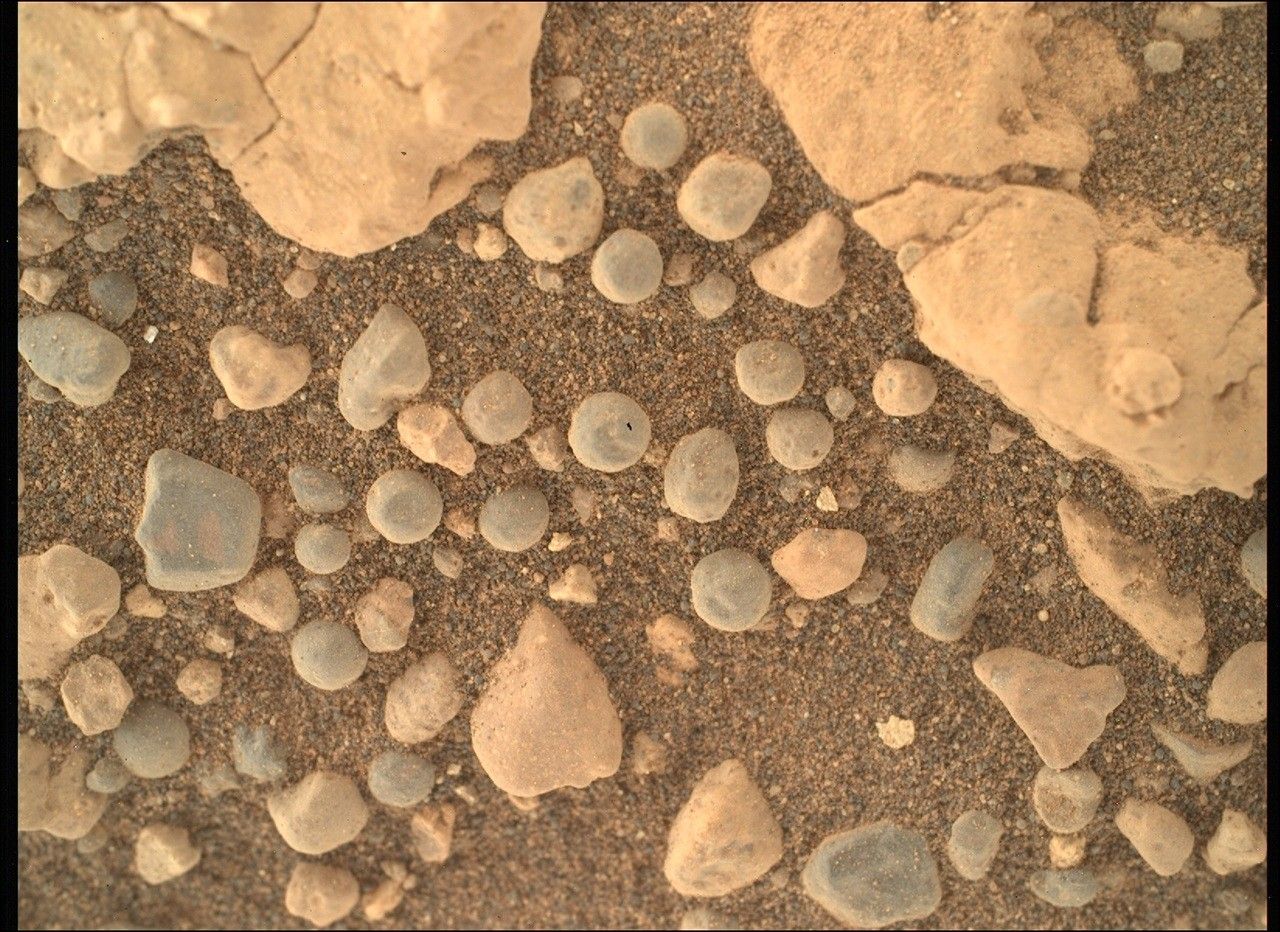
The field of space exploration continues to captivate scientists and the general public alike, with each new discovery offering a glimpse into the history and mysteries of our solar system. One of the most recent intriguing finds comes from NASA’s Perseverance rover, which is currently exploring the Martian surface. This rover has stumbled upon a fascinating feature of Martian geology—nearly perfect spherical formations within the soil, reminiscent of a discovery made over two decades ago by another rover named Opportunity.
Opportunity made headlines when it uncovered small, round formations composed of hematite, which were affectionately dubbed "blueberries," near its landing site in Meridiani Planum. These "blueberries" were understood to have formed in water-saturated sediments, providing evidence of Mars’ wetter past. Now, Perseverance has encountered similar spherules, albeit with a significantly different composition, in a region informally known as “Witch Hazel Hill.”
During its mission, Perseverance explored a location called “Hare Bay,” where it investigated outcrops rich with these spherules. The rover’s scientific team was so intrigued by these formations that they decided to collect a core sample from an area known as "Bell Island" for further study. This decision underscores the importance of these spherules in understanding the geological history of Mars.
On Sol 1555, coinciding with the United States’ Fourth of July celebrations, Perseverance was diligently conducting research on these spherule-rich soils at a target site named “Rowsell Hill.” Utilizing its state-of-the-art robotic arm equipped with proximity instruments, the rover studied the regolith (a layer of loose, heterogeneous material covering solid rock) in detail. High-resolution images were captured using SHERLOC’s Autofocus and Context Imager and the WATSON camera, while PIXL, another instrument, analyzed the elemental composition of the spherules and surrounding materials.
The initial findings from Rowsell Hill indicate that the spherules here have a basaltic composition, contrasting sharply with the hematite composition of the “blueberries” found by Opportunity. This suggests a different origin story for these formations. Instead of forming in groundwater-saturated environments, the spherules at Rowsell Hill might have originated from high-energy geological events, such as a meteoroid impact or volcanic activity.
When a meteoroid impacts a planetary surface, the intense energy can melt rock, dispersing it into droplets that cool rapidly to form spherules. Alternatively, these formations might have been created during a volcanic eruption, where molten lava solidifies into spherical shapes. Both scenarios involve dynamic processes that can offer valuable insights into the history and composition of Mars.
The ongoing analysis of these spherules by Perseverance’s science team aims to answer several key questions. If the spherules were formed by an ancient impact event, they might reveal details about the meteoroid’s composition and provide clues about the prevalence and impact of such cratering events in Mars’s early history. On the other hand, if volcanic activity is the source, these spherules could serve as a window into the planet’s volcanic past, particularly in the Jezero Crater region.
Understanding these spherules is not just about piecing together Mars’s geological past; it’s about unraveling the broader narrative of the planet’s evolution. Each discovery adds a new chapter to our understanding of Mars, informing both current missions and future explorations.
The significance of studying these Martian formations extends beyond scientific curiosity. By comparing these findings with similar geological formations on Earth, scientists can develop better models of planetary processes. This comparative planetology approach enriches our knowledge of both Mars and Earth, highlighting the commonalities and differences in planetary evolution.
The Perseverance rover’s mission is part of a larger effort to explore Mars and assess its habitability, past or present. The rover is tasked with searching for signs of ancient life, collecting samples for possible return to Earth, and preparing for future human exploration. Each discovery, including these intriguing spherules, brings us closer to understanding whether life ever existed on Mars and what conditions made it possible.
In the meantime, the scientific community and the public eagerly anticipate the next updates from Perseverance. As it continues its journey across the Martian landscape, the rover not only fulfills its mission objectives but also inspires a new generation of scientists and explorers. The insights gained from its findings will likely influence future missions and shape our approach to exploring other planets.
In conclusion, the discovery of basaltic spherules by the Perseverance rover represents a significant milestone in Martian exploration. Whether these formations are the result of ancient impacts or volcanic activity, they hold the potential to unlock secrets about Mars’s past environments and geological processes. As the rover continues to explore and analyze the Martian surface, each new finding contributes to a deeper understanding of our neighboring planet and the dynamic forces that have shaped it over billions of years.
For those interested in following the ongoing adventures of Perseverance, NASA’s official website offers regular updates, providing a front-row seat to the exploration of Mars. These discoveries remind us of the importance of scientific exploration and the endless possibilities that await in the vast expanse of space.
For more Information, Refer to this article.