














![[Video] Samsung Color E-Paper: A Smarter Alternative to Traditional Posters](https://www.hawkdive.com/media/samsung-tvs-and-displays-samsung-color-e-paper-samsung-vxt-digital-signage_thumb932-218x150.jpg "Samsung introduces Color E-Paper as innovative poster alternative.")







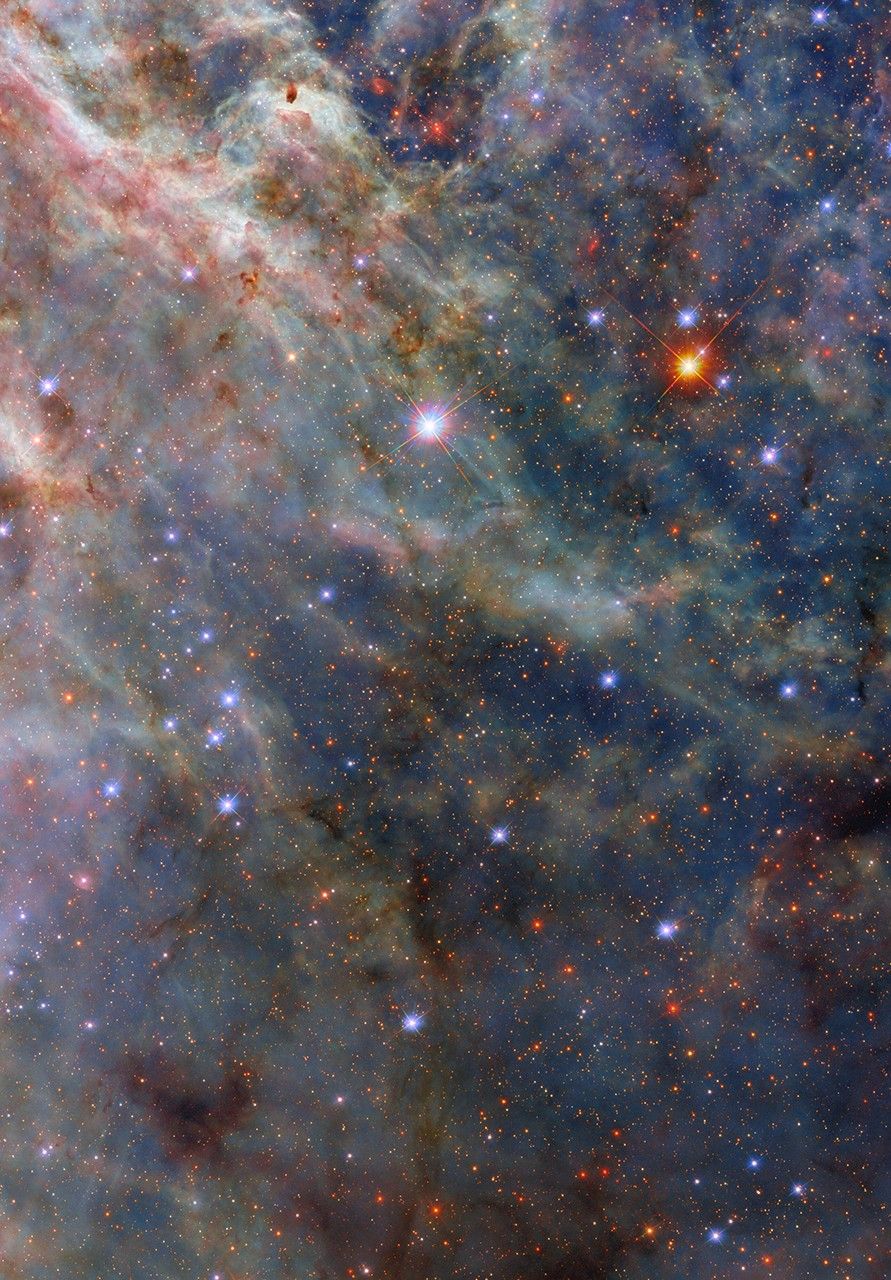
The Fascinating World of the Tarantula Nebula: A Closer Look Through the Hubble Space Telescope
The Hubble Space Telescope, a joint project of NASA and the European Space Agency (ESA), has once again provided us with a breathtaking view of the universe. This time, it has captured intricate details within the Tarantula Nebula, a star-forming region of monumental significance located in the Large Magellanic Cloud. This dwarf galaxy lies approximately 160,000 light-years away from us, nestled within the constellations of Dorado and Mensa.
The Large Magellanic Cloud: A Cosmic Neighbor
The Large Magellanic Cloud (LMC) is the largest of several satellite galaxies that orbit our own Milky Way Galaxy. It is an integral part of our local cosmic neighborhood. Among the myriad of celestial formations it hosts, the Tarantula Nebula stands out as the most prominent. Not only is it the largest and brightest star-forming region within the LMC, but it also holds this distinction among the entire group of nearby galaxies that make up our local galactic cluster.
The Stellar Giants of the Tarantula Nebula
One of the most fascinating aspects of the Tarantula Nebula is its role as a nursery for some of the universe’s most massive stars. These stellar behemoths can be up to 200 times more massive than our Sun. Among these giants, a rare type of star known as the Wolf–Rayet star can be found. These stars are characterized by their extreme heat and luminosity, having lost their outer hydrogen layers and now expelling powerful stellar winds. The image captured by Hubble offers a close look at these celestial phenomena.
Hubble’s Imaging Capabilities and Observational Programs
The Hubble Space Telescope is known for its ability to capture images across multiple wavelengths, a feature that is crucial for studying the complex structures within the Tarantula Nebula’s dusty clouds. The data for this stunning image was collected under an observational initiative known as the Scylla program. Named after a multi-headed sea monster from Greek mythology, Scylla is designed to work in tandem with another Hubble program called ULLYSES (Ultraviolet Legacy Library of Young Stars as Essential Standards). While ULLYSES focuses on young, massive stars in the Small and Large Magellanic Clouds, Scylla delves into the surrounding gas and dust formations.
Understanding Wolf–Rayet Stars and Their Significance
Wolf–Rayet stars play a critical role in astrophysics due to their unique properties. These stars are in an advanced evolutionary stage, having shed their outer layers and exposing their hot cores. Their powerful stellar winds significantly influence the nebulae they inhabit, often triggering new star formation and altering the chemical composition of their surroundings. Observing these stars in the Tarantula Nebula provides valuable insights into the life cycle of massive stars and the dynamics of star-forming regions.
The Importance of the Tarantula Nebula in Astrophysical Studies
The Tarantula Nebula is not just a visual spectacle; it is a crucial subject for scientific research. The nebula’s large population of massive stars offers a unique laboratory for studying the processes of star formation and evolution. By analyzing the interactions between these stars and their surrounding environment, scientists can gain a deeper understanding of the mechanisms that drive the birth and death of stars.
A Glimpse Into the Past and the Future
Studying the Tarantula Nebula also allows astronomers to look back in time. Because the nebula is so far away, the light we see today actually left it 160,000 years ago. This time delay offers a snapshot of the universe as it was in the distant past. Furthermore, understanding the evolution of star-forming regions like the Tarantula Nebula helps scientists predict the future development of our own galaxy and others in the local group.
Hubble’s Legacy and Future Exploration
Since its launch, the Hubble Space Telescope has revolutionized our understanding of the cosmos. Its images have not only captured the imagination of the public but have also provided invaluable data for scientific research. The study of the Tarantula Nebula is just one of many ways in which Hubble has contributed to our knowledge of the universe. As we look to the future, upcoming missions with next-generation telescopes will continue to build on Hubble’s legacy, offering even more detailed views of the cosmos and unlocking new mysteries of the universe.
Public Perception and the Impact of Cosmic Discoveries
The images and data provided by the Hubble Space Telescope have had a profound impact beyond the scientific community. They have engaged the public and fostered a greater appreciation for the wonders of space. The Tarantula Nebula, with its striking beauty and scientific importance, serves as a testament to the awe-inspiring nature of our universe. These cosmic discoveries not only deepen our understanding of the cosmos but also inspire future generations to explore and seek answers to the fundamental questions of existence.
In conclusion, the Hubble Space Telescope’s latest image of the Tarantula Nebula is a testament to the marvels of modern astronomy. It highlights the intricate beauty and complexity of star-forming regions and underscores the importance of continued exploration and study of our universe. As we continue to uncover the secrets of the cosmos, each new discovery brings us closer to understanding the vast and intricate tapestry of the universe we call home.
For more Information, Refer to this article.