




















NASA’s SPARCS Mission Captures First Images and Begins Scientific Operations
NASA’s groundbreaking Star-Planet Activity Research CubeSat (SPARCS) mission has reached a significant milestone with the acquisition of its first images from space. This achievement signals the readiness of the spacecraft to embark on its mission of studying the energetic behaviors of the most common stars in our galaxy, ultimately aiming to identify potentially habitable worlds beyond our solar system.
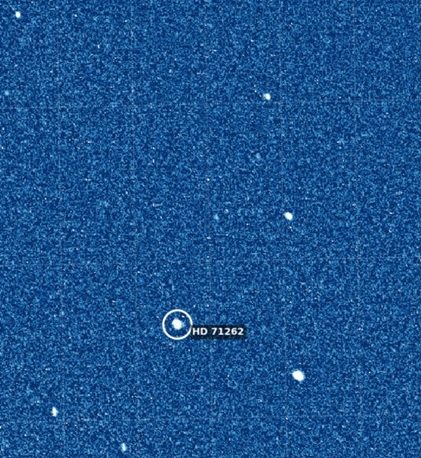
The successful capture of the “first light” images is a crucial step for any space mission, confirming that the spacecraft’s instruments are operational and poised to transition to full-fledged scientific observations. SPARCS relies heavily on precise ultraviolet (UV) measurements for its investigations, making the validation of the camera’s performance essential for achieving its scientific objectives. Launched on January 11, the spacecraft transmitted the images back to Earth on February 6, where they were processed for analysis.
SPARCS, approximately the size of a large cereal box, is designed to monitor flares and sunspot activity on low-mass stars, which are stars with a mass ranging from 30% to 70% of our Sun. These stars are abundant in the Milky Way and are known to harbor a significant number of potentially habitable terrestrial planets within their habitable zones. These rocky worlds orbit at distances conducive to liquid water and potentially sustaining life.
Professor Evgenya Shkolnik, the Principal Investigator of the SPARCS mission from Arizona State University, expressed excitement at the successful acquisition of the spacecraft’s first ultraviolet images, affirming that the telescope and detectors are functioning as intended for the scientific investigations ahead.
The SPARCS spacecraft is the first of its kind dedicated to continuously monitoring far-ultraviolet and near-ultraviolet radiation from low-mass stars over extended periods. Throughout its one-year mission, SPARCS will focus on around 20 low-mass stars, observing them for durations ranging from five to 45 days each.
Despite their smaller size and lower temperature compared to the Sun, low-mass stars are known to exhibit frequent flaring activity, which can have a significant impact on the atmospheres of their orbiting planets. Understanding the behavior of these host stars is crucial for assessing the potential habitability of exoplanets.
The development of the SPARCS camera, known as SPARCam, was led by Shouleh Nikzad, the chief technologist at NASA’s Jet Propulsion Laboratory. Nikzad highlighted the innovative detector and filter technologies integrated into SPARCam, which were developed at JPL’s Microdevices Laboratory. By directly depositing filters onto UV-sensitive “delta-doped” detectors, the team achieved exceptional sensitivity and performance, resulting in one of the most sensitive systems of its kind ever flown in space.
The successful demonstration of this technology not only benefits the SPARCS mission but also lays the groundwork for future NASA missions with ultraviolet capabilities, such as the Habitable Worlds Observatory mission concept and the forthcoming UltraViolet EXplorer (UVEX) mission led by Caltech.
SPARCS also leverages advanced computational processing through an onboard computer that can analyze data and adjust observation parameters in real-time to capture the evolving nature of stellar flares. This intelligent processing capability enhances the mission’s ability to study low-mass stars in ultraviolet light, providing valuable insights into stellar environments and planetary habitability.
Managed by Arizona State University and funded by NASA, SPARCS is part of the agency’s CubeSat Launch Initiative (CSLI), which offers a cost-effective pathway for conducting scientific investigations and technology demonstrations in space. The spacecraft bus was fabricated by Blue Canyon Technologies.
By combining focused scientific objectives, state-of-the-art detectors, and intelligent onboard processing, the SPARCS mission aims to deepen our understanding of the stars that host most of the planets in our galaxy. Through its groundbreaking observations in ultraviolet light, SPARCS is poised to shed light on the habitability of distant worlds and pave the way for future space exploration endeavors.
For more information about the SPARCS mission and its latest developments, please visit the official NASA website.
For more Information, Refer to this article.