














![[Video] Samsung Color E-Paper: A Smarter Alternative to Traditional Posters](https://www.hawkdive.com/media/samsung-tvs-and-displays-samsung-color-e-paper-samsung-vxt-digital-signage_thumb932-218x150.jpg "Samsung introduces Color E-Paper as innovative poster alternative.")







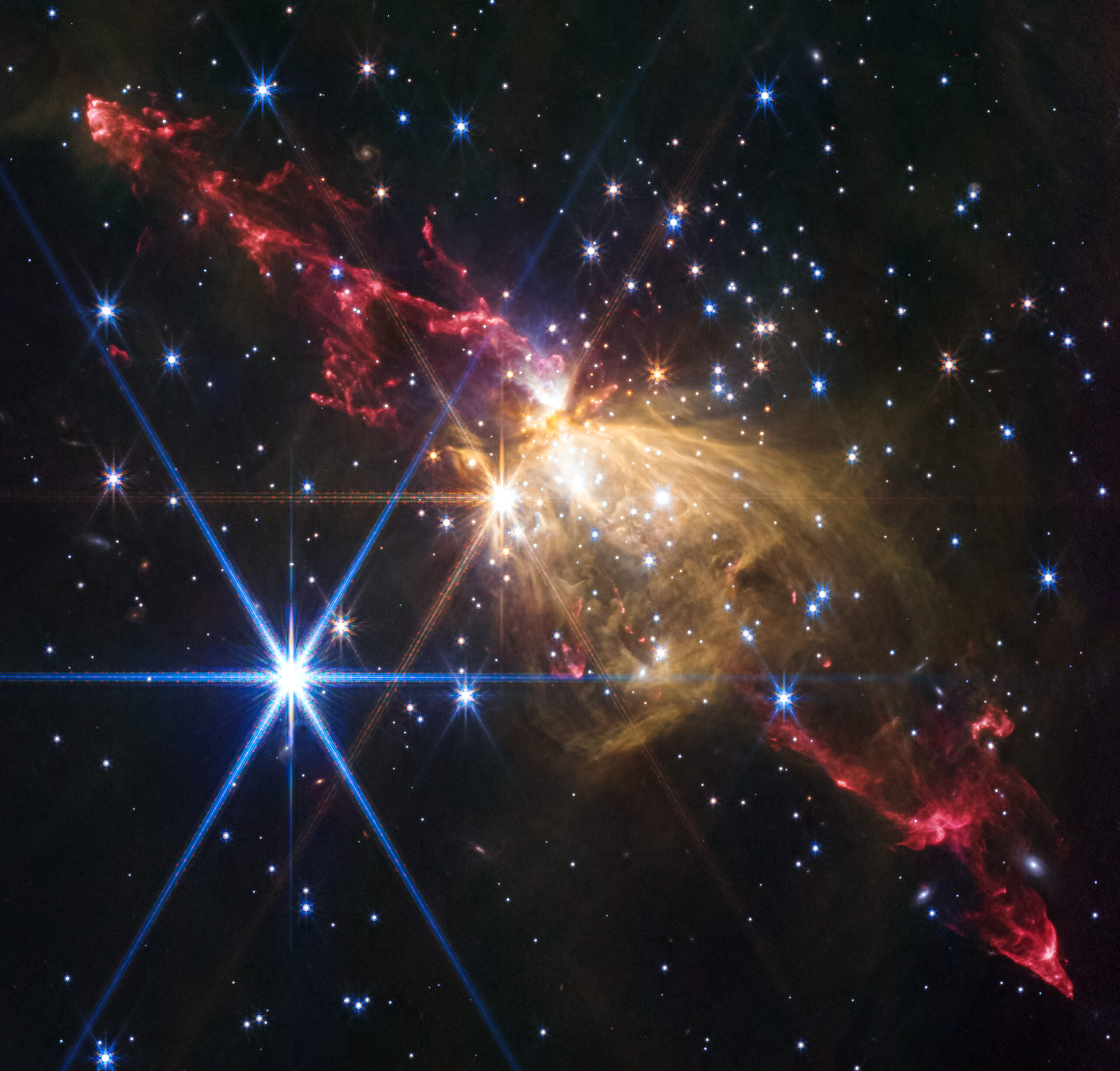
NASA’s James Webb Space Telescope Unveils a Massive Stellar Jet
In an extraordinary astronomical discovery, NASA’s James Webb Space Telescope (JWST) has captured a stunning image of a colossal stellar jet erupting from a newly forming star. Released on September 10, 2025, this image showcases a dramatic “blowtorch” of intensely heated gases, shedding light on the fascinating processes occurring at the edges of our Milky Way galaxy.
Understanding Stellar Jets
Stellar jets are streams of gas and dust that are expelled from young stars, also known as protostars, during their formative years. These jets are powered by the gravitational energy that is released as the star accumulates more mass. Essentially, as a protostar pulls in surrounding material to grow, some of this material is ejected at high speeds in the form of jets. The study of these jets provides astronomers with crucial insights into the early stages of star formation.
The recent image captured by the JWST is significant because it confirms a long-standing hypothesis in the field of astrophysics: the size and intensity of a stellar jet are directly related to the mass of the star from which it originates. In simpler terms, the more massive the star, the more powerful and larger the resulting jet.
The Role of the James Webb Space Telescope
The James Webb Space Telescope, a collaboration between NASA, the European Space Agency (ESA), and the Canadian Space Agency (CSA), has been instrumental in expanding our understanding of the universe. Launched to succeed the Hubble Space Telescope, the JWST is equipped with advanced instruments that allow it to observe the cosmos in unprecedented detail. Its capacity to capture infrared light makes it particularly adept at peering through the dense clouds of gas and dust that often obscure young stars.
The latest image of the stellar jet is a testament to the telescope’s capabilities. By observing the infrared emissions from the jet, astronomers can analyze the composition, speed, and dynamics of the ejected material, providing a clearer picture of how stars like our Sun come into being.
Implications for Astrophysics
The discovery of this immense stellar jet offers several implications for the field of astrophysics. Firstly, it provides concrete evidence supporting the theory that the characteristics of stellar jets are influenced by the mass of their parent stars. This is a crucial piece of the puzzle in understanding the processes that govern star formation across the universe.
Moreover, studying these jets allows scientists to trace back the history of the protostar’s growth. By examining the jet’s structure and composition, astronomers can infer the rate at which the star has been accumulating mass, offering clues about the environment in which the star is forming.
Technical Insights for the Layman
For those not familiar with astronomical jargon, let’s break it down a bit further. Imagine a star as a giant vacuum cleaner in space, pulling in gas and dust to grow bigger. However, not all of this material sticks around—some of it is shot out at high speeds in narrow streams, much like a fire hose. These streams, or jets, help balance the forces acting on the star and are crucial for its development.
Understanding these processes is vital because stars are the building blocks of galaxies. By studying how stars form, scientists can gain insights into the evolution of galaxies, including our own Milky Way.
Reactions from the Scientific Community
The scientific community has responded with enthusiasm to the new findings. Dr. Yu Cheng from the National Astronomical Observatory of Japan (NAOJ), involved in the research, expressed excitement about the data the JWST is providing. “These observations are opening new doors to understanding the complexities of star formation,” Dr. Cheng noted.
Joseph DePasquale, responsible for processing the stunning image, emphasized the importance of visual data in communicating complex scientific concepts. “Images like these help bridge the gap between the scientific community and the public, allowing everyone to appreciate the wonders of the universe,” he said.
Looking Ahead
With the James Webb Space Telescope continuing its mission, astronomers are optimistic about what future discoveries await. The telescope’s ability to capture detailed images of distant celestial phenomena will undoubtedly lead to further breakthroughs in our understanding of the cosmos.
In conclusion, the recent capture of a massive stellar jet by the JWST is a remarkable achievement in space exploration. It not only reinforces existing theories about star formation but also provides a platform for future research. As we continue to unravel the mysteries of the universe, discoveries like these remind us of the incredible scale and complexity of the cosmos we inhabit.
For more information on this fascinating discovery, you can visit NASA’s official website: [NASA’s James Webb Observes Immense Stellar Jet](https://science.nasa.gov/missions/webb/nasas-webb-observes-immense-stellar-jet-on-outskirts-of-our-milky-way/).
Image credit: NASA, ESA, CSA, STScI, Yu Cheng (NAOJ); Image Processing: Joseph DePasquale (STScI)
For more Information, Refer to this article.