









Nasa’s Artemis II Mission: Twin Control Rooms Play Pivotal Role in Lunar Operations
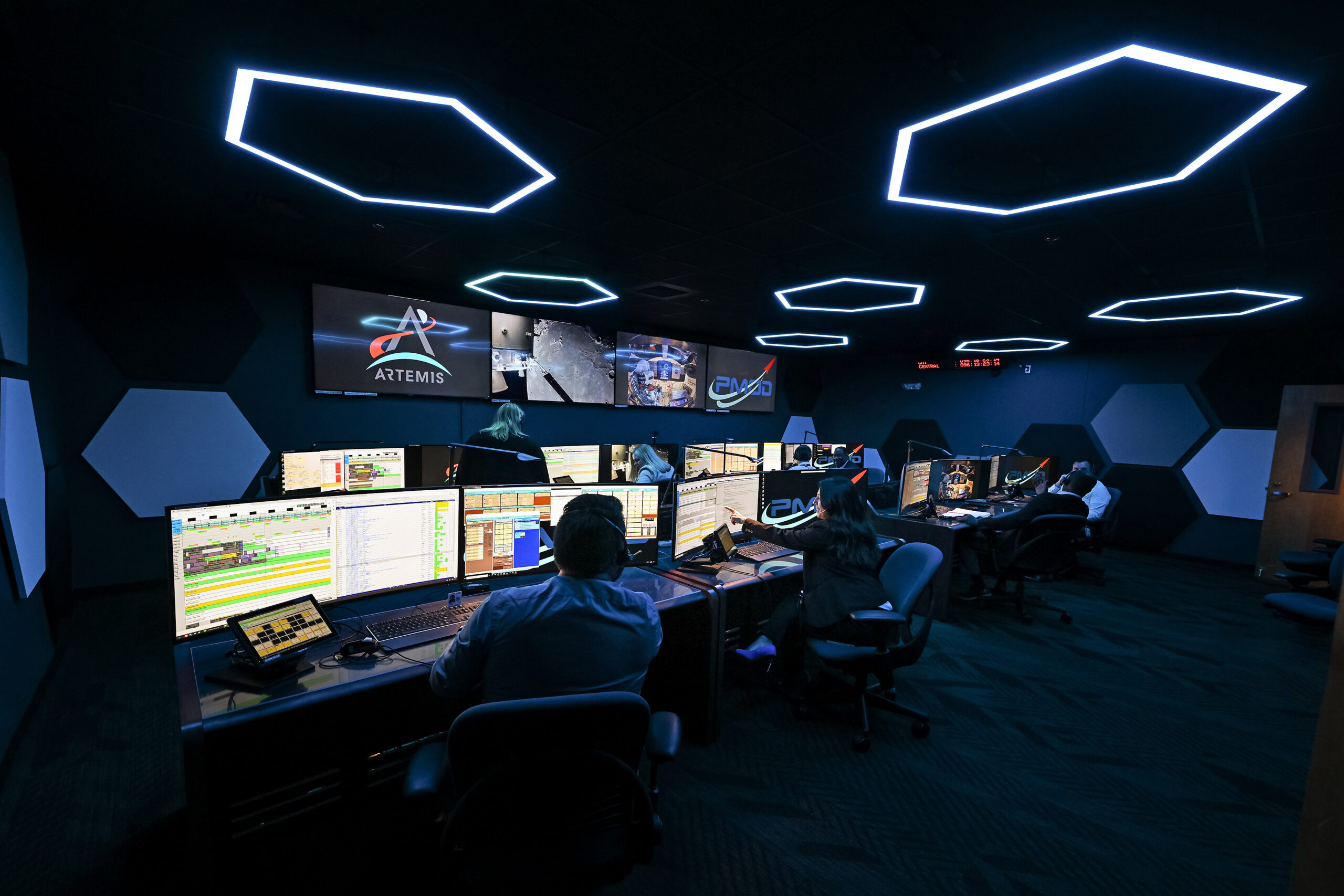
NASA’s Marshall Space Flight Center in Huntsville, Alabama, is currently engaged in real-time mission operations for the Artemis II mission, which aims to enhance astronaut safety and ensure mission success as the crew prepares for their return to Earth on April 10. The twin control rooms, known as the Lunar Utilization Control Area (LUCA) and the Lander Engineering Support Area (LESA), are integral to this effort, each focusing on distinct aspects of lunar exploration.
A Closer Look at LUCA and LESA
Located within the Huntsville Operations Support Center at NASA Marshall, LUCA and LESA may appear similar but serve different purposes. LUCA is dedicated to supporting scientific operations related to Artemis, while LESA focuses on engineering support for landing astronauts on the Moon. This dual approach allows NASA to address both the scientific and technical challenges associated with lunar missions.
Harish Chandranath, who leads the Payload and Mission Operations Division for Human Landing Systems at Marshall, emphasized the adaptability of the Huntsville Operations Support Center. “LUCA and LESA are some of our newest configurable control rooms for the Artemis campaign,” he stated. The center is not only pivotal for Artemis but also supports other initiatives such as the Commercial Crew Program, the Space Launch System (SLS) rocket, and operations related to the International Space Station.
Comprehensive Support Services
The Huntsville Operations Support Center provides a wide array of services essential for mission success. These include spacecraft command management, telemetry (the process of recording and transmitting data), local and remote voice services for international communications, live and recorded video feeds, and a telescience resource kit. This specialized software enables seamless communication between distant computers without requiring human intervention.
Both LUCA and LESA can leverage these services, allowing operators to access critical data and communicate effectively with scientists and experts globally. This interconnectedness enhances decision-making capabilities during missions by ensuring that all necessary information is readily available.
Scientific Innovations During Artemis II
During Artemis II, teams operating from LUCA are conducting groundbreaking scientific operations aimed at understanding how deep space conditions—such as microgravity and radiation—affect crew physiology, immune response, and overall performance. The insights gained from these experiments will be invaluable for future crewed flights to the Moon.
In parallel, teams stationed in LESA are monitoring real-time mission operations. This hands-on observation provides an essential opportunity to refine operational processes in preparation for future crewed landings on the lunar surface. Members of NASA’s Human Landing System Mission Insight Support Team—including engineers, safety leads, flight operations experts, and technical authorities—will utilize LESA to oversee lander systems and facilitate critical decision-making during missions.
The Broader Implications of Artemis
The Artemis program represents NASA’s commitment to returning humans to the Moon not just for exploration but also for scientific discovery and economic opportunities. It lays the groundwork for future crewed missions to Mars, aiming to benefit humanity as a whole. By refining technologies and processes through missions like Artemis II, NASA seeks to pave the way for sustainable human presence beyond Earth.
What This Means
The successful operation of LUCA and LESA during Artemis II highlights NASA’s strategic approach to lunar exploration. By integrating scientific research with engineering support in real-time operations, NASA enhances its capability to conduct complex missions safely. The data collected during this mission will inform future endeavors not only on lunar soil but also in deeper space explorations like Mars. As humanity stands on the brink of a new era in space travel, initiatives like Artemis II are crucial in shaping our understanding of space environments while preparing us for even greater challenges ahead.
For more information, read the original report here.