















![[Video] Samsung Color E-Paper: A Smarter Alternative to Traditional Posters](https://www.hawkdive.com/media/samsung-tvs-and-displays-samsung-color-e-paper-samsung-vxt-digital-signage_thumb932-218x150.jpg "Samsung introduces Color E-Paper as innovative poster alternative.")






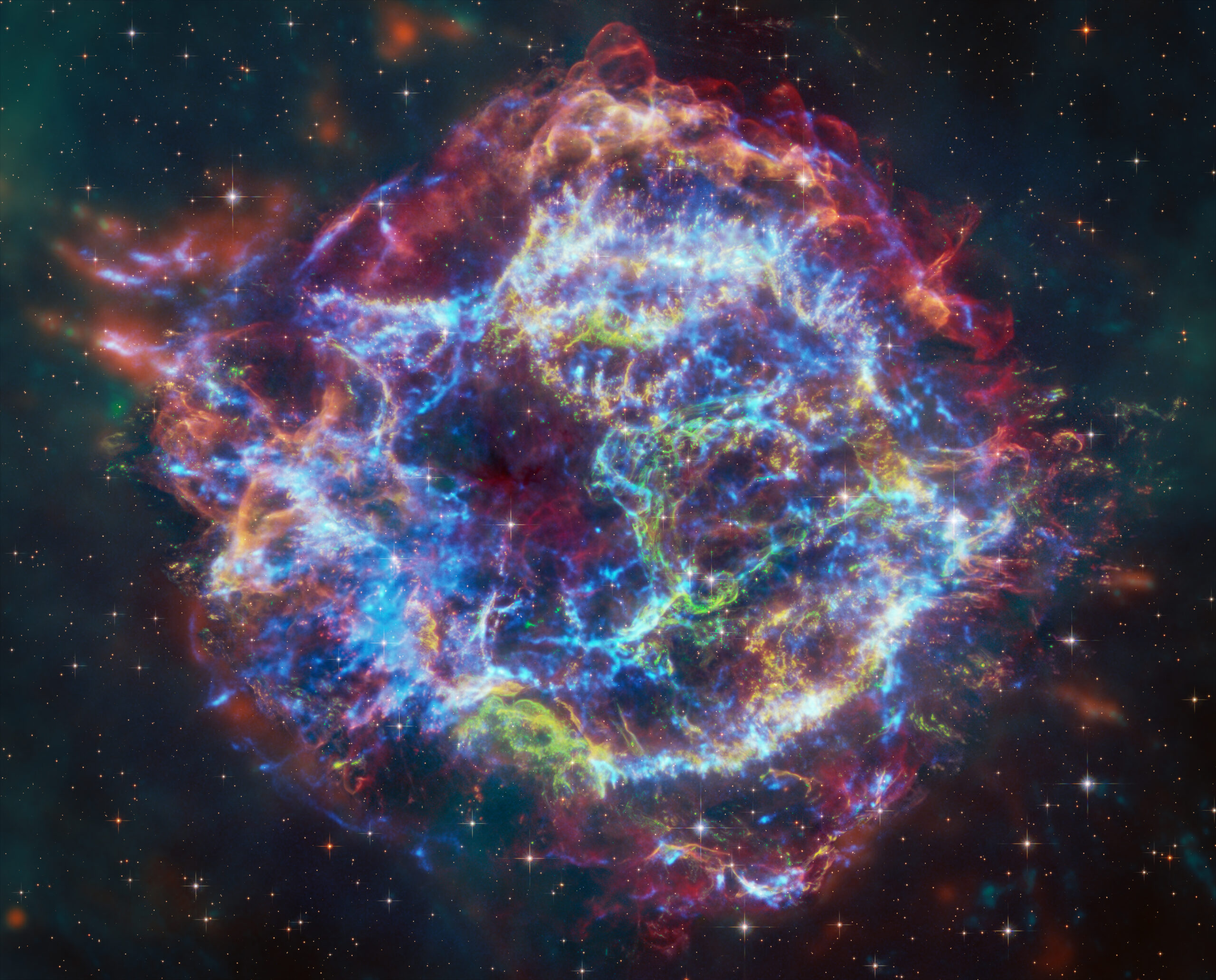
Remarkable Discoveries from the Cassiopeia A Supernova Remnant
The Cassiopeia A supernova remnant, an awe-inspiring celestial spectacle, shines brilliantly in X-ray, visible, and infrared light. This captivating image, captured on January 8, 2024, is a composite visualization, a harmonious blend of data collected from NASA’s Chandra X-ray Observatory alongside the Hubble, Webb, and Spitzer space telescopes. This image not only provides a mesmerizing view of the cosmic beauty but also serves as a crucial tool for advancing our understanding of the universe.
In a groundbreaking study, the X-ray Imaging and Spectroscopy Mission (XRISM) spacecraft has achieved a significant milestone by making the first-ever X-ray detections of chlorine and potassium emanating from this stellar wreckage. This remarkable achievement was documented in a paper published on December 4, 2025, in the esteemed journal, Nature Astronomy.
Unraveling the Mysteries of Cassiopeia A
Cassiopeia A, often abbreviated as Cas A, is one of the most studied supernova remnants in the Milky Way galaxy. Situated approximately 11,000 light-years away from Earth, this remnant is the aftermath of a massive star’s explosive end. The explosion occurred about 350 years ago, and since then, Cas A has been a point of intrigue and study for astronomers and astrophysicists around the world.
The supernova remnant is a rich source of information, offering a glimpse into the life cycle of stars and the intricate processes that govern stellar evolution. When a star exhausts its nuclear fuel, it undergoes a cataclysmic explosion, dispersing its outer layers into space. This ejected material, enriched with elements synthesized during the star’s life, provides a fertile ground for studying the composition and dynamics of such celestial events.
The Role of Multi-Wavelength Observations
The composite image of Cas A is a testament to the power of multi-wavelength astronomy, where data from different parts of the electromagnetic spectrum are combined to provide a more comprehensive understanding of astronomical phenomena. Each wavelength offers unique insights, revealing different aspects of the remnant’s structure and composition.
- X-ray Observations: Conducted by NASA’s Chandra X-ray Observatory, these observations highlight the high-energy processes occurring within the remnant. X-rays are emitted by the hot gas and shock waves generated by the supernova explosion. The detection of chlorine and potassium in X-rays by the XRISM spacecraft marks a significant advancement in identifying the chemical composition of supernova remnants.
- Visible Light Observations: Captured by the Hubble Space Telescope, visible light observations allow astronomers to study the remnant’s filamentary structure and the distribution of various elements. This helps in understanding the dynamics of the explosion and the subsequent expansion of the remnant.
- Infrared Observations: The Webb and Spitzer space telescopes contribute to this composite image by providing infrared data. Infrared observations are crucial for penetrating the dust and gas that often obscure parts of the remnant, revealing the cooler components and the distribution of dust within Cas A.
Significance of Chlorine and Potassium Detection
The XRISM spacecraft’s detection of chlorine and potassium in X-rays is a pioneering achievement. These elements, produced during the supernova explosion, are crucial for understanding the nucleosynthesis processes that occur in massive stars. Chlorine and potassium are relatively rare in the universe, and their presence in the supernova remnant provides valuable clues about the conditions during the star’s life and the nature of the explosion.
The study of these elements helps astronomers refine models of stellar evolution and supernova mechanisms. By analyzing the abundance and distribution of elements like chlorine and potassium, researchers can gain insights into the physical processes that dominated the star’s final moments and the subsequent evolution of the remnant.
Implications for Astrophysics
The discoveries from Cassiopeia A not only enhance our understanding of supernova remnants but also have broader implications for the field of astrophysics. Supernovae play a pivotal role in enriching the interstellar medium with heavy elements, which are essential for the formation of planets and life as we know it. Understanding the detailed composition of supernova remnants helps astronomers piece together the cosmic puzzle of how elements are distributed throughout the universe.
Moreover, the successful deployment and operation of the XRISM spacecraft demonstrate the importance of international collaboration in advancing space science. The mission, a joint effort between NASA, the Japan Aerospace Exploration Agency (JAXA), and other international partners, showcases the power of cooperation in tackling complex scientific challenges.
The Future of Supernova Research
The advancements in observing techniques and technologies, as exemplified by the Cassiopeia A study, pave the way for future explorations of supernova remnants. As telescopes and instruments continue to evolve, astronomers anticipate uncovering more secrets hidden within these cosmic debris fields.
Future missions and observations will likely focus on exploring other supernova remnants, comparing their compositions, and understanding the diversity of explosion mechanisms. These studies will contribute to a more nuanced understanding of the universe’s chemical evolution and the roles supernovae play in shaping the cosmos.
In conclusion, the recent findings from the Cassiopeia A supernova remnant underscore the dynamic and interconnected nature of the universe. Through continued exploration and collaboration, humanity inches closer to unraveling the mysteries of the cosmos, one stellar explosion at a time. The Cassiopeia A study serves as a beacon of scientific discovery and a testament to the relentless pursuit of knowledge that drives the field of astrophysics forward. For more detailed information on this study, you can refer to the publication in Nature Astronomy.
For more Information, Refer to this article.