


















NASA Develops New Method for Evaluating Risk When Reducing NDE
Performing nondestructive evaluation (NDE) is crucial for ensuring the safety and reliability of spaceflight hardware. However, the cost and schedule impacts of NDE inspections have led to discussions about the possibility of descoping, or reducing, these inspections on certain components. Despite the potential benefits of descoping, it is important to adhere to NASA’s Technical Standard NASA-STD-5019A, which establishes requirements for establishing a fracture control plan to ensure the integrity of critical parts.
Under the 5019A framework, damage tolerance is a key consideration, with NDE playing a vital role in identifying flaws that could lead to failure. While descoping NDE inspections may seem risky, the NASA Engineering and Safety Center (NESC) conducted an assessment to determine if an equivalent risk posture could be achieved without following the traditional 5019A approach.
The objective of the assessment was to develop a probabilistic analysis method that would allow NASA programs to estimate the risk associated with descoping NDE requirements for single-wrought materials. By using historical data, conducting sensitivity studies, and identifying the minimum data needed for approving a descoping request, the NESC aimed to provide a robust framework for evaluating the safety implications of reducing NDE inspections.
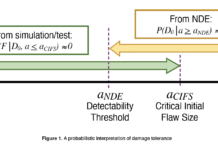
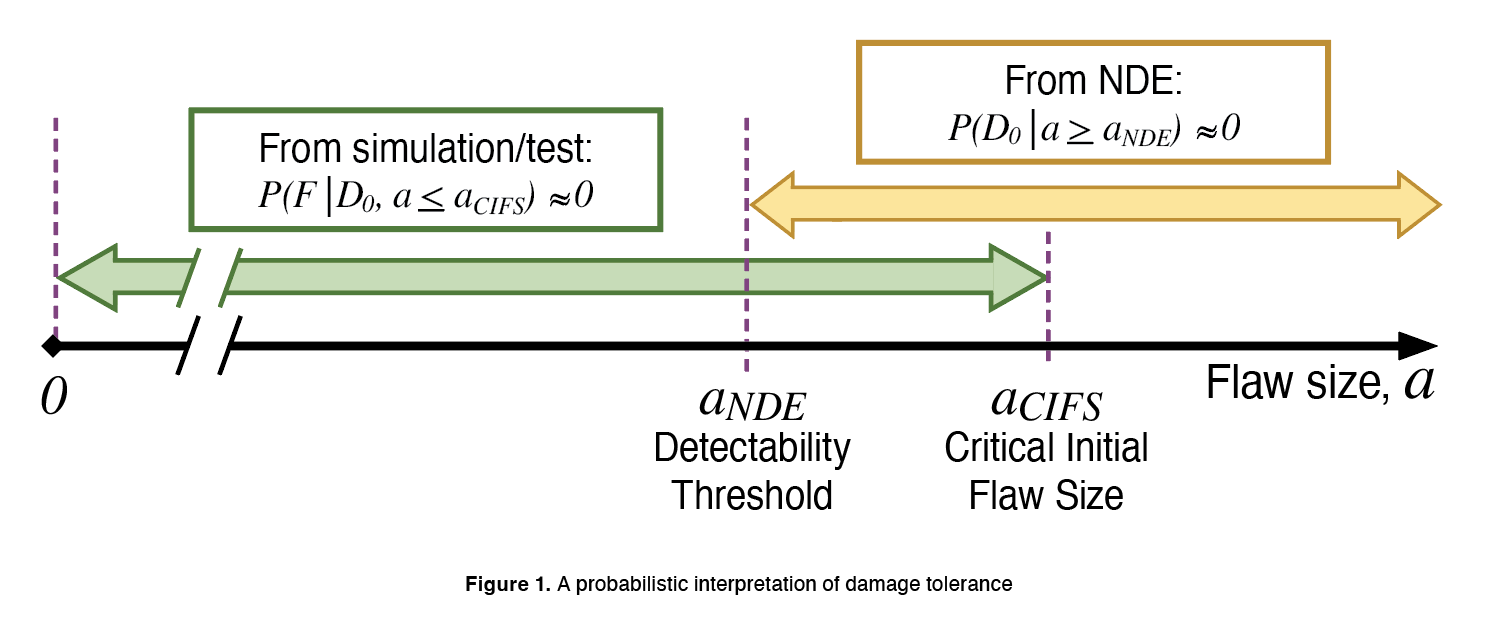
Damage tolerance is typically viewed as deterministic, with specific thresholds for flaw detection and failure analysis. However, it is rooted in probabilities related to flaw existence, NDE detection capabilities, and the likelihood of failure. By combining these probabilities, a joint failure probability can be calculated to assess the overall risk of a component.
Estimating the probability of a flaw exceeding a critical size and leading to failure can be challenging without detailed information on flaw occurrence and detection. To address this, the NESC proposed using historical NDE data to estimate the upper confidence bound on the probability of detectable flaws existing. By applying this method to a dataset of bolt-hole inspections, the NESC was able to demonstrate how the risk associated with descoping NDE could be quantified.
The results of the risk evaluation framework showed that increasing the number of inspections in the dataset could marginally improve the reliability of the assessment. However, achieving a high level of structural reliability would require a significant number of inspections and a low rejection rate. The methodology developed by the NESC emphasizes the importance of maintaining consistent process controls and aggregating data across multiple parts to reduce uncertainty in risk estimation.
Overall, the new method developed by NASA provides a valuable tool for evaluating the safety implications of descoping NDE inspections. By incorporating historical data and probabilistic analysis, NASA programs can make informed decisions about the level of risk associated with reducing NDE requirements for spaceflight hardware.
For more information, please contact Patrick E. Leser at patrick.e.leser@nasa.gov.
Reference: NASA/TM-20250004074
Sources:
– https://www.nasa.gov/wp-content/uploads/2026/03/techup2025-pg57-58-innov-tech-nde-descoping.pdf
– https://ntrs.nasa.gov/citations/20250004074
For more Information, Refer to this article.