






















NASA researchers have delved into the inner workings of thermal protection system (TPS) materials to uncover the mechanisms behind internal pressure buildup in high-enthalpy environments. This exploration is crucial for predicting potential degradation and failure modes, such as spallation, in these materials.
By utilizing a combination of experimental techniques, scientists were able to gain valuable insights into both the chemical and mechanical processes occurring beneath the surface of TPS materials. The goal was to understand how gases evolve, move, and interact with the microstructure of the TPS, ultimately shedding light on the factors contributing to spallation.
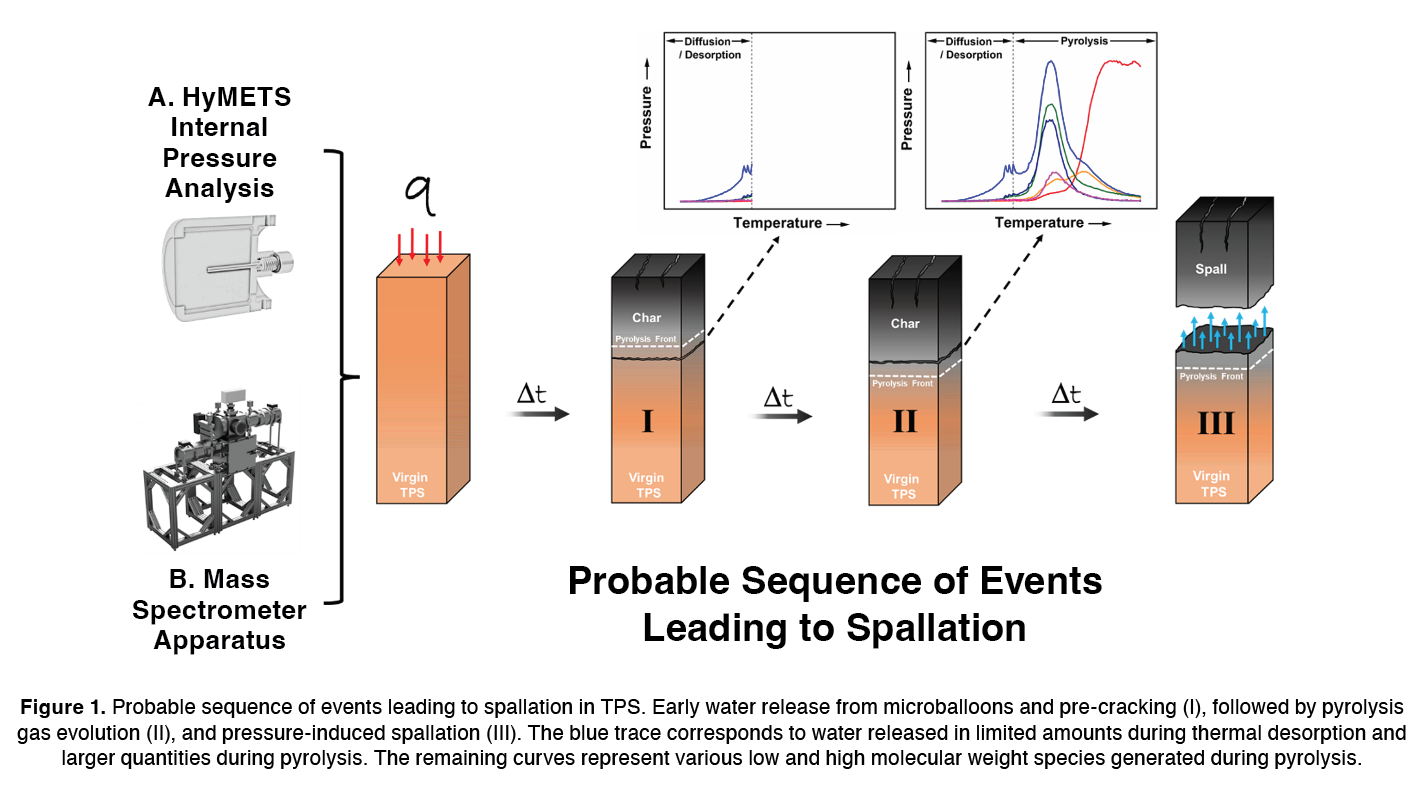
One of the key methods used in this investigation was the Hypersonic Materials Environmental Test System (HyMETS), which allowed researchers to measure the dynamic buildup of subsurface pressure as gases evolved within the TPS material. Additionally, mass spectrometry was employed to analyze the volatile species released during the decomposition of the TPS under high temperatures. This analysis helped differentiate between different types of species released at varying temperatures, providing a comprehensive view of the chemical processes at play.
The data collected from mass spectrometry and HyMETS testing provided valuable insights into the spallation mechanisms of TPS materials. The researchers found that as the TPS material is heated, absorbed water is released from microballoons and the surrounding matrix before extensive pyrolysis occurs. This early release of water can lead to localized stresses and potential crack formation before the pyrolysis process kicks in. As heating continues, the pyrolysis front advances, releasing a significant amount of gas and causing a rapid buildup of pressure. If this internal pressure exceeds the material’s strength, spallation occurs, resulting in the ejection of fragments.
This research highlights the intricate relationship between volatile release, gas evolution during pyrolysis, and stress generation in TPS materials. By understanding these processes, scientists can better predict and mitigate the risk of spallation under extreme conditions.
The findings from this study offer valuable insights into the behavior of TPS materials under high-enthalpy environments, providing a foundation for future research and development in thermal protection systems. By unraveling the complex mechanisms behind spallation, researchers can work towards enhancing the stability and performance of these critical materials.
For more information on this research, you can contact Dr. Brody K. Bessire at brody.k.bessire@nasa.gov.
References:
– NASA Study on Spallation Mechanisms of TPS Materials
– Hypersonic Materials Environmental Test System (HyMETS)
– Mass Spectrometry Analysis in Material Science
Overall, this study represents a significant step forward in our understanding of TPS materials and the factors influencing their stability and performance in high-enthalpy environments.
For more Information, Refer to this article.