






















In recent developments surrounding SpaceX’s ambitious Starship project, a significant setback has occurred, casting doubts over the developmental timeline of this innovative spacecraft. On November 21, the latest booster from the new generation of Starship vehicles, known as Booster 18, suffered substantial damage during a test. This incident has raised questions about the progress and future of the Starship program.
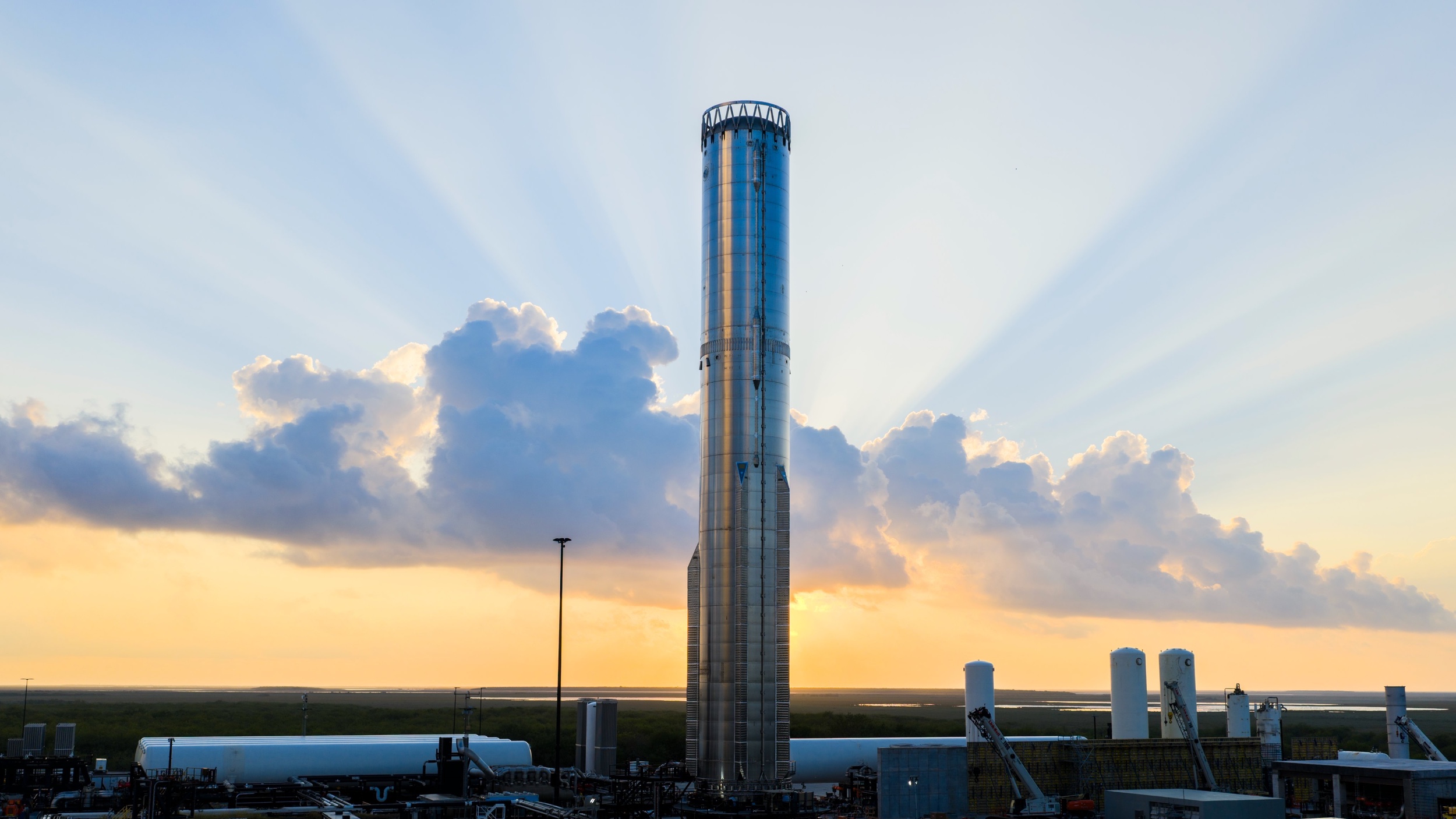
The Super Heavy booster, Booster 18, was stationed at a test site near SpaceX’s Starbase facility in Texas during the early morning hours when the incident occurred. According to independent video footage, the lower section of the booster appeared to burst, resulting in visible ruptures in the structure. Despite this, the booster remained upright, indicating that the damage, while significant, did not lead to a complete collapse.
SpaceX, in a statement released later that day, confirmed that Booster 18 encountered an issue during gas system pressure testing. This test was a precursor to structural proof testing, which is a process intended to ensure that the booster can withstand the pressures and loads it will face during actual launches. Unlike a previous incident in June, where a Starship upper stage exploded during preparations for a static-fire test, this test did not involve loading propellant or installing engines. The focus was solely on verifying the structural integrity of the booster under pressure.
The company emphasized that no personnel were injured during the incident and noted that they require additional time to investigate the root cause of the anomaly. This cautious approach underscores the complexity and challenges involved in developing such an advanced spacecraft.
Booster 18 is the first Super Heavy booster constructed for Version 3 of the Starship program. This version incorporates several upgrades and modifications compared to its predecessor, Version 2. Notable changes include an enhanced fuel transfer line, similar in size to that used in the Falcon 9 booster, and the introduction of an integrated hot-staging ring. This ring remains attached to the top of the booster, helping with the transition between different stages of flight. Additionally, the design now incorporates three grid fins instead of four, which are used for aerodynamic control during reentry, and upgraded Raptor engines for improved performance.
These upgrades are crucial for SpaceX’s broader vision of utilizing Starship for significant missions, such as launching larger Starlink satellites and supporting NASA’s Artemis lunar lander program. The Artemis program represents humanity’s return to the moon, and SpaceX’s role is pivotal in providing a lunar lander based on the Starship design.
Despite the recent setback, prior to the incident, SpaceX was optimistic about the progress of Starship Version 3. Kiko Dontchev, SpaceX’s Vice President of Launch, expressed confidence at the Economist Space Summit on November 5, stating that the company was intensely focused on preparing Version 3 for a launch early next year. Dontchev highlighted that several Starship V3 vehicles were already in production, with plans to conduct testing imminently. He was hopeful about the possibility of a launch as early as January, demonstrating a strong belief in the program’s potential.
Dontchev also acknowledged that Starship remains a development vehicle with a unique approach to testing. The philosophy at SpaceX allows for learning through testing, as long as failures do not result in harm to personnel or cause significant setbacks. He noted that all 11 integrated Starship/Super Heavy flights have been successful in the sense that each flight has provided valuable insights and data.
The incident with Booster 18 may increase pressure on NASA to reconsider its plans for the Artemis lunar landing missions. SpaceX is contracted to supply a Starship-based lunar lander for the Artemis 3 mission, which is officially scheduled for 2027. However, even before this recent issue, it was apparent that SpaceX was behind schedule, potentially by several years.
In light of these delays, NASA Acting Administrator Sean Duffy announced on October 20 that the Artemis 3 lander contract would be opened to competition. NASA is seeking accelerated plans from both SpaceX and Blue Origin, the latter of which holds a lander contract for Artemis 5. This move signifies NASA’s commitment to ensuring the success and timeliness of its lunar missions, even if it means considering alternative options.
SpaceX, in response, stated on October 30 that it had proposed a "simplified" architecture for the Artemis 3 mission to NASA. This approach aims to expedite the schedule, although specific technical details have not been disclosed. SpaceX argues that despite the delays, Starship remains the fastest route for returning humans to the lunar surface, showcasing the company’s confidence in its capabilities.
Looking ahead, SpaceX has outlined its next major milestones for Starship Version 3. These include placing one Starship vehicle in orbit for extended testing, followed by a launch of another vehicle to dock with it. This docking would demonstrate in-space propellant transfer, a critical technology for the overall Starship architecture. SpaceX has indicated that the timing of these tests will depend on the progress of upcoming flight tests debuting the new Starship V3 architecture, with both tests targeted for 2026.
In conclusion, the recent incident with Booster 18 highlights the challenges and complexities of developing cutting-edge space technology. While it has introduced uncertainties into SpaceX’s timeline, the company’s commitment to innovation and learning from each test remains steadfast. As SpaceX continues to refine and advance the Starship program, the world watches with anticipation for the next steps in this ambitious journey to the stars.
For those interested in more details, you can read the original report here.
For more Information, Refer to this article.