




















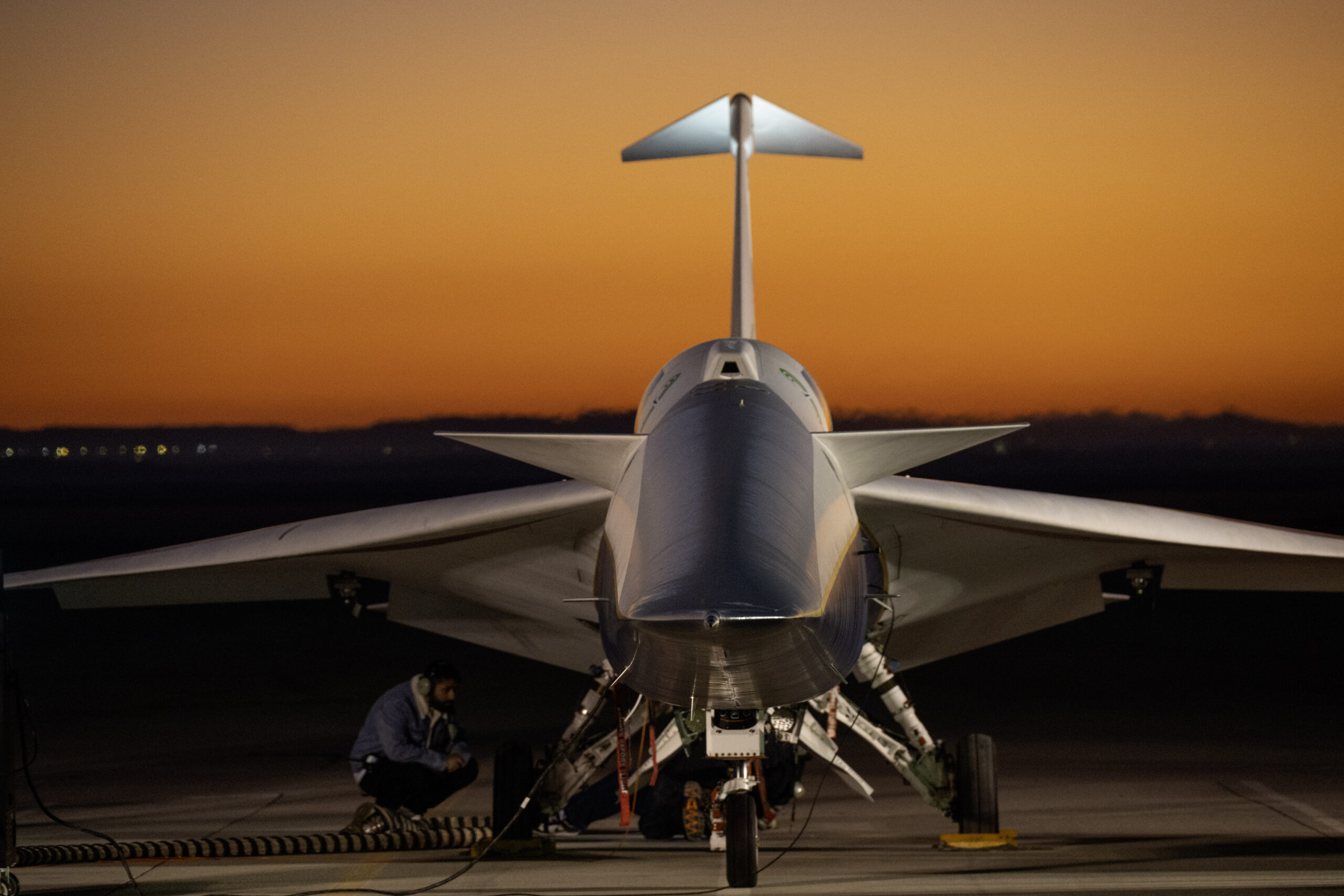
NASA’s X-59 experimental aircraft is gearing up for its second flight, which marks a significant step towards more extensive flight testing in 2026.
In the upcoming months, NASA will be pushing the boundaries of the quiet supersonic jet, aiming to increase its speed and altitude while ensuring safety and performance. This process, known as envelope expansion, is crucial for testing the capabilities of the aircraft.
The second flight of the X-59 will be piloted by NASA test pilot Jim “Clue” Less, who will take off and land at Edwards Air Force Base in California. Less expressed his focus on completing the test cards accurately during the flight, emphasizing the importance of getting the job done right.
Accompanying Less will be NASA test pilot Nils Larson, who will be flying a NASA F/A-18 aircraft to observe the X-59 during the flight. Larson was also the pilot for the X-59’s maiden flight on October 28, 2025.
Following the first flight, NASA and Lockheed Martin, the contractor for the X-59, conducted thorough post-flight maintenance and inspections. This involved the removal and reinstallation of various components, including the engine, tail section, seat, and multiple panels to ensure the aircraft’s airworthiness.
The team recently completed one of the final ground tests before the second flight, which involved firing up the X-59’s modified F-18 Super Hornet F414-GE-100 engine. This milestone marked a significant moment for the team, highlighting the progress made in preparing the aircraft for flight.
The upcoming second flight of the X-59 signifies a crucial step towards envelope expansion tests, where the team will closely monitor the aircraft’s performance. This phase will involve gradually increasing the speed and altitude of the aircraft to meet its mission parameters of flying at approximately 925 mph, or Mach 1.4, at 55,000 feet.
The ultimate goal of the X-59 is to support NASA’s Quesst mission, which aims to revolutionize commercial supersonic flight over land by reducing the loud sonic boom to a quieter thump. Envelope expansion is just the first phase of Quesst, with Phase 2 focusing on validating the X-59’s acoustic performance and studying how its design mitigates sonic boom formation.
Once the acoustics validation is complete, NASA plans to fly the X-59 over selected U.S. communities to gather data on how the quieter sound signature is perceived on the ground. This data will be shared with both U.S. and international regulators to support the future of supersonic flight.
As the X-59 continues its journey towards supersonic flight, the team remains focused on achieving the mission objectives while ensuring the safety and performance of the aircraft. Each flight brings the project closer to realizing the vision of quiet, commercial supersonic travel, paving the way for a new era in aviation.
For more Information, Refer to this article.