





















SpaceX Falcon 9 Launches 21 Satellites for U.S. Space Force’s Space Development Agency
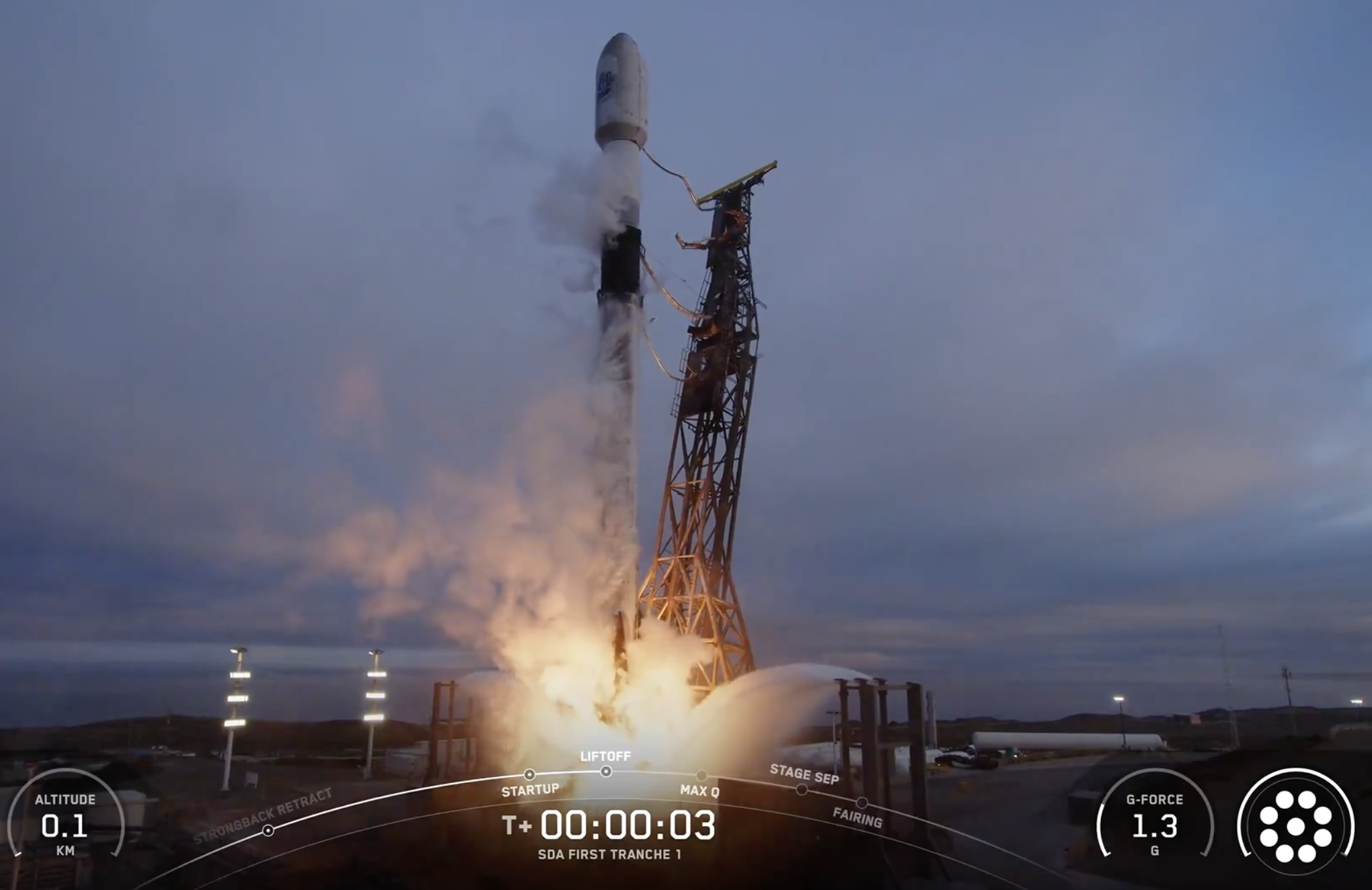
In an important stride towards enhancing satellite communication for military applications, SpaceX’s Falcon 9 rocket successfully launched 21 satellites into low Earth orbit on September 10. This launch was specifically undertaken for the U.S. Space Force’s Space Development Agency (SDA). These satellites represent the initial deployment of a larger network initiative called the Transport Layer, which is part of a broader strategy named the Proliferated Warfighter Space Architecture (PWSA).
The launch took place at 10:12 a.m. Eastern Time, from the Vandenberg Space Force Base in California. This mission is a cornerstone for the SDA, marking the beginning of an ambitious plan to establish a global network of satellites designed for data transport and advanced sensor capabilities.
Understanding the Transport Layer
The Transport Layer is a critical component in the SDA’s vision for a robust, global satellite mesh network. It is engineered to offer beyond line-of-sight communication capabilities, which are essential for connecting military forces around the world. A significant goal of this layer is to advance the U.S. military’s primary battlefield communication system, known as Link 16. Traditionally, Link 16 radios have a limited range of a few hundred miles. However, with the Transport Layer, it becomes possible to relay secure, real-time messages worldwide using satellite links. This development significantly boosts connectivity for military operations on land, at sea, and in the air.
The first beneficiaries of this enhanced communication system will be the U.S. Indo-Pacific Command forces. These forces operate in the expansive Pacific theater, where improved data connectivity and continuous coverage are crucial for strategic operations and decision-making.
Construction and Technical Specifications
The 21 satellites launched in this mission were constructed by York Space Systems. In February 2022, York Space Systems secured a $382 million contract to build these satellites. Additionally, Lockheed Martin and Northrop Grumman are also involved in supplying transport satellites for future Tranche 1 launches.
One of the standout features of these Transport Layer satellites is their optical inter-satellite communication terminals, provided by Tesat-Spacecom. These terminals facilitate high-speed, low-latency data exchanges across the network. Essentially, this means that data can be transmitted quickly and efficiently between satellites, minimizing delays and enhancing the quality of communication.
Strategic Deployment: The First of Ten Planes
The launch of these 21 satellites signifies the first of ten "planes" within Tranche 1 of the PWSA constellation. In satellite terminology, a plane refers to a set of satellites that share the same orbital path, ensuring continuous regional coverage. This particular plane operates in a polar orbit, which is advantageous because it allows coverage of every point on Earth as the planet rotates. Polar orbits are especially effective for global reach, including areas at high latitudes that equatorial orbits cannot access.
In total, completing Tranche 1 will necessitate six Transport Layer launches alongside four Tracking Layer launches. The entire Tranche 1 constellation aims to consist of 126 Transport Layer data relay satellites and 28 satellites dedicated to missile warning and tracking. These are scheduled for deployment over the next year.
A New Era for Satellite Development
Gurpartap “GP” Sandhoo, the acting director of the SDA, hailed the launch as a significant milestone. Sandhoo emphasized the importance of this achievement not only for the SDA but also for the warfighters who will benefit from the enhanced capabilities of this satellite network.
The SDA was founded in 2019 with the objective of moving away from the Pentagon’s traditional dependency on large, costly satellites. Instead, the agency is focusing on deploying networks of smaller, more resilient satellites. These are constructed using commercial components and acquired through rapid acquisition methods, which are often more cost-effective and adaptable.
The Broader Implications
The successful launch of these 21 satellites is more than just a technical achievement; it represents a shift in how military and strategic communications are approached. By utilizing a mesh network of smaller satellites, the SDA is pioneering a more flexible and resilient model of satellite technology. This approach not only enhances security and connectivity but also provides a more scalable solution for future communications needs.
Good to Know: The Role of Commercial Space Industry
The involvement of companies like SpaceX, York Space Systems, Lockheed Martin, and Northrop Grumman underscores the growing role of the commercial space industry in supporting government and military projects. By leveraging the expertise and innovation of these companies, the SDA is able to implement cutting-edge technology more swiftly and efficiently than traditional methods might allow.
Future Prospects and Considerations
As the SDA continues to roll out the Tranche 1 constellation, it will be important to monitor how these developments impact military operations and strategic communications. The potential for improved global connectivity could transform various aspects of military strategy, making operations more agile and responsive.
Moreover, the technological advancements realized through this program may also have civilian applications, potentially benefiting global communication networks in the future. This dual-use potential is a testament to the innovative spirit driving today’s space endeavors.
Conclusion
The successful launch of the first 21 satellites for the SDA’s Transport Layer marks a significant milestone in the evolution of military communications. As these satellites begin to enhance global connectivity, they pave the way for a new era of strategic operations characterized by speed, security, and resilience. The collaboration between governmental agencies and commercial entities in this mission highlights the dynamic nature of modern space exploration and its far-reaching implications.
For more Information, Refer to this article.