












![[Video] Samsung Color E-Paper: A Smarter Alternative to Traditional Posters](https://www.hawkdive.com/media/samsung-tvs-and-displays-samsung-color-e-paper-samsung-vxt-digital-signage_thumb932-218x150.jpg "Samsung introduces Color E-Paper as innovative poster alternative.")








The Sun’s Surprising Surge: A New Era of Solar Activity
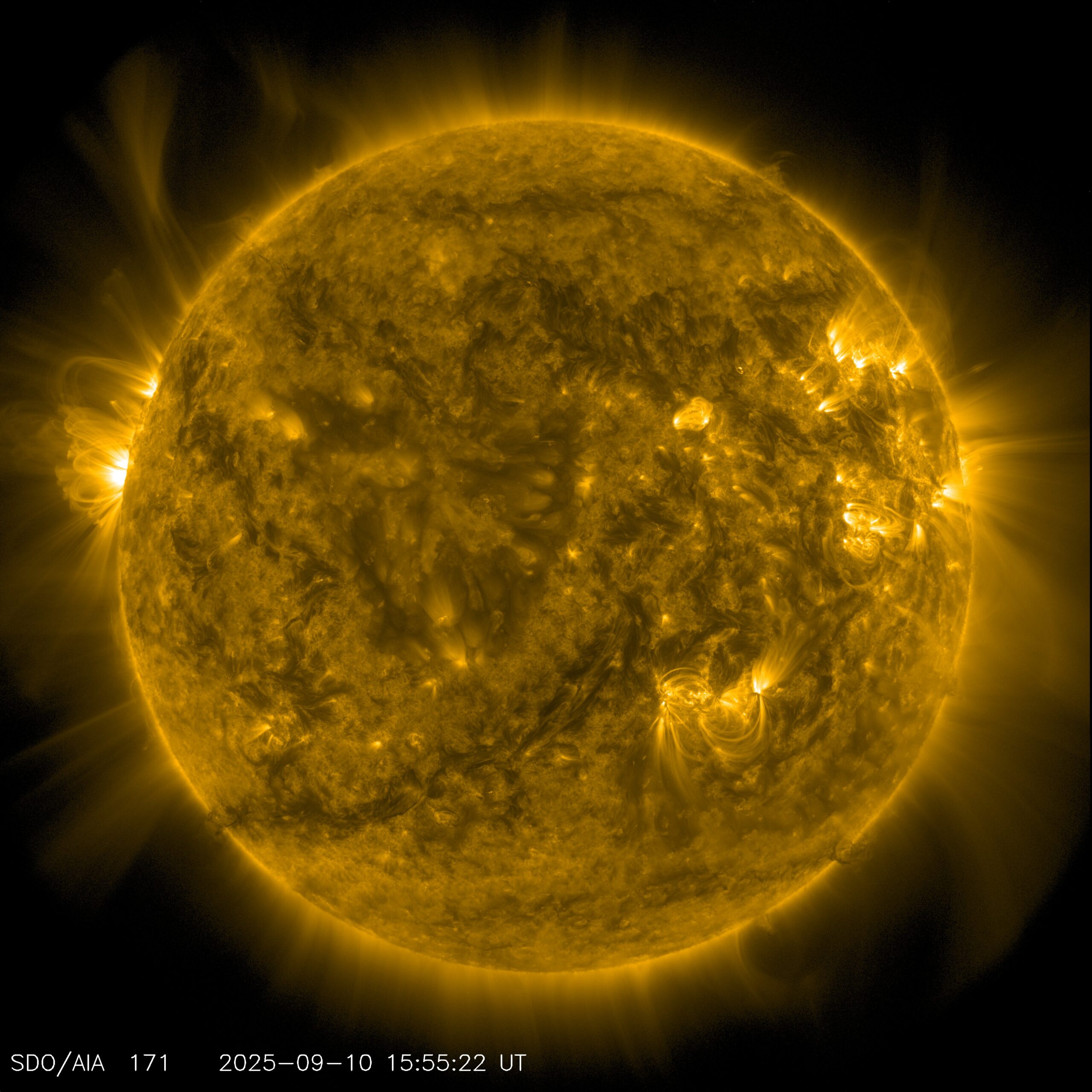
In recent years, our understanding of the Sun’s behavior has been turned on its head. A new study from NASA has revealed that the Sun, which was expected to enter a prolonged period of inactivity, has instead become increasingly active since 2008. This unexpected change marks a significant shift in solar activity, which has implications for space weather and technological systems on Earth.
A Turn in Solar Trends
Historically, the Sun’s activity fluctuates in cycles of approximately 11 years, with periods of high activity known as solar maximums and low activity known as solar minimums. However, longer-term trends can span decades. Since the 1980s, scientists observed a steady decline in solar activity, reaching a record low in 2008. At this point, many experts anticipated the onset of a historic period of solar calmness.
Contrary to these expectations, the Sun has shown a marked increase in activity. This trend reversal was detailed in a recent publication in The Astrophysical Journal Letters. Researchers suggest that this unexpected rise could lead to an increase in space weather events, such as solar storms, solar flares, and coronal mass ejections (CMEs). These phenomena can have profound effects on technology and human activity on Earth.
Understanding Solar Activity
The study of solar activity dates back to the early 1600s when astronomers like Galileo began tracking sunspots. These are cooler, darker areas on the Sun’s surface caused by intense magnetic activity. Higher numbers of sunspots are often associated with increased solar phenomena, such as flares and CMEs, which are bursts of radiation and plasma ejected from the Sun.
NASA closely monitors these events due to their potential impact on spacecraft, astronaut safety, radio communications, GPS systems, and even terrestrial power grids. As part of NASA’s Artemis campaign, understanding space weather is crucial for protecting astronauts from space radiation during missions to the Moon and Mars.
Future Space Weather Missions
To further our understanding of space weather, NASA and other agencies are launching several missions. Scheduled no earlier than September 23, the Interstellar Mapping and Acceleration Probe (IMAP) and Carruthers Geocorona Observatory will enhance our ability to study these phenomena. Additionally, the National Oceanic and Atmospheric Administration’s (NOAA) Space Weather Follow On-Lagrange 1 (SWFO-L1) mission will provide critical data to support future lunar and Martian endeavors.
These missions aim to deepen our knowledge of the solar wind, a stream of charged particles emitted by the Sun. The solar wind influences the magnetic fields of planets across the solar system, affecting the protective magnetospheres that shield planets with magnetic cores, like Earth, from solar plasma.
Historical Context and Recent Discoveries
The Sun’s behavior has puzzled scientists for centuries. Notably, two periods of low activity occurred from 1645 to 1715 and 1790 to 1830. These extended solar minimums are still not fully understood. As Jamie Jasinski of NASA’s Jet Propulsion Laboratory explains, "The longer-term trends are a lot less predictable and are something we don’t completely understand yet."
In the years leading up to 2008, sunspots and solar wind activity decreased significantly, leading researchers to expect a prolonged solar minimum. However, since then, solar parameters have been steadily rising. This analysis, led by Jasinski, utilized data from NASA’s OMNIWeb Plus, a platform maintained by the Goddard Space Flight Center.
The data for this study came from a variety of NASA missions, including the Advanced Composition Explorer (ACE) and the Wind mission. These spacecraft, part of NASA’s Heliophysics Division, have been collecting data on solar activity for decades, helping scientists understand the Sun’s influence on space and planetary environments.
Implications and Future Directions
The unexpected increase in solar activity has significant implications for our understanding of the Sun and its impact on the solar system. This shift in activity could affect technological systems on Earth and require adjustments in space mission planning.
As we continue to unravel the mysteries of solar behavior, collaboration between space agencies and the development of advanced monitoring missions will be crucial. By enhancing our ability to predict and respond to space weather events, we can better protect both our technology and the safety of astronauts venturing into space.
For those interested in exploring the detailed findings of this study, the full research is available in The Astrophysical Journal Letters. This ongoing research exemplifies the dynamic nature of our solar system, and the continuous efforts to understand it will undoubtedly lead to further discoveries in the years to come.
For more Information, Refer to this article.