















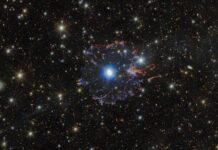






On March 3, 2026, a stunning image was created by combining data from ESA’s Euclid and NASA’s Hubble Space Telescope, showcasing the intricate beauty of the Cat’s Eye Nebula, also known as NGC 6543. This planetary nebula, located 4,400 light-years away in the constellation Draco, has long fascinated astronomers with its complex structure.
The Cat’s Eye Nebula is a result of a dying star shedding its outer layers, creating a mesmerizing display of gas and dust swirling in space. Astronomers have been studying this celestial wonder for years, trying to unravel its secrets and understand the processes at play.
By combining observations from both the Euclid and Hubble telescopes, scientists have gained new insights into the Cat’s Eye Nebula. The high-resolution images captured by these powerful instruments have revealed intricate details of the nebula’s structure, providing valuable data for further analysis.
One of the most striking features of the Cat’s Eye Nebula is its multilayered composition, with concentric rings of material expanding outward from the central star. These rings are thought to be the result of complex interactions between the dying star and the surrounding interstellar medium.
The Cat’s Eye Nebula serves as a reminder of the beauty and complexity of the universe, offering a glimpse into the life cycle of stars and the processes that shape our cosmic environment. By studying objects like the Cat’s Eye Nebula, scientists can gain a better understanding of the mechanisms that drive stellar evolution and the formation of planetary nebulae.
This latest image, created through the collaboration of ESA’s Euclid and NASA’s Hubble Space Telescope, highlights the importance of combining data from multiple sources to gain a comprehensive view of celestial objects. By leveraging the capabilities of different telescopes and instruments, astronomers can piece together a more complete picture of the universe and unlock its mysteries.
As technology advances and new observational techniques are developed, we can expect to uncover even more secrets hidden within the depths of space. The Cat’s Eye Nebula is just one example of the wonders waiting to be discovered, reminding us of the endless possibilities for exploration and discovery in the vast expanse of the cosmos.
In conclusion, the collaboration between ESA’s Euclid and NASA’s Hubble Space Telescope has provided a unique and detailed look at the Cat’s Eye Nebula, shedding light on its intricate structure and captivating beauty. This cosmic gem continues to inspire awe and curiosity among astronomers, serving as a testament to the wonders of the universe and the endless possibilities for exploration that lie beyond.
For more Information, Refer to this article.