
















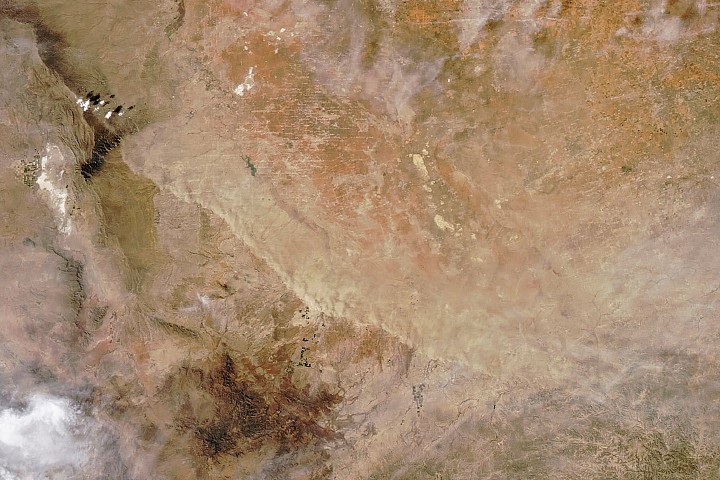
On March 15, 2026, West Texas and the state’s Panhandle experienced hazardous weather conditions due to a strong cold front moving across the region. The cold front brought strong winds that stirred up a massive dust storm, reducing visibility and creating dangerous travel conditions. Additionally, the dry conditions and high winds increased the risk of wildland fires in the area.
NASA’s MODIS (Moderate Resolution Imaging Spectroradiometer) on the Aqua satellite captured images of the blowing dust as it moved across Texas. The images showed the wall of dust traveling across the region, impacting visibility and causing chaos on the roads. A video captured by a storm chaser showcased the plummeting visibility as the dust storm passed through, contributing to a multivehicle crash in North Texas.
The National Weather Service issued a Red Flag Warning for March 15 due to the combination of high winds, low humidity, and dry fuels, further increasing the risk of wildfires. Several wildfires ignited in the Panhandle, leading to evacuations in the area.
The weather conditions drastically changed as the cold front passed through. Temperatures in Pecos, Texas, dropped from a high of 88 degrees Fahrenheit to a low of 39 degrees Fahrenheit within hours. Sustained winds of about 25 miles per hour with gusts up to 40 miles per hour were recorded in Pecos, while stations in the Panhandle reported gusts exceeding 60 miles per hour.
The region has been experiencing moderate to severe drought, as indicated by the U.S. Drought Monitor. Dust storms are common in the area during this time of year, but the lack of rain has dried out the land, making it more susceptible to such events.
It is essential for residents in the affected areas to stay informed about weather alerts and warnings to ensure their safety during extreme weather conditions. By following guidelines from local authorities and being prepared for emergencies, individuals can mitigate the risks associated with dust storms and wildfires.
Overall, the Ides of March brought challenging weather conditions to West Texas and the Panhandle, highlighting the importance of being vigilant and prepared for such natural phenomena. Stay tuned for further updates on weather patterns and safety measures in the region.
For more information, you can refer to the following sources:
– Amarillo Globe-News (2026, March 16) Video of wildfires, dust storms forcing evacuations in Texas Panhandle.
– NASA Earth Observatory (2025, March 6) Storm Brings a Potpourri of Hazards to the U.S.
– NASA Earthdata (2026) Dust/Ash/Smoke.
– National Weather Service, Dust Storms and Haboobs.
– National Weather Service, via Iowa Environmental Mesonet (2026, March 14) Urgent – Weather Message.
– Texas Storm Chasers (2026, March 13) Texas Weather Roundup: Dangerous Fire Weather, Damaging Winds & Sharp Cold Front Sunday.
By staying informed and prepared, individuals can navigate through challenging weather conditions with caution and safety in mind.
For more Information, Refer to this article.