


























Falcon 9’s Impressive Launch: A Detailed Look into the Transporter-15 Mission
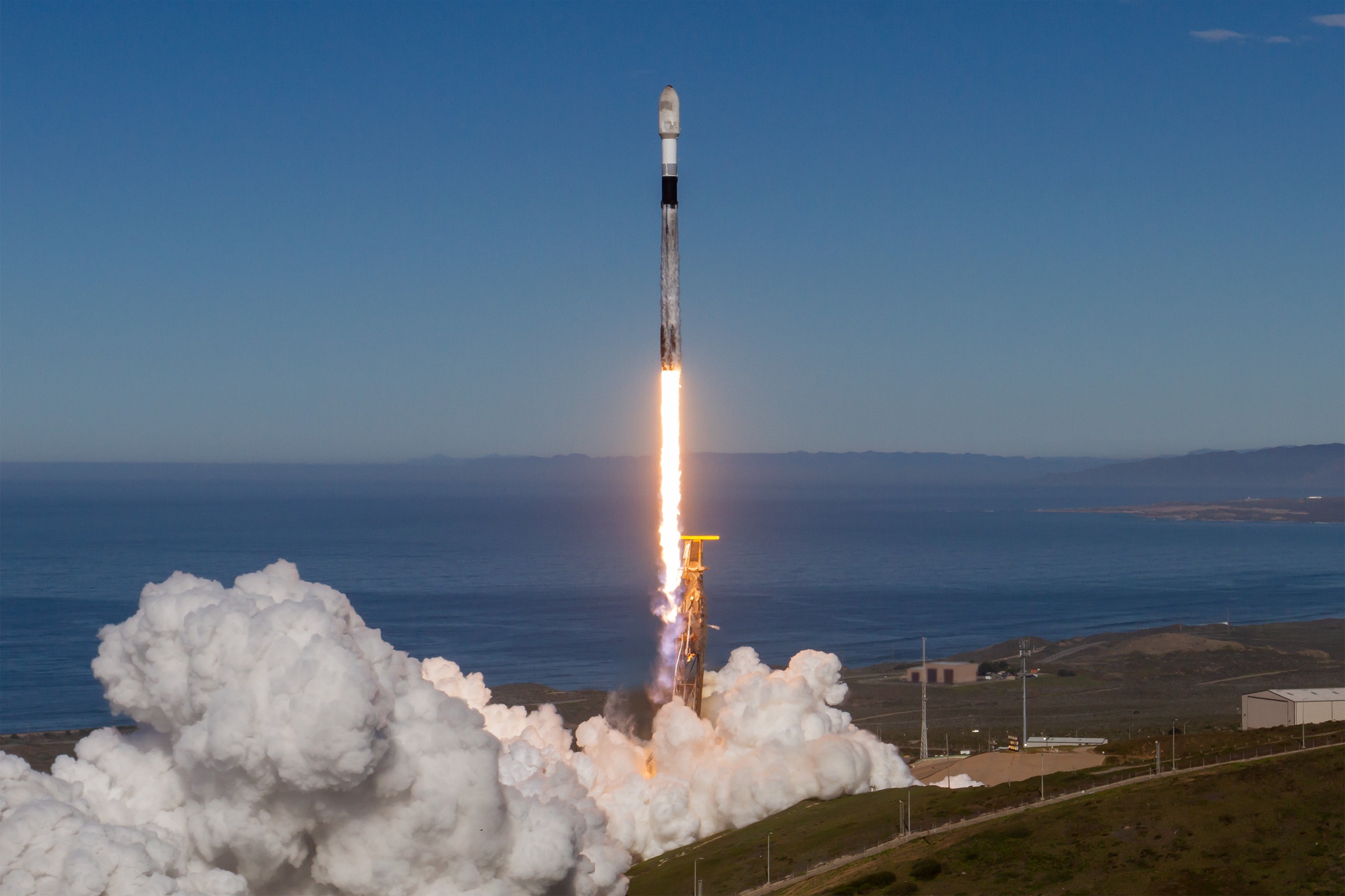
Space exploration continues to capture human imagination as technological advancements make it more accessible. Recently, SpaceX’s Falcon 9 rocket launched an astounding 140 payloads during its latest dedicated rideshare mission, dubbed Transporter-15, on November 28th. This mission included a diverse array of payloads, ranging from European government satellites to private astronomy instruments, showcasing the increasing demand for space missions and the versatility of modern aerospace technology.
A Successful Launch from Vandenberg
The Falcon 9 rocket lifted off from Vandenberg Space Force Base in California at precisely 1:44 p.m. Eastern Time. The Transporter-15 mission saw the deployment of its payloads begin approximately 55 minutes after the liftoff. The entire process of releasing the satellites extended nearly 2 hours and 45 minutes post-launch, marking another milestone in SpaceX’s impressive track record of successful missions.
Challenges Overcome
The mission was initially slated for an earlier launch but encountered delays due to temporary restrictions imposed by the Federal Aviation Administration (FAA). These restrictions were a result of a government shutdown, which affected the scheduling of commercial space launches. Once these restrictions were lifted, the mission faced additional hurdles, including a scrubbed launch attempt on November 26th. Despite these challenges, the successful execution of the mission underscores SpaceX’s resilience and adaptability in managing complex aerospace operations.
Payload Diversity and Customer Base
The Transporter-15 mission carried 140 payloads, making it the second most payload-laden mission by SpaceX. The only mission surpassing this was the inaugural Transporter-1 mission in January 2021, which carried 143 payloads. The variety of payloads highlights the sustained and growing demand for SpaceX’s rideshare services, which offer an efficient and cost-effective solution for launching multiple satellites into space.
The mission featured a mix of new and returning customers. Planet, a leading player in satellite imagery, was the largest single satellite operator on the flight. The company deployed 36 Dove cubesats along with two Pelican high-resolution imaging satellites. Moreover, Spire, another significant player, had 11 satellites on board, which included spacecraft for its own weather and ship-tracking constellation. Some satellites were also built for companies like GHGSat and Lacuna Space, emphasizing the collaborative nature of today’s space industry.
International Collaborations and Innovations
The mission saw significant international collaboration, with Finnish company Iceye contributing five synthetic aperture radar (SAR) imaging satellites. These included spacecraft for the Greek and Polish governments, as well as for Azalea, a project developed by BAE Systems. Notably, the group included one of Iceye’s first Gen4 satellites, capable of producing SAR imagery with a resolution of 16 centimeters. Such high-resolution imaging is critical for various applications, including environmental monitoring and defense.
Returning customers also included D-Orbit, which flew two of its ION orbital transfer vehicles, and Impulse Space, which launched its third Mira transfer vehicle. Additionally, Varda Space Industries launched its W-5 reentry vehicle. These repeat customers exemplify the trust and dependency companies have on SpaceX’s proven track record for reliability and success.
European Contributions and Advancements
Transporter-15 also carried several European government payloads, reflecting Europe’s growing interest and investment in space technology. In addition to the Iceye satellites, the mission included eight satellites for IRIDE, an Italian imaging constellation. The twin HydroGNSS satellites for the European Space Agency (ESA) were also aboard, marking the first mission under ESA’s Scout program. This initiative focuses on developing low-cost Earth observation satellites to study the water cycle using reflected navigation satellite signals, an innovative approach in monitoring Earth’s vital resources.
The launch occurred just a day after ESA member states agreed to a significant budget increase for the agency, which included funding for space transportation programs. This financial boost is intended to bolster Europe’s autonomous access to space, supporting emerging launch vehicle developers and enhancing Europe’s presence in the global space industry.
Unique Payloads and Technological Innovations
Among the unique payloads was Mauve, a commercial astronomy satellite developed by Blue Skies Space. This satellite carries a small ultraviolet telescope that astronomers will use to study stellar flares and young stars hosting exoplanets. The subscription-based model offered by Blue Skies Space allows universities and research institutes in Europe, Japan, and North America to purchase observing time on Mauve, democratizing access to space-based astronomy tools.
Additionally, the mission included three CTC-1 satellites built by Space Telecommunications Inc. These satellites are designed to test Spacecoin, a communications protocol utilizing blockchain technologies. The company plans to use these satellites to test communications both between the satellites and with the ground, aiming to develop a "decentralized satellite internet infrastructure." While details about the project’s timeline and costs remain scarce, the potential of blockchain technology in space communications presents exciting prospects for the future.
Conclusion
The Transporter-15 mission stands as a testament to how far commercial space exploration has come. With a wide range of international and commercial collaborations, innovative technologies, and a diverse array of payloads, this mission highlights the dynamic and rapidly evolving landscape of space exploration. As companies and countries continue to invest in space technology, the possibilities for scientific discovery and technological advancement are virtually limitless.
The success of the Transporter-15 mission not only underscores the growing demand for efficient space transport solutions but also sets a precedent for future collaborations and innovations in the industry. As we look to the stars, missions like these remind us of the incredible potential of human ingenuity and the exciting journey that lies ahead in our exploration of the cosmos.
For more Information, Refer to this article.






![[Interview] Inside Spatial Signage: How Samsung Brought Glasses-Free 3D Displays to Life](https://www.hawkdive.com/media/samsung-tvs-and-displays-spatial-signage-interview_thumb932-218x150.jpg "Samsung’s Glasses-Free 3D Displays: The Inside Story [Interview]")
