





















Understanding Particle Accelerators: A Comprehensive Overview
Particle accelerators are remarkable machines designed to boost the energy of particles. Despite their shared aim, these accelerators achieve their goals through different methods, each with unique features and advantages. Today, we delve into the fascinating world of particle accelerators, examining the differences between cyclotrons, linear accelerators (linacs), and synchrotrons, and exploring their varied applications in medicine, research, and industry.
Cyclotrons: Compact and Versatile Powerhouses
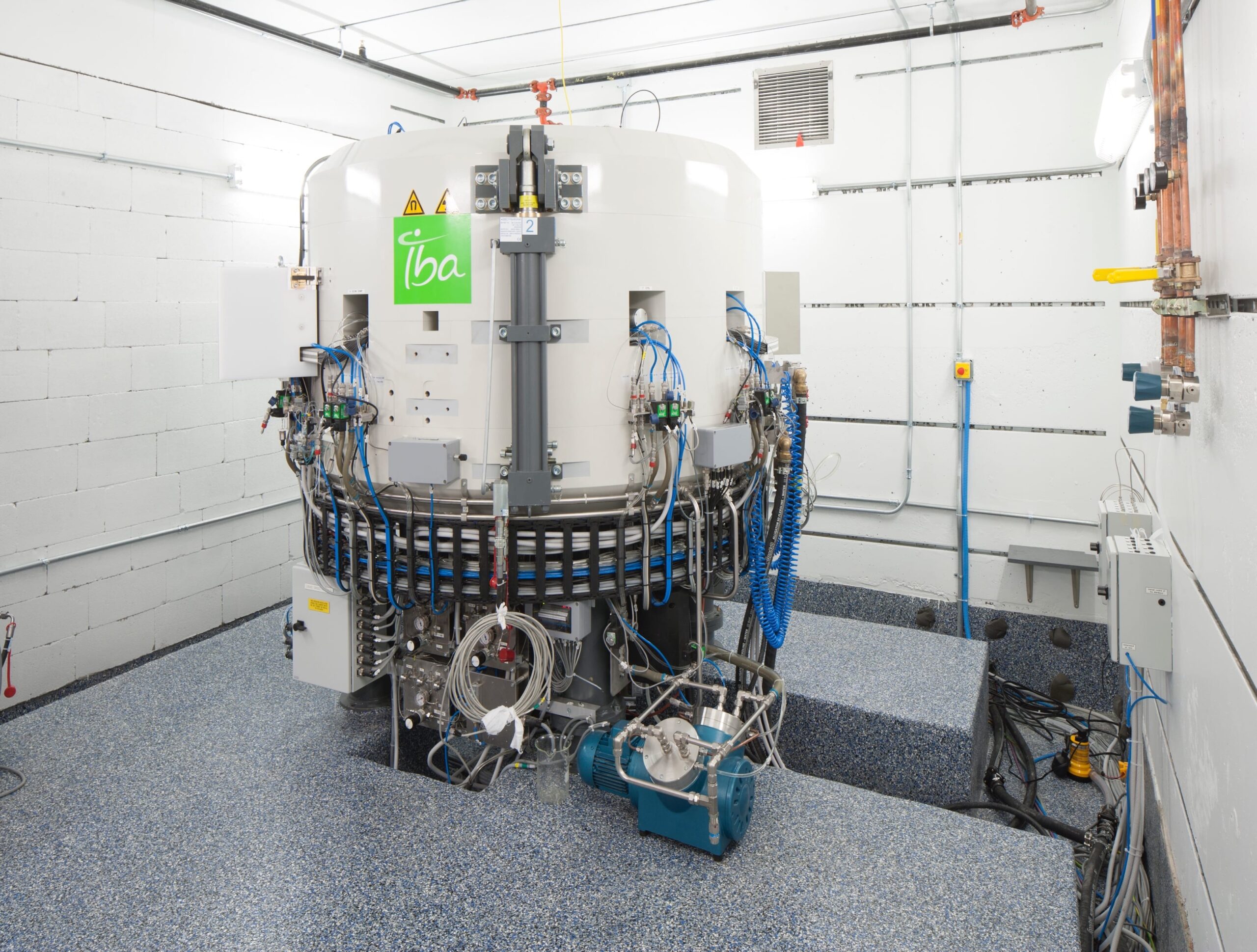
Cyclotrons are renowned for their compact design and efficient operation. These devices accelerate charged particles along a spiral path, using a combination of a constant magnetic field and an alternating electric field. The spiral trajectory is a key feature, allowing particles to gain energy continuously within a confined space. This design offers the advantage of compactness, making cyclotrons typically room-sized and more cost-effective than their larger counterparts.
One of the standout applications of cyclotrons is in the medical field. Due to their ability to produce specific radioactive isotopes, they are invaluable in medical imaging techniques like PET scans and in targeted cancer treatments. The isotopes generated by cyclotrons are used to create images of internal body structures or to deliver precise doses of radiation to destroy cancer cells.
Moreover, cyclotrons are not only limited to medical use. They are also employed in various research and industrial applications. Their smaller size allows them to be installed in hospitals and university laboratories, eliminating the need for massive facilities. This accessibility makes them a popular choice for localized applications where space and budget are constraints.
Linear Accelerators: Precision in Straight Lines
Linear accelerators, commonly known as linacs, differ significantly from cyclotrons. Instead of a spiral path, linacs propel particles in a straight line using a sequence of electric fields. This linear design can be simpler but often requires more space to achieve the same energy levels as a cyclotron. Linacs are particularly useful in medical treatments, especially in radiotherapy.
In radiotherapy, linacs generate precise beams of radiation aimed at tumors. This precision is crucial, as it allows for targeting cancer cells while minimizing damage to surrounding healthy tissue. The ability to focus radiation beams accurately is a significant advantage of linacs, making them an essential tool in modern cancer treatment facilities.
Despite their relative simplicity, linacs must be carefully designed to ensure they can achieve the necessary energy levels for effective treatment. The space requirements can be a limitation, but their effectiveness in medical applications justifies the investment in larger facilities.
Synchrotrons: The Giants of Particle Acceleration
Synchrotrons are the largest and most complex type of particle accelerators, typically found in national research centers. Like cyclotrons, synchrotrons guide particles in a circular path. However, they employ variable magnetic fields and radiofrequency acceleration, allowing them to reach extremely high energy levels.
These machines are indispensable in cutting-edge research fields such as particle physics, materials science, and drug development. The high energies achieved by synchrotrons enable scientists to probe the fundamental properties of matter, leading to groundbreaking discoveries in fundamental physics. In materials science, synchrotrons are used to study the structure of materials at the atomic level, aiding in the development of new and improved materials for various industries.
The sheer size and cost of synchrotrons mean they are typically used by national or international research organizations rather than hospitals or smaller laboratories. These facilities are often collaborative efforts, bringing together scientists from around the world to conduct experiments that require the immense capabilities of these powerful machines.
The Bigger Picture: Why Particle Accelerators Matter
Particle accelerators have a profound impact on multiple fields, from advancing our understanding of the universe to improving medical treatments and developing new technologies. Their applications extend beyond what we have explored here. For instance, they are used in the production of synchrotron light sources, which are invaluable tools in fields like biology, chemistry, and environmental science.
Moreover, the technology behind particle accelerators continues to evolve. Researchers are constantly working to develop more efficient and compact designs, making these powerful machines even more accessible. The ongoing advancements in accelerator technology promise to open new avenues for research and innovation.
For those interested in learning more about the intricacies of particle accelerators, resources such as the International Atomic Energy Agency (IAEA) provide detailed information and insights into their operation and applications. Exploring these resources can offer a deeper understanding of how particle accelerators work and their significance in the modern world.
Final Thoughts: The Future of Particle Acceleration
As we look to the future, the role of particle accelerators is poised to expand further. With the increasing demand for precision in medical treatments, the continuous pursuit of knowledge in fundamental physics, and the need for advanced materials in technology, the importance of these machines cannot be overstated.
Efforts to miniaturize and enhance accelerator technology are underway, with researchers exploring innovative approaches to make these devices more efficient and versatile. The potential for new discoveries and applications is vast, promising to shape the landscape of science and technology in the years to come.
In conclusion, particle accelerators are not just machines; they are gateways to understanding and innovation. Whether in the form of cyclotrons, linacs, or synchrotrons, these devices continue to drive progress across diverse fields, making them an essential part of our technological and scientific future. For more information on particle accelerators, their function, and applications, you can visit the International Atomic Energy Agency’s website.
For more Information, Refer to this article.