





















Screenbound: A Unique Blend of 2D and 3D Platforming
When it comes to video games, the age-old debate of 2D platformers versus 3D platformers has divided gamers for decades. But what if you didn’t have to choose between the two? That’s the question posed by Screenbound, a new game from developer Cresent Moon Games that combines elements of both styles into a single, seamless experience.
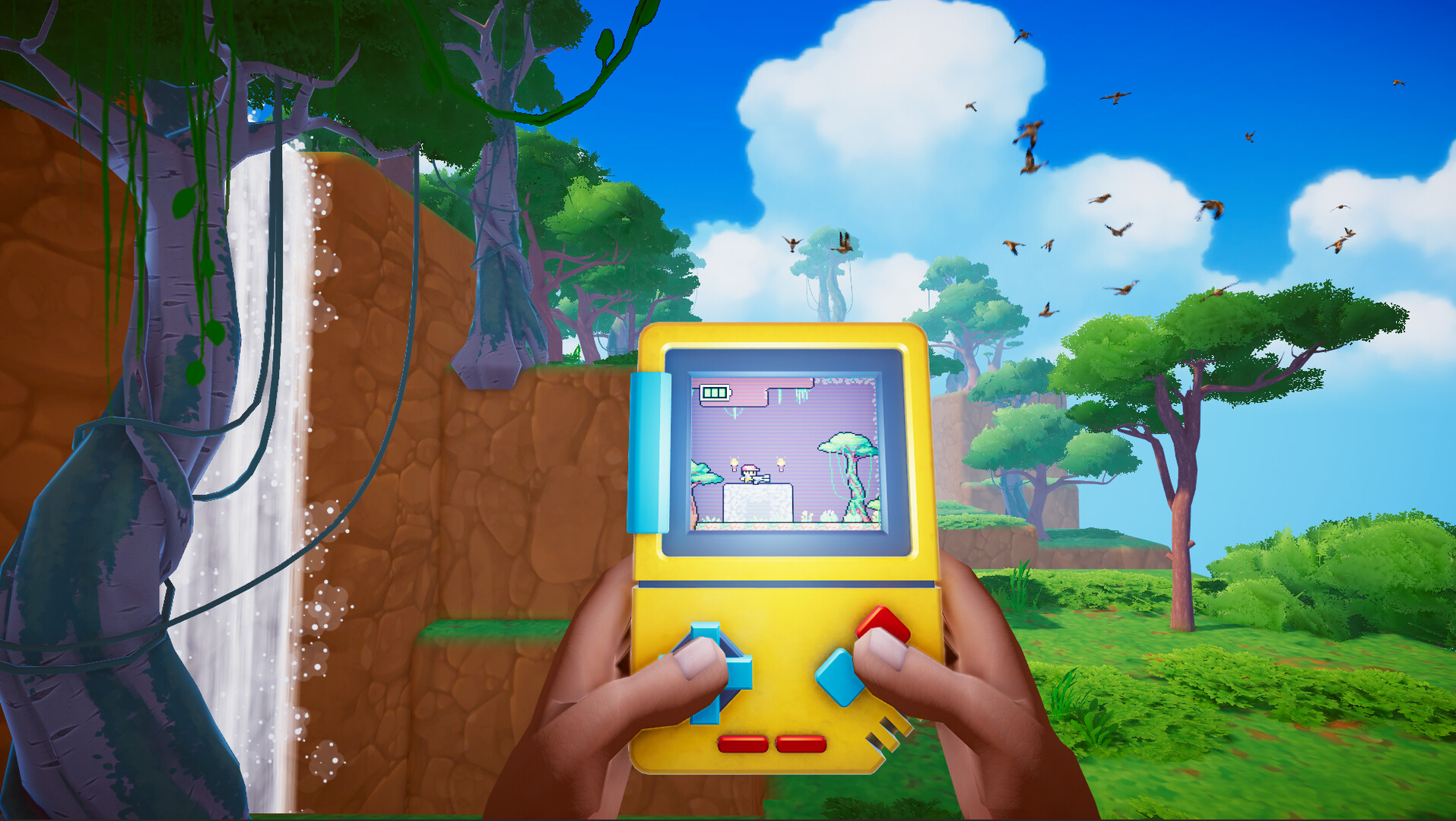
At first glance, Screenbound may seem like a traditional platformer. The game starts with your character stumbling upon a mysterious device called the “Qboy” – a gadget left behind by their mother with a note instructing them to “Find Me.” When activated, the Qboy transports the player to a classic game world filled with floating islands, a nostalgic chiptune soundtrack, and coins to collect.
But here’s where things get interesting: in Screenbound, players navigate the game world in both 2D and 3D simultaneously. While the first-person perspective offers a full view of the 3D environment, the Qboy at the bottom of the screen displays the same level in a retro 2D platformer style (or 2.5D, for the sticklers out there).
As you start playing the demo, you’ll quickly realize the unique challenges and opportunities that come with this dual perspective. Navigating through colorful 3D environments, dodging obstacles, engaging in platforming sequences, battling enemies, and uncovering secrets all become part of the experience.
What sets Screenbound apart is the seamless transition between the 2D and 3D viewpoints. While the 2D view provides a clear sense of direction and reveals hidden collectibles or pathways, the 3D view offers a broader perspective of the world. To progress through the game, players must constantly switch between both perspectives, sometimes needing to utilize elements that are only visible in one dimension to overcome obstacles in the other.
One of the game’s standout features is the “Q-view” mode, where players can merge both worlds to reveal hidden secrets in 3D based on information from the 2D view. This mechanic adds a layer of complexity to the puzzles and challenges players encounter throughout the game.
In addition to the dual perspective gameplay, Screenbound also introduces purely 2D sections behind doors and inside consoles. These areas offer platforming challenges, bonus coins, and hidden collectibles that unlock new levels and secrets within the 3D world. With each new level, players are introduced to new weapons, block types, enemies, and gameplay mechanics that keep the experience fresh and engaging.
As players progress through the game, they unlock new cartridges, hinting at the potential for Screenbound to evolve into different styles and genres while staying true to its roots in classic 2D platformers. The possibilities for where Cresent Moon Games could take this concept are endless, with the potential for mind-bending puzzle-platforming experiences that pay homage to the games that inspired it.
While the blending of 2D and 3D perspectives is impressive on its own, the promise of combining entire genres within Screenbound hints at an even more ambitious and exciting future for the game. With its innovative gameplay mechanics, nostalgic aesthetics, and potential for genre-bending experiences, Screenbound is shaping up to be a must-play title for fans of platformers and puzzle games alike.
In conclusion, Screenbound represents a unique fusion of 2D and 3D platforming that challenges players to think in multiple dimensions while exploring a vibrant and nostalgic game world. With its innovative gameplay mechanics and potential for genre-bending experiences, Screenbound is poised to become a standout title in the world of indie gaming. Whether you’re a fan of classic platformers or looking for a fresh and engaging gaming experience, Screenbound offers something for everyone to enjoy.
For more Information, Refer to this article.