





















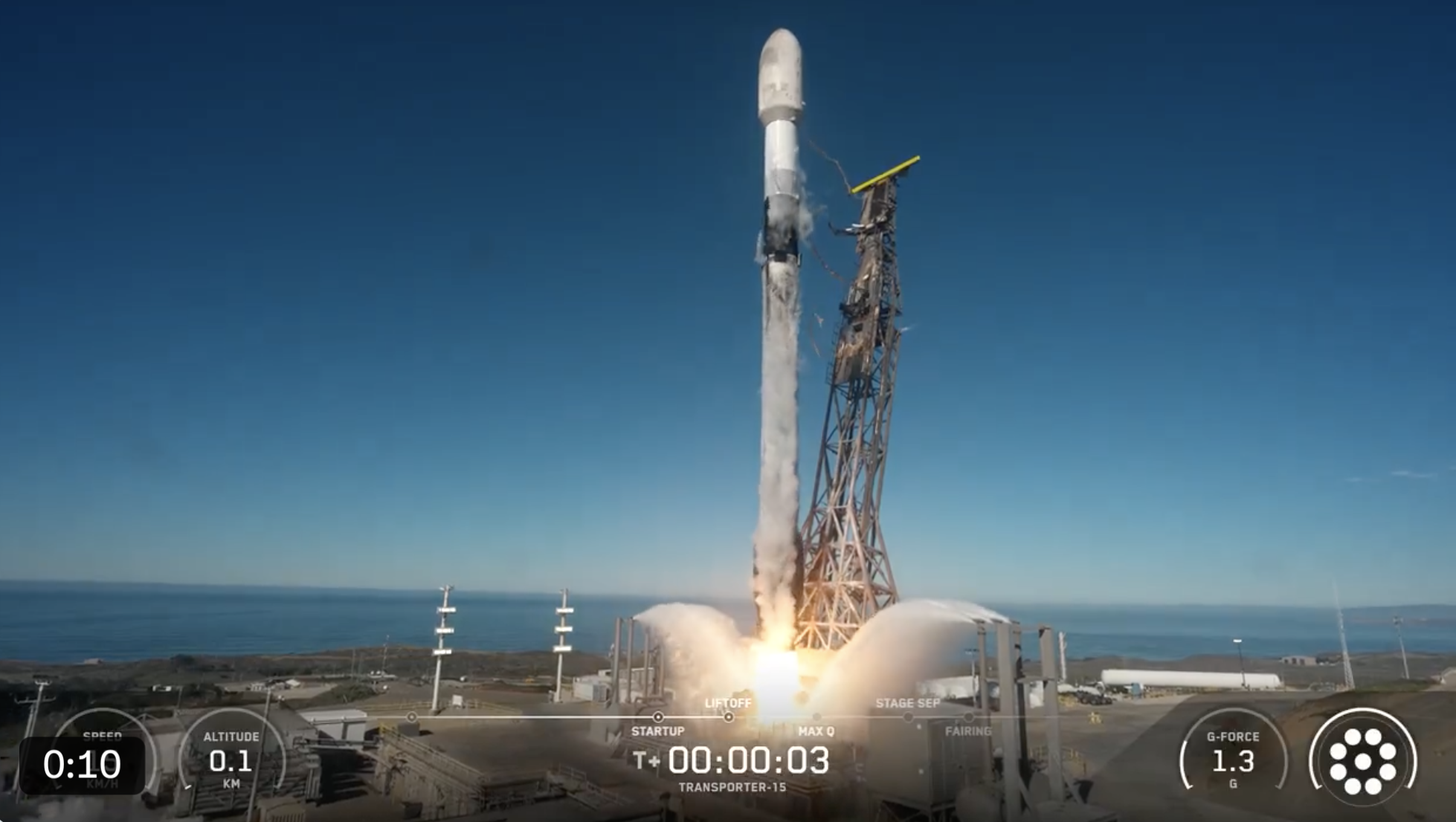
Varda Space Industries has made significant strides in the realm of space-based manufacturing with the successful launch of its fifth mission, known as W-5. This mission achieved orbit following its departure from Vandenberg Space Force Base, as part of SpaceX’s Transporter-15 rideshare program. The launch, which took place at 1:44 p.m. Eastern Time, included a total of 140 small satellites, with W-5 among them. This marks a new milestone for Varda Space Industries, a company based in El Segundo, California, that is pioneering the creation of "space factories" designed to leverage the unique conditions of microgravity for manufacturing purposes.
The Concept of Space Factories
The concept behind these space factories is both innovative and forward-thinking. In the absence of Earth’s gravitational pull, certain materials can be manufactured with enhanced properties. For instance, pharmaceuticals are known to crystallize more cleanly in space, which can potentially lead to more effective medications. The microgravity environment allows for the production of high-value products that may present challenges when manufactured on Earth.
Varda’s W-Series Vehicles
Varda’s W-5 mission is part of its "W-Series" of free-flying reentry vehicles. These spacecraft are designed to orbit Earth, conduct on-orbit processing, and return space-made materials back to the planet. With the W-5 now in orbit, Varda is operating two W-Series vehicles simultaneously for the first time, following the earlier launch of W-4 in June. This marks a significant step forward in the company’s mission to harness space for manufacturing.
Collaboration with the U.S. Government
The W-5 mission includes a payload funded by the U.S. government, specifically through the Air Force Research Laboratory’s (AFRL) Prometheus program. This initiative is focused on testing the survivability of materials and sensors at hypersonic speeds, as well as assessing their performance. AFRL has been utilizing commercial reentry systems like Varda’s to expose various components and prototype materials to the extreme thermal and mechanical loads that occur at these high velocities. During its descent, Varda’s capsule re-enters the atmosphere at speeds exceeding Mach 25, approximately 18,000 miles per hour, before deploying a parachute for a safe landing.
Previous Collaborations and Experiments
While specific details of the experiment onboard the W-5 mission have not been disclosed, Varda has a history of collaboration with AFRL. Previous missions, such as W-2 and W-3, also carried AFRL-funded tests, demonstrating the ongoing partnership between the two entities in advancing hypersonic research.
Technical Components of the W-5 Vehicle
The W-5 vehicle itself is a sophisticated piece of technology, comprising several critical components. These include:
- Hypersonic Reentry Capsule: This component is designed to withstand the intense heat and pressure of re-entering Earth’s atmosphere at hypersonic speeds.
- Satellite Bus: Serving as the backbone of the spacecraft, the satellite bus provides essential functions such as power, navigation, and propulsion.
- Ablative C-PICA Heatshield: Protecting the spacecraft during the peak heating phase of re-entry, this heatshield is a crucial element in ensuring the safety and integrity of the vehicle and its payload.
All these components are manufactured at Varda’s facility in El Segundo, showcasing the company’s capability in producing advanced space technology.
Long-term Collaboration with AFRL
In recognition of Varda’s capabilities, AFRL has awarded the company a multi-year Indefinite Delivery, Indefinite Quantity (IDIQ) contract. This agreement secures access to reentry flights through at least 2028, allowing AFRL to task Varda with flying experimental payloads, collecting reentry data, and returning hardware for analysis. This effectively transforms Varda’s commercial capsules into a repeatable hypersonic test range, offering a cost-effective solution to increase test frequency without the need for major infrastructure investments.
Implications and Future Prospects
The success of the W-5 mission, and the broader W-Series program, underscores the potential of commercial space companies like Varda to contribute to scientific and technological advancements. The ability to conduct routine hypersonic flight testing, as highlighted by Brandi Sippel, Varda’s vice president of mission management, represents a significant achievement. It opens up new possibilities for research and development in fields ranging from aerospace engineering to pharmaceuticals.
Broader Industry Impact
Varda’s achievements also reflect broader trends in the space industry, where partnerships between commercial companies and government agencies are becoming increasingly common. This collaboration not only accelerates technological innovation but also democratizes access to space, enabling a wider range of entities to participate in space exploration and research.
The Transporter-15 mission, which carried Varda’s W-5 alongside 139 other small satellites, is indicative of the growing trend of rideshare missions that make space more accessible and affordable for a diverse array of participants. This democratization of space access is likely to spur further innovation and collaboration in the industry.
Conclusion
In conclusion, Varda Space Industries’ W-5 mission represents a pivotal moment in the evolution of space-based manufacturing. By exploiting the unique properties of microgravity, Varda is at the forefront of creating new opportunities for producing high-value materials in space. With the support of the U.S. government and its own technological expertise, Varda is poised to continue making significant contributions to both the space industry and broader scientific research.
For more information on this mission and other related topics, you can visit the original source on SpaceNews: SpaceNews Article.
By continuing to push the boundaries of what is possible in space, Varda Space Industries is not only advancing technology but also paving the way for a future where space-based manufacturing becomes a standard practice, unlocking new possibilities for innovation and discovery.
For more Information, Refer to this article.