












![[Video] Samsung Color E-Paper: A Smarter Alternative to Traditional Posters](https://www.hawkdive.com/media/samsung-tvs-and-displays-samsung-color-e-paper-samsung-vxt-digital-signage_thumb932-218x150.jpg "Samsung introduces Color E-Paper as innovative poster alternative.")









Celebrating NASA’s Innovations: James Webb Telescope and Curiosity Rover in TIME’s Hall of Fame
In a significant recognition of groundbreaking technological achievements, two of NASA’s most renowned inventions have been honored by TIME magazine. The James Webb Space Telescope and the Curiosity Rover have been inducted into TIME’s "Best Inventions Hall of Fame." This accolade is part of TIME’s tradition of highlighting the 25 most impactful inventions over the past 25 years, a practice that started in 2000. These inventions are prominently featured in TIME’s December issue, underscoring their global significance.
Nicky Fox, who serves as the Associate Administrator for the Science Mission Directorate at NASA Headquarters in Washington, expressed pride in this achievement. She acknowledged the visionary efforts of NASA teams that consistently push the boundaries of what’s possible. "NASA accomplishes the impossible daily, beginning with innovative science that propels humanity further than ever before," she remarked. The acknowledgment from TIME highlights the immense contributions of the teams behind these engineering marvels. Their work has brought distant galaxies closer to human understanding and provided new insights into Mars, expanding the horizons of human achievements in space exploration.
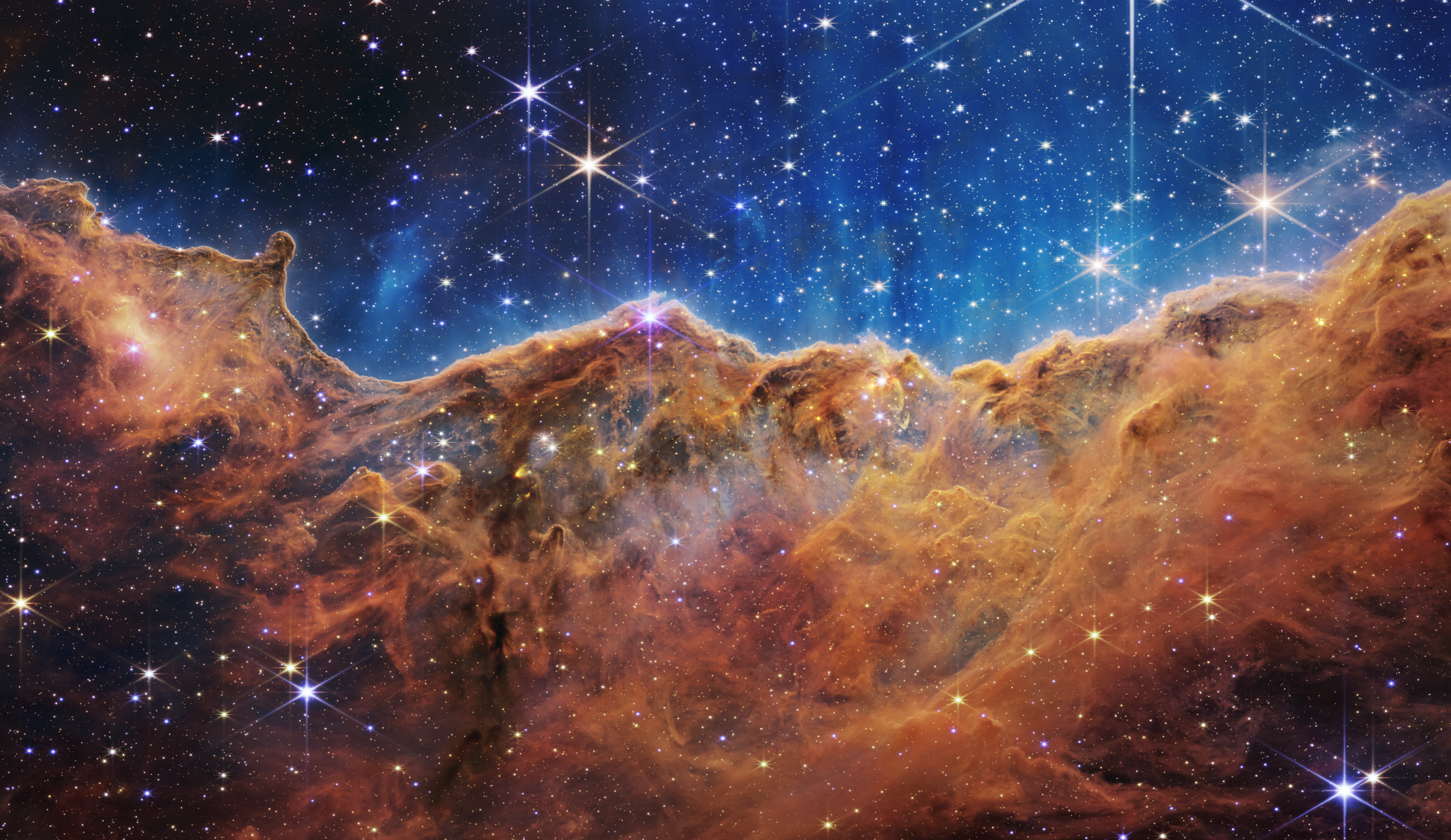
The James Webb Space Telescope, a project decades in the making, stands as the most powerful space observatory ever constructed. Positioned a million miles from Earth, it offers stunning insights into the universe, capturing images of new stars, remote galaxies, and even exoplanets. The technological advancements developed for Webb’s mission objectives, including optics and thermal control systems, have transcended their original purpose. These innovations now enhance everyday life, improving the quality and precision of products ranging from high-end cameras to advanced semiconductors and aircraft engine components.
Meanwhile, on Mars, the Curiosity Rover continues to make strides in planetary exploration. This car-sized science laboratory has spent over ten years on the Red Planet, revealing evidence that Mars could have once supported life. The findings from Curiosity have fundamentally transformed our understanding of Mars, our closest planetary neighbor. Notably, the rover has significantly contributed to future space missions. Its Radiation Assessment Detector has been studying Martian radiation for nearly 14 years, providing crucial data for future human exploration. Furthermore, Curiosity’s innovative landing technique using a robotic jetpack has paved the way for heavier spacecraft, a critical capability for transporting cargo and eventually humans to Mars.
The process of selecting inventions for TIME’s "Hall of Fame" is rigorous. TIME solicits nominations from its editors and correspondents worldwide, focusing on high-impact areas such as healthcare and technology. Each nomination is then evaluated based on originality, sustained impact, ambition, and overall influence.
The James Webb Space Telescope is heralded as the world’s premier space science observatory. Its mission is to unravel the mysteries of our solar system, explore distant exoplanets, and delve into the enigmatic structures and origins of the universe. A collaborative international effort, the Webb Telescope is led by NASA with significant contributions from the European Space Agency (ESA) and the Canadian Space Agency (CSA).
Similarly, the Curiosity Rover represents a pinnacle of engineering by NASA’s Jet Propulsion Laboratory (JPL), managed by Caltech in Pasadena, California. JPL spearheads the mission as part of NASA’s Mars Exploration Program. Curiosity’s success is a testament to the collaborative efforts in scientific exploration, providing invaluable data that continues to shape our understanding of the cosmos.
For those interested in delving deeper into NASA’s science missions, more information can be found on NASA’s official science website.
The James Webb Space Telescope: Expanding Cosmic Horizons
The James Webb Space Telescope (JWST) is not just an engineering feat; it represents a new era in space exploration. Unlike its predecessor, the Hubble Space Telescope, the Webb Telescope operates primarily in the infrared spectrum. This capability allows it to peer through cosmic dust clouds that obscure many parts of the universe, offering unprecedented views of stars and galaxies forming billions of years ago.
This observatory is equipped with a suite of advanced instruments designed to tackle some of the most profound questions in astronomy. For instance, the telescope aims to study the atmospheres of exoplanets, looking for signs of habitability and potentially life. The data it gathers helps scientists understand the formation of stars and galaxies, shedding light on the history of our universe.
The development of JWST required overcoming numerous technical challenges. Engineers had to devise a way to launch a telescope with a sunshield the size of a tennis court and a mirror capable of capturing faint light from the distant universe. The successful deployment of these components in space was a testament to human ingenuity and perseverance.
Curiosity Rover: Unveiling Mars’ Secrets
Since its dramatic landing in 2012, Curiosity has been a cornerstone of Mars exploration. Its primary mission is to assess whether Mars ever had the right environmental conditions to support small life forms called microbes. Through its comprehensive suite of scientific instruments, Curiosity has analyzed rock samples, studied the planet’s climate and geology, and sent back invaluable data to Earth.
One of the rover’s significant findings is the presence of ancient streambeds, indicating that liquid water once flowed on Mars. This discovery is crucial as it suggests that Mars might have had conditions suitable for life. Moreover, Curiosity’s ongoing research helps scientists understand the planet’s past climate changes, which in turn provides insights into the future of Earth’s environment.
The rover’s design includes a robust power source that allows it to operate in the harsh Martian environment. Its ability to traverse challenging terrain and conduct complex scientific experiments has made it an indispensable asset in the quest to understand Mars.
Reaction and Impact
The recognition by TIME underscores the global impact of these NASA missions. The James Webb Space Telescope and Curiosity Rover have not only advanced scientific knowledge but have also inspired countless individuals worldwide. Their successes illustrate the power of international collaboration and the importance of investing in scientific exploration.
These missions have redefined what is possible, pushing the boundaries of technology and human understanding. They serve as a reminder of the wonders that can be achieved when humanity unites in a common goal to explore the unknown.
As these iconic inventions continue to operate and deliver groundbreaking discoveries, they remain a source of inspiration, encouraging future generations to dream big and pursue careers in science and engineering. The legacy of the James Webb Space Telescope and Curiosity Rover will undoubtedly continue to influence and shape the future of space exploration for years to come.
For more detailed information on these and other NASA missions, you can visit NASA’s Science website.
For more Information, Refer to this article.