

















The Human Body’s Resilience in Space: Insights from NASA’s Human Research Program
Space travel is a fascinating journey that offers insights into both the universe and the human body. Spending extended periods in space, however, has distinct effects on astronauts, impacting their muscles, body fluids, and sense of balance. NASA’s Human Research Program (HRP) is dedicated to studying these changes to ensure that astronauts can thrive during long-duration missions in deep space. This program is pivotal in preparing for future missions to the Moon, Mars, and beyond.
Life in Microgravity: The Astronauts’ Routine
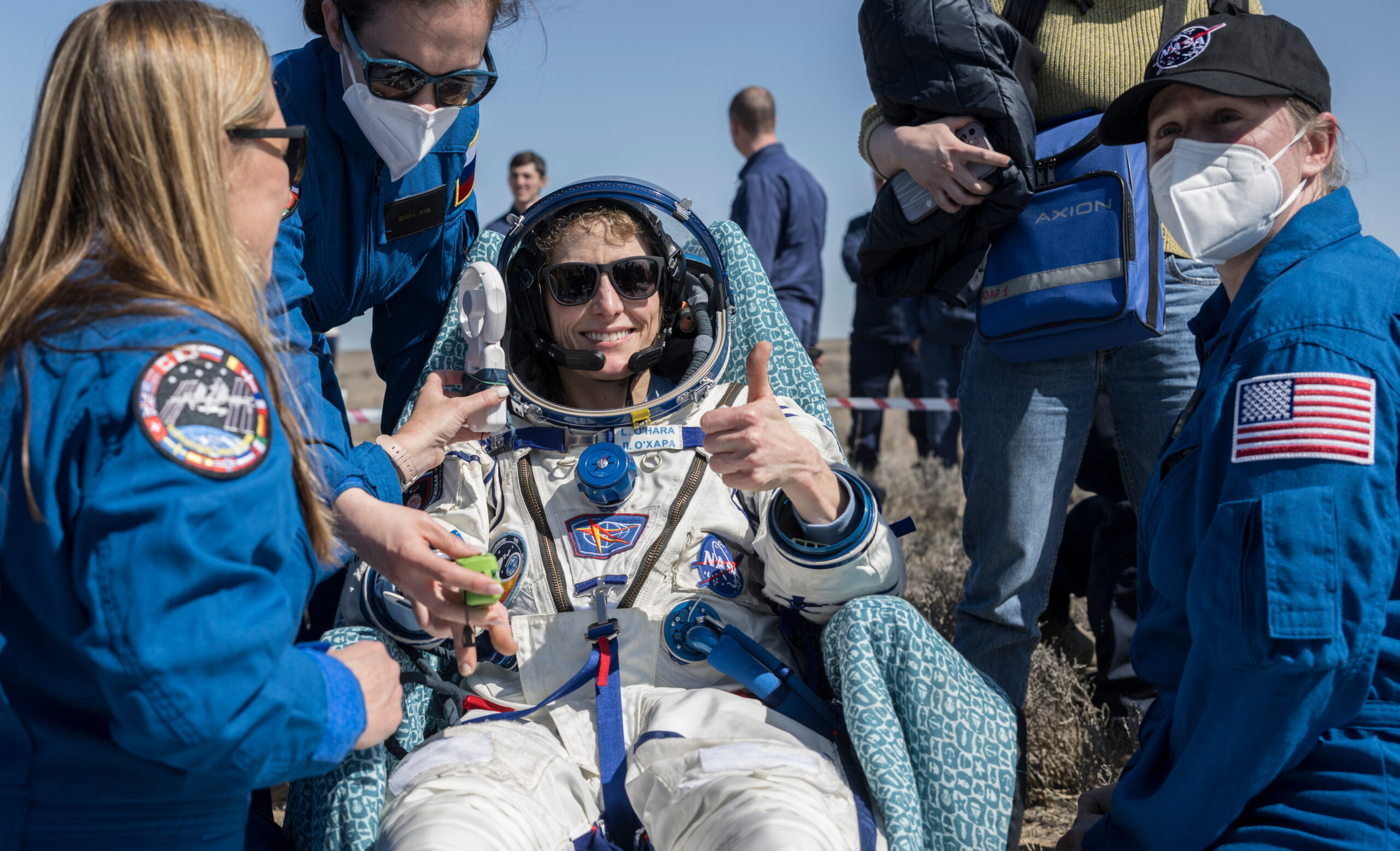
Astronauts aboard the International Space Station (ISS) undertake rigorous physical exercise to maintain their physical health. They typically exercise for about two hours each day, focusing on preserving bone density, muscle strength, and cardiovascular health. The absence of gravity in space, known as microgravity, poses unique challenges as it can make it difficult for astronauts to readapt to Earth’s gravity once they return. After months in orbit, returning astronauts often describe Earth as being surprisingly heavy, noisy, and still. While some astronauts adapt quickly, others require more time to adjust.
Reacclimating to Gravity: A Personal Journey
The crew of NASA’s SpaceX Crew-7 mission, which included NASA astronaut Jasmin Moghbeli, ESA astronaut Andreas Mogensen, JAXA astronaut Satoshi Furukawa, and Roscosmos cosmonaut Konstantin Borisov, returned to Earth in March 2024 after nearly 200 days in space. One of their initial tasks was a balance test, which involved walking with their eyes open and then closed. Mogensen noted the difficulty of walking in a straight line with his eyes closed, highlighting how space affects the brain’s reliance on visual cues for balance. Moghbeli humorously compared her attempt to a tap dance, demonstrating the challenge of readjusting to gravity.
Each astronaut experiences recovery differently. Moghbeli reported feeling wobbly for the first two days, with neck muscles strained from holding up her head. Mogensen took longer to regain coordination, while Furukawa experienced nausea when looking down. Despite these challenges, astronauts gradually regain stability and strength over time.
Insights from Veteran Astronauts
NASA astronaut Loral O’Hara, who returned in April 2024 after 204 days in space, felt back to normal within a week. Her background as an ocean engineer provided her with valuable experience in managing small teams remotely, akin to space missions. NASA astronaut Nichole Ayers noted the brain’s quick adaptation to weightlessness and its ability to readjust rapidly upon returning to Earth.
Frank Rubio, who set a record with a 371-day mission, experienced soreness in his feet and lower back due to the absence of weight for over a year but felt largely recovered within weeks. The emotional aspect of extending his mission was managed through regular video calls with family, providing crucial support.
Crew-8 astronauts faced their own challenges upon return. Matt Dominick found sitting on hard surfaces initially uncomfortable, while Jeanette Epps immediately felt Earth’s heaviness. Michael Barratt emphasized that each astronaut’s recovery is unique and contributes to NASA’s growing understanding of space travel’s effects.
The Continuous Learning Process
Even seasoned astronauts like Suni Williams and Butch Wilmore face challenges when adjusting back to gravity. Williams noted the surprising weight of things upon return, while Don Pettit, at 70 years old, described his recovery as similar to previous missions. Pettit pointed out that while regaining strength in major muscle groups is essential, retraining smaller muscles unused in space is equally important.
NASA’s Human Research Program plays a crucial role in understanding how spaceflight environments affect astronaut health and performance. By studying astronauts before, during, and after spaceflight, the program develops strategies to keep crews healthy for future missions. Earth-based analog missions simulate space conditions to refine these strategies further.
Ground-Based Research and Its Importance
To better understand the effects of microgravity, NASA conducts bedrest studies where volunteers spend 60 days in a specific position that mimics space conditions. This research, often conducted at the German Aerospace Center’s Cologne campus, helps scientists develop interventions to counteract microgravity’s effects.
Additional insights come from the Crew Health and Performance Exploration Analog (CHAPEA) and the Human Exploration Research Analog (HERA) at NASA’s Johnson Space Center. These analogs simulate remote deep space conditions on Earth, providing valuable data on how crews handle isolation and communication delays.
A Legacy of Continuous Learning
Since November 2000, NASA and its partners have supported continuous human presence in space through the ISS. This platform serves as a proving ground for research and training for future deep space missions, including NASA’s Artemis campaign and lunar exploration. As we look towards missions to Mars and beyond, the knowledge gained from these studies will be invaluable in ensuring astronaut safety and mission success.
For more information on NASA’s Human Research Program and ongoing research, visit NASA’s HRP website.
For more Information, Refer to this article.