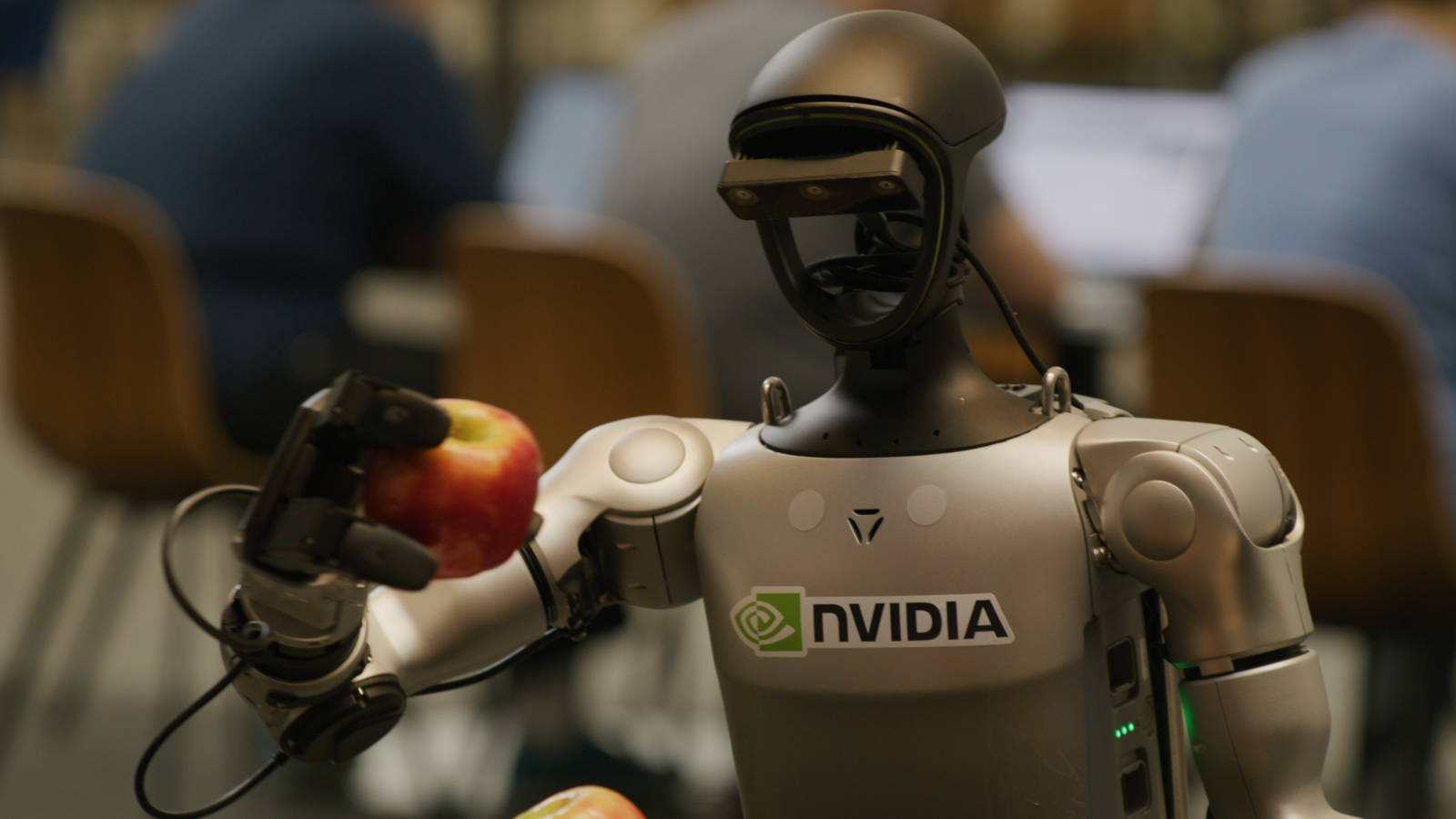
Exciting Advances in Robotics: NVIDIA’s New Developments
In a remarkable leap forward for robotics and artificial intelligence, NVIDIA has unveiled several groundbreaking technologies that promise to enhance the capabilities of robots in executing complex tasks with human-like precision and reasoning. These innovations are set to reshape the landscape of robotics research and development, driving the creation of more adaptable and efficient robots. This comprehensive overview will explore NVIDIA’s latest offerings, their potential impact, and the responses from the global robotics community.
Pioneering the Future with the Newton Physics Engine
NVIDIA has launched the open-source Newton Physics Engine, a collaborative effort with Google DeepMind and Disney Research. Now available through the NVIDIA Isaac Lab, this engine represents a significant advancement in simulating the intricate physical interactions needed for robotics development. As an open-source, GPU-accelerated tool, Newton is designed to model complex robotic actions in a simulated environment, such as navigating through difficult terrains like snow or gravel, and manipulating objects like cups and fruits. This capability is crucial for ensuring that robots can safely and reliably transition their learned skills from virtual simulations to real-world applications.
The significance of this development is underscored by its adoption by top research institutions such as ETH Zurich, the Technical University of Munich, and Peking University. These institutions are leveraging the Newton Physics Engine to push the boundaries of robotics research, promising to deliver more sophisticated and capable robots.
Enhancing Robot Intelligence with Isaac GR00T
NVIDIA’s introduction of the Isaac GR00T open foundation model marks a transformative step in developing robots that can comprehend and execute complex tasks with human-like reasoning. The GR00T model is designed to enable robots to interpret ambiguous instructions and adapt to new, unforeseen situations using a vast repository of prior knowledge and common sense. This model integrates NVIDIA Cosmos Reason, a customizable reasoning vision language model, acting as the cognitive core for robots.
Not only does Cosmos Reason enhance a robot’s ability to transform vague directives into actionable plans, but it also serves as a robust tool for generating and annotating large datasets necessary for training AI models. This capability accelerates the development of robots capable of handling a wide array of tasks, from industrial applications to everyday household chores.
Expanding Horizons with Cosmos World Foundation Models
NVIDIA’s new Cosmos World Foundation Models (WFMs) introduce a novel approach to generating diverse datasets, crucial for training physical AI models at an unprecedented scale. These models leverage text, images, and videos to create rich, synthetic data environments conducive to training AI systems. The upcoming Cosmos Predict 2.5 and Cosmos Transfer 2.5 promise to streamline the process of creating complex simulations, enabling longer video generation and photorealistic synthetic data production.
These advancements are particularly valuable for developers seeking to create robust AI systems without the prohibitive costs associated with real-world data collection and testing. By reducing the complexity and time required to develop comprehensive datasets, NVIDIA is empowering researchers and developers to innovate more efficiently.
Revolutionizing Robot Grasping Techniques
One of the perennial challenges in robotics is teaching robots to perform precise actions like grasping objects. NVIDIA’s new dexterous grasping workflow, integrated into the Isaac Lab 2.3 platform, addresses this challenge by offering a structured, curriculum-based approach to training robots. By simulating a variety of environments and conditions, this workflow helps robots develop the necessary skills to perform delicate tasks with precision.
The success of this approach is exemplified by Boston Dynamics’ Atlas robots, which have significantly enhanced their manipulation capabilities using NVIDIA’s workflow. This advancement opens new possibilities for robots to perform complex tasks in dynamic environments, ranging from industrial automation to service robotics.
Real-World Testing and Evaluation through Simulation
The path to developing skilled robots is fraught with challenges, particularly when it comes to testing new abilities. Real-world testing is not only slow and costly but also risky. NVIDIA addresses this issue with the development of the Isaac Lab – Arena, an open-source framework for evaluating robotic skills in a simulated environment. Collaborating with Lightwheel, NVIDIA aims to provide a scalable platform for comprehensive testing without the need for building complex systems from scratch.
Simulation offers a safe, cost-effective way to test robots against numerous scenarios, ensuring they are well-prepared to handle real-world complexities. This approach mitigates the risks associated with deploying untested robots in practical settings, fostering greater innovation and confidence in robotic developments.
Powering Robotics with Advanced AI Infrastructure
To support these cutting-edge developments, NVIDIA has introduced a powerful AI infrastructure tailored to meet the demanding requirements of robotics workloads. This includes the NVIDIA GB200 NVL72, a rack-scale system integrating advanced NVIDIA Grace CPUs and Blackwell GPUs. This infrastructure is designed to accelerate AI training and inference, including complex reasoning and physical AI tasks.
Additionally, the NVIDIA RTX PRO Servers and Jetson Thor provide robust platforms for various robotic development needs, from data generation to real-time, on-robot inference. These technologies ensure that developers have the necessary tools to create high-performance robots capable of intelligent interactions in real-time environments.
Global Impact and Community Reception
NVIDIA’s latest innovations have garnered significant attention and adoption from leading research institutions and robotics companies worldwide. Esteemed universities such as Stanford University and institutions like ETH Zurich are leveraging NVIDIA’s technologies to advance their robotics research, pushing the boundaries of what is possible in the field.
Moreover, leading robotics companies such as Boston Dynamics, Agility Robotics, and Techman Robot are integrating NVIDIA’s solutions into their development processes, underscoring the transformative potential of these technologies.
Conclusion
NVIDIA’s recent announcements highlight a pivotal moment in the evolution of robotics and artificial intelligence. By providing powerful tools and infrastructure, NVIDIA is empowering researchers and developers to explore new frontiers in robotics, driving the creation of robots that are more intelligent, capable, and adaptable than ever before. As these technologies continue to evolve, they promise to unlock new possibilities for automation and intelligent systems, fundamentally transforming industries and enhancing everyday life.
For further insights and updates on NVIDIA’s robotics research and developments, you can visit their dedicated page here.
For more Information, Refer to this article.