NASA’s Juno Spacecraft Unveils Stunning Images of Io’s Volcanic Landscape
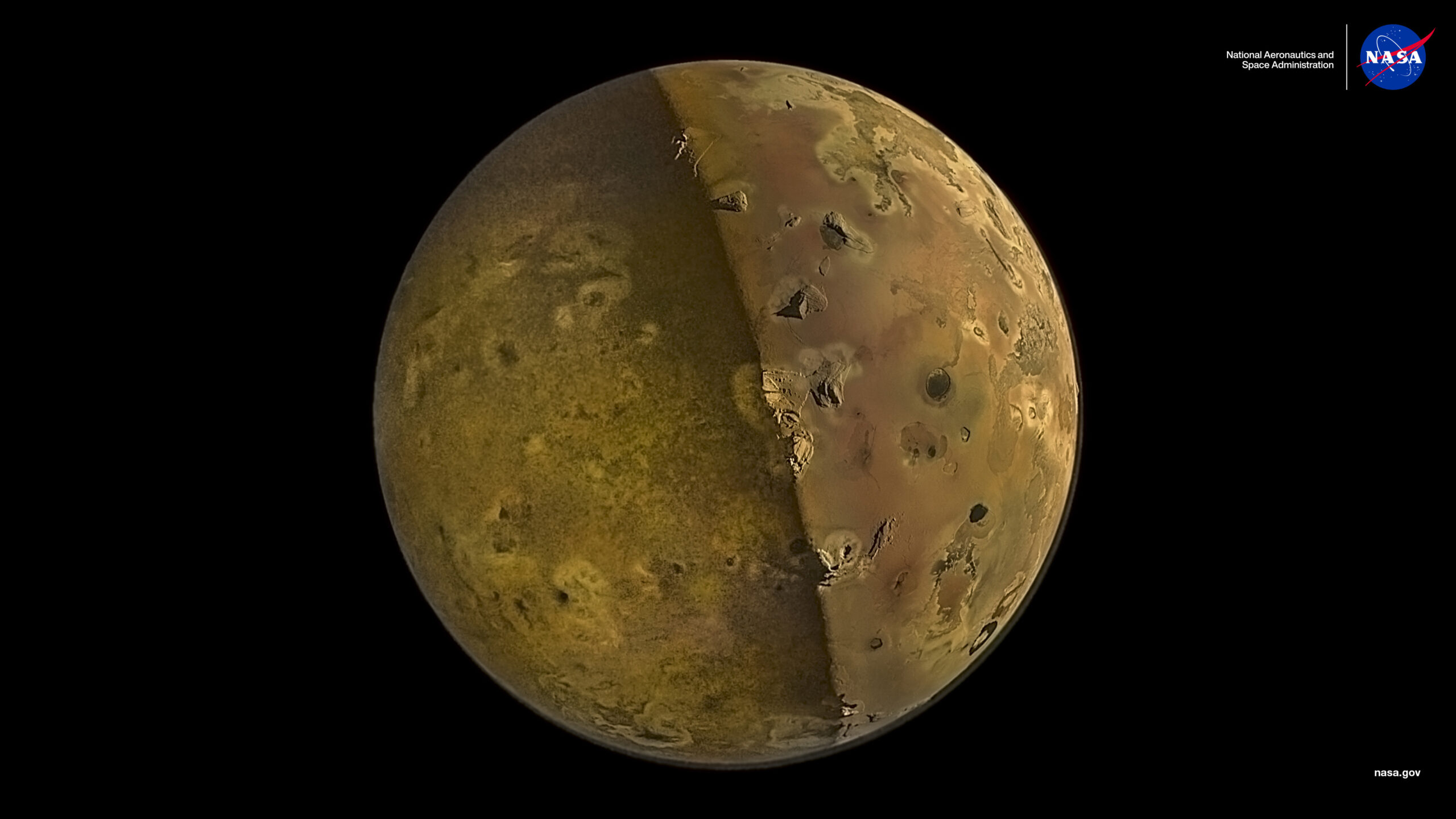
On December 30, 2023, NASA’s Juno spacecraft conducted a close flyby of Jupiter’s fascinating moon, Io, capturing some of the most detailed images ever seen of its volcanic terrain. This mission has provided scientists and space enthusiasts alike with a remarkable glimpse into the dynamic and fiery world of Io, which is renowned for being the most volcanically active body in our solar system.
Juno’s imagery was captured using the JunoCam instrument from a distance of approximately 930 miles (1,500 kilometers) above the surface of Io. One of the intriguing aspects of the captured image is the illumination of Io’s night side, known as the “left lobe,” by a phenomenon called “Jupitershine.” This occurs when sunlight reflects off Jupiter’s surface, providing a soft glow that lights up Io’s landscape even in the absence of direct sunlight.
A Closer Look at Io: The Volcanic Powerhouse
Io stands out in the solar system for its extreme volcanic activity, which is driven by the intense gravitational pull of Jupiter. This gravitational interaction causes immense tidal heating within Io, leading to frequent and powerful volcanic eruptions. These eruptions are so intense that they can propel volcanic material hundreds of miles into space.
The images captured by Juno offer an unprecedented view of the moon’s surface, revealing intricate details of its volcanic features. Scientists are particularly interested in studying these images to understand the composition of Io’s surface, the nature of its volcanic activity, and the processes that drive its geologic dynamism.
Why This Image Matters
The image taken by Juno has been recognized as the NASA Science Image of the Month for October 2025, a testament to its significance and the insights it offers into Io’s geological activity. Each month, NASA’s Science Mission Directorate selects an image that not only showcases the beauty and complexity of our universe but also sparks curiosity and encourages educational engagement. The chosen image is featured with downloadable desktop wallpapers and links to related scientific topics, activities, and educational games, making it accessible to a broad audience.
The Role of Juno in Unraveling Jupiter’s Mysteries
Launched in 2011, Juno’s primary mission is to study Jupiter, the largest planet in our solar system. However, its journey has also provided valuable data about Jupiter’s moons, including Io. By examining Io up close, Juno contributes significantly to our understanding of the moon’s volcanic activity and its interaction with Jupiter’s magnetosphere.
Juno’s mission is managed by NASA’s Jet Propulsion Laboratory (JPL) in conjunction with the Southwest Research Institute (SwRI) and Malin Space Science Systems (MSSS). The collaboration among these institutions ensures that data collected by Juno is thoroughly analyzed and interpreted, providing a wealth of information to the scientific community.
The Science Behind Jupitershine
The phenomenon of Jupitershine, where sunlight reflected off Jupiter illuminates Io’s surface, is not only a captivating visual effect but also a useful tool for scientists. It allows researchers to study Io’s surface features in conditions that would otherwise be too dark for observation. This indirect lighting can reveal details about the moon’s topography and surface composition that are not easily visible under direct sunlight.
Astronomical Community Reactions
The astronomical community and space enthusiasts have expressed great excitement over the new insights provided by Juno’s flyby. The detailed images of Io’s volcanic landscape have sparked discussions about the moon’s geological processes and the potential for future exploration missions.
Scientists are particularly interested in comparing the new data with previous observations to track changes in Io’s volcanic activity over time. This ongoing research is crucial for understanding the moon’s long-term behavior and its influence on the surrounding space environment.
Future Prospects for Io Exploration
The success of Juno’s flyby has heightened interest in future missions to Io. Scientists are eager to continue exploring this enigmatic moon to unlock more of its secrets. Potential missions could focus on direct sampling of Io’s surface or deploying landers to study its geology up close.
As technology advances, the possibilities for exploration expand, offering the potential to answer fundamental questions about the nature of Io and its role within the Jovian system. Such missions could also provide valuable insights into volcanic processes on Earth by studying a celestial body where volcanic activity is more extreme and frequent.
Conclusion
Juno’s recent flyby of Io marks a significant milestone in our exploration of the solar system. The stunning images and data collected offer a window into one of the most geologically active and intriguing bodies known to exist. As researchers analyze this new information, our understanding of Io, Jupiter, and the dynamics of our solar system will continue to grow, inspiring future generations of scientists and explorers.
For those interested in seeing the detailed images and learning more about NASA’s missions, visit the official NASA website, where you can find a wealth of resources and educational materials that bring the wonders of space closer to home.
For more Information, Refer to this article.