






























NASA and Partners Launch Sentinel-6B Satellite to Enhance Ocean and Atmospheric Monitoring
In a significant leap forward for meteorological science and oceanography, NASA, in collaboration with several international partners, has successfully launched a new satellite named Sentinel-6B. This advanced satellite, roughly the size of a full-size pickup truck, promises to deliver crucial information about the Earth’s oceans and atmosphere. This data will be pivotal in refining hurricane forecasts, safeguarding infrastructure, and boosting commercial activities such as global shipping.
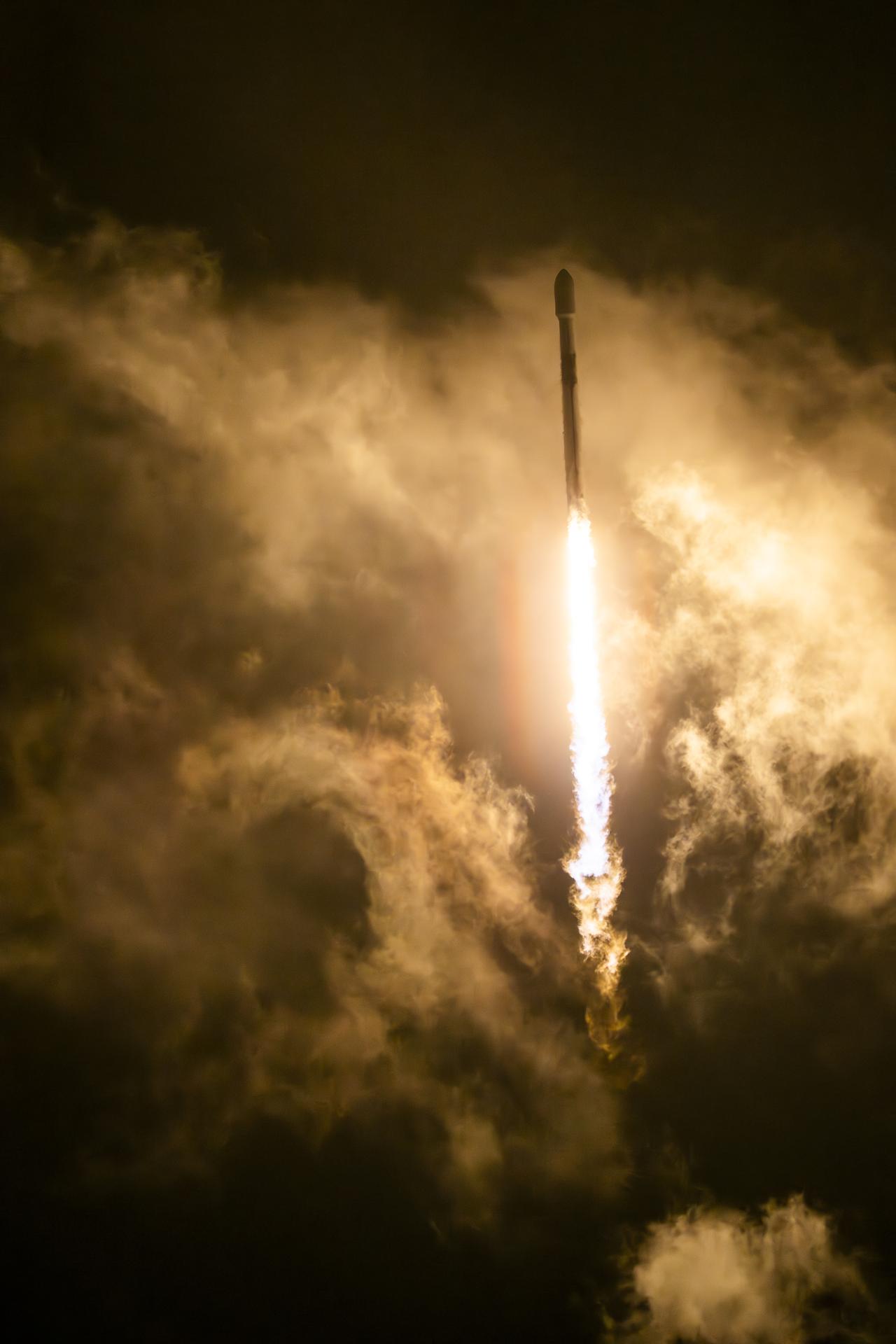
The Sentinel-6B satellite embarked on its journey aboard a SpaceX Falcon 9 rocket, launching from the Launch Complex 4 East at Vandenberg Space Force Base in central California at precisely 9:21 p.m. PST on November 16. Approximately 1 hour and 30 minutes after liftoff, the satellite successfully established contact with a ground station located in northern Canada. Fortunately, all systems were reported to be functioning optimally, marking a successful initiation of the mission.
Nicky Fox, the associate administrator of the Science Mission Directorate at NASA Headquarters in Washington, emphasized the mission’s significance. "Comprehending tidal patterns with precision is essential for managing our daily interaction with the oceans," Fox stated. "Sentinel-6B builds upon the legacy of Sentinel-6 Michael Freilich by gathering sea level measurements that enhance forecasts utilized by communities, businesses, and operations nationwide. Additionally, it will support safer reentry for astronauts, including those from the Artemis Moon missions."
Sea levels vary across different regions, and Sentinel-6B is equipped to provide precise measurements at both local and global levels. Operating from hundreds of miles above the Earth in low Earth orbit, these observations are crucial for U.S. flood predictions. This data is vital for protecting coastal infrastructure, real estate, energy storage facilities, and other essential coastal assets. Sentinel-6B will eventually take over from Sentinel-6 Michael Freilich, launched in 2020, which became the benchmark satellite for global sea level measurements. It provides a reference for the accuracy of sea surface height measurements from other satellites.
The Sentinel-6B mission is the result of a collaborative effort involving multiple organizations, including NASA, the European Space Agency (ESA), the European Organisation for the Exploitation of Meteorological Satellites (EUMETSAT), and the National Oceanic and Atmospheric Administration (NOAA). The satellite is also part of the European Union’s Copernicus program.
Simonetta Cheli, director of ESA’s Earth Observation Programmes, highlighted the importance of collaboration in this mission. "Collaboration among partners is vital for a mission like Sentinel-6, and we express our gratitude to everyone involved in developing, launching, and operating this outstanding satellite, which follows in the footsteps of the first Sentinel-6, Michael Freilich," Cheli remarked. "This achievement exemplifies what can be accomplished when international agencies and industries unite for a common goal. Sentinel-6B will ensure the continued collection of high-precision data needed to understand our changing climate, safeguard our oceans, and support decisions that protect coastal communities worldwide."
Together, Sentinel-6 Michael Freilich and Sentinel-6B form the Copernicus Sentinel-6/Jason-CS (Continuity of Service) mission. This mission is the latest in a series of ocean-observing radar altimetry missions that have been monitoring Earth’s changing seas since the early 1990s.
Similar to its predecessor, the Sentinel-6B satellite will provide essential data on wind speeds, wave heights, atmospheric temperature, and humidity. This is crucial because water expands as its temperature increases, allowing researchers to identify warmer ocean regions based on elevated sea surface heights.
Combining this information with data from other instruments will improve marine weather forecasting, including hurricane development. Hurricanes tend to intensify in warmer waters, making this information vital. Additionally, large ocean currents are taller than surrounding waters due to their higher temperatures, enabling sea surface measurements to illuminate interactions between currents like the Gulf Stream and nearby waves. Where these interactions occur, seas can become rougher, posing hazards to even the largest ships.
Karen St. Germain, director of NASA’s Earth Science Division, emphasized the mission’s broader significance. "Sentinel-6B exemplifies the value of NASA’s partnership missions in delivering actionable satellite information and scientific insights to decision-makers on the ground," she stated. "Sentinel-6B will gather ocean surface data crucial for decisions affecting coastal communities, commercial shipping and fishing, national defense, and emergency preparedness and response. This is what NASA does — translates advanced technology and science into action for the nation’s benefit."
Upon reaching its operational altitude, Sentinel-6B will trail about 30 seconds behind Sentinel-6 Michael Freilich, which carries identical scientific instruments. Once the mission completes cross-calibrating the data collected by the two satellites, Sentinel-6 Michael Freilich will transition into a different orbit. Sentinel-6B will then assume the role of the official reference satellite, orbiting Earth approximately 13 times a day at an altitude of 830 miles (1,336 kilometers) above the surface.
Dave Gallagher, director of NASA’s Jet Propulsion Laboratory (JPL) in Southern California, highlighted the satellite’s capabilities. "Sentinel-6B showcases the versatile Earth science applications made possible by expertly engineered, space-based technology. The satellite’s advanced suite of instruments will measure about 90% of Earth’s oceans down to fractions of an inch, continually contributing to a crucial dataset relied upon by the United States and a growing global community," Gallagher stated.
More about Sentinel-6B
The Copernicus Sentinel-6/Jason-CS mission is a collaborative endeavor involving ESA, the European Union, EUMETSAT, NASA, and NOAA. The French space agency CNES (Centre National d’Études Spatiales) provided technical support. Copernicus, encompassing the Sentinel missions, is the European Union’s Earth observation program led by the European Commission.
A division of Caltech in Pasadena, JPL contributed three scientific instruments for each Sentinel-6 satellite: the Advanced Microwave Radiometer, the Global Navigation Satellite System – Radio Occultation, and the laser retroreflector array. NASA also played a role by providing launch services, ground systems for operating the NASA science instruments, science data processors for two of these instruments, and support for the U.S. members of the international Ocean Surface Topography Science Team and Sentinel-6 science teams.
For those interested in further details about Sentinel-6B, more information is available at the official NASA mission page: Sentinel-6B Mission.
This launch represents a significant milestone in international collaboration for environmental monitoring, and its success bodes well for the future of global efforts to understand and respond to climate change and related phenomena. The Sentinel-6B mission, with its cutting-edge technology and data collection capabilities, is poised to play a pivotal role in enhancing our understanding of Earth’s oceans and atmosphere, paving the way for more informed decisions and a more sustainable future.
For more Information, Refer to this article.







