NASA Prepares for Nancy Grace Roman Space Telescope Launch with New Equipment
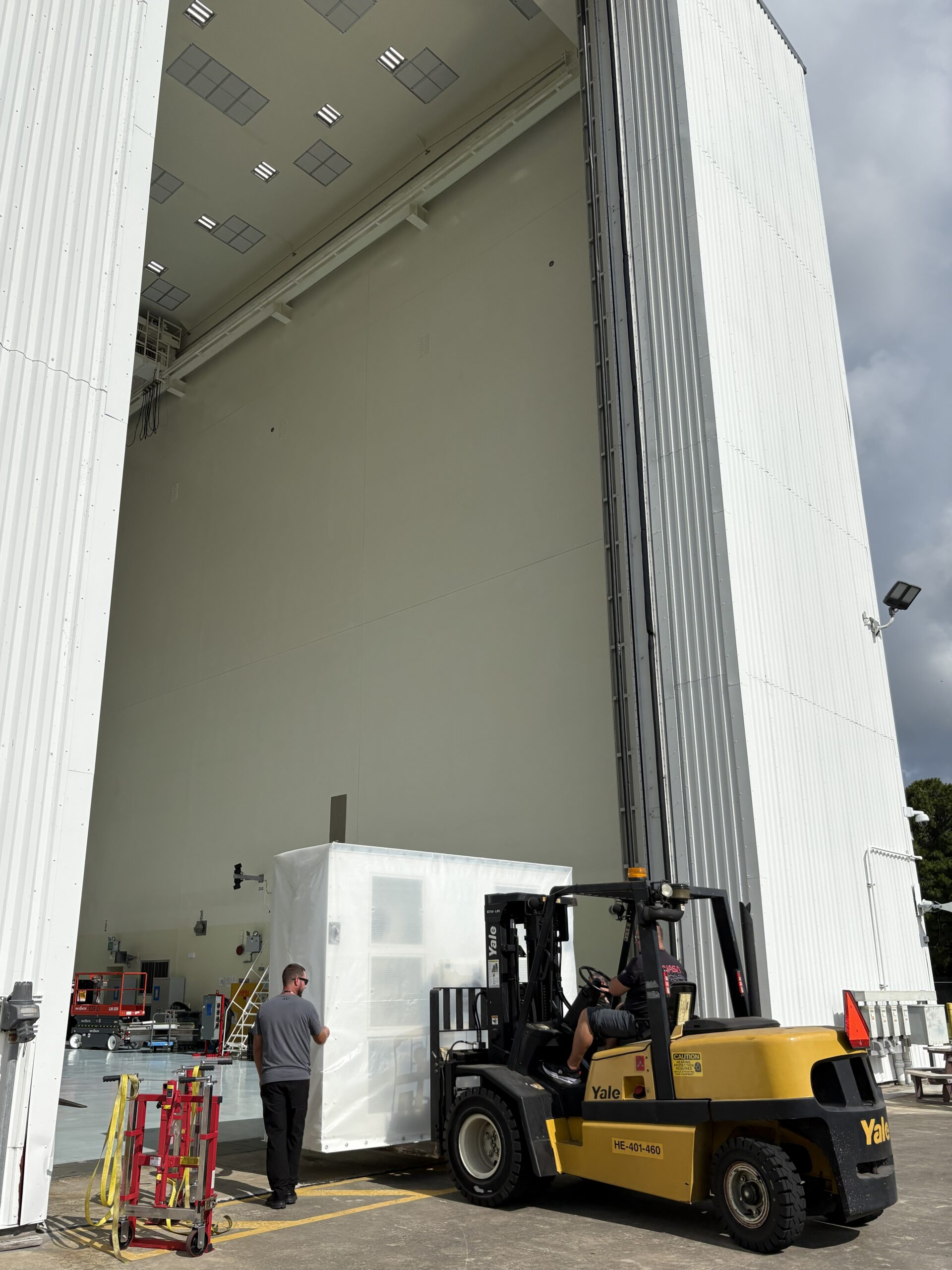
NASA has taken a significant step towards the launch of its Nancy Grace Roman Space Telescope by offloading eight high-efficiency particulate air (HEPA) wall modules at the Payload Hazardous Servicing Facility (PHSF) located at Kennedy Space Center in Florida. This event took place on April 27 and marks a crucial phase in the preparation for the telescope’s upcoming mission.
Enhancing Clean Room Standards
The newly delivered HEPA modules, each weighing 1,800 pounds, are designed to bolster the clean room systems at PHSF. These enhancements are vital to meet the stringent cleanliness requirements necessary for the Roman Space Telescope during its stay at the facility. The telescope will undergo several critical processes, including spacecraft fueling, before its anticipated liftoff.
Maintaining a contamination-free environment is essential when working with sensitive astronomical instruments. The HEPA filters will help ensure that dust and other particulates do not interfere with the telescope’s performance, which is crucial for capturing high-quality data from deep space.
A Glimpse into Cosmic Mysteries
The Roman Space Telescope is poised to make significant contributions to our understanding of the universe. It will utilize its Wide Field Instrument and a Coronagraph Instrument technology demonstration to observe celestial phenomena in infrared light. The telescope’s wide field of view allows it to produce panoramic images that can help astronomers investigate some of the most profound mysteries of the cosmos, including the puzzling acceleration of the universe’s expansion.
Through its innovative observational techniques, Roman aims to chart how the universe has evolved over cosmic time. This mission will provide new insights into dark energy—an enigmatic force driving this accelerated expansion—and advance studies on exoplanets. Additionally, it will map both normal matter and dark matter throughout space and time, enhancing our understanding of their distribution and structure.
Launch Timeline and Future Prospects
NASA teams are currently targeting an early September launch for the Roman Space Telescope aboard a SpaceX Falcon Heavy rocket from Launch Complex 39A at Kennedy Space Center. This timeline aligns with ongoing preparations and testing phases necessary for ensuring mission success.
The choice of a Falcon Heavy rocket underscores NASA’s commitment to utilizing advanced commercial launch capabilities while also fostering partnerships with private aerospace companies. The collaboration aims not only to facilitate this mission but also to pave the way for future explorations beyond our planet.
What This Means
The successful deployment of HEPA modules signifies NASA’s rigorous approach to preparing for one of its most ambitious astronomical missions yet. The Nancy Grace Roman Space Telescope is expected to transform our understanding of fundamental questions about dark energy and cosmic evolution, making it a cornerstone project in contemporary astrophysics. As preparations continue toward its September launch, anticipation builds within both scientific communities and space enthusiasts alike.
For more information, read the original report here.