






















BioSentinel: Unveiling the Mysteries of Space Radiation and Its Impact on Life
The extreme environment faced by astronauts aboard the International Space Station (ISS) is nothing short of fascinating. Positioned approximately 250 miles above Earth, astronauts exist in a microgravity environment that requires regular resupply missions every couple of months. Despite this, the ISS benefits from Earth’s magnetic field, offering significant protection against harmful space radiation. However, as humanity prepares for deeper space exploration, such as missions to Mars, understanding and mitigating the effects of space radiation becomes crucial. This is where NASA’s BioSentinel mission steps in, marking a pivotal advancement in deep space biology research.
The BioSentinel Mission: A Brief Overview
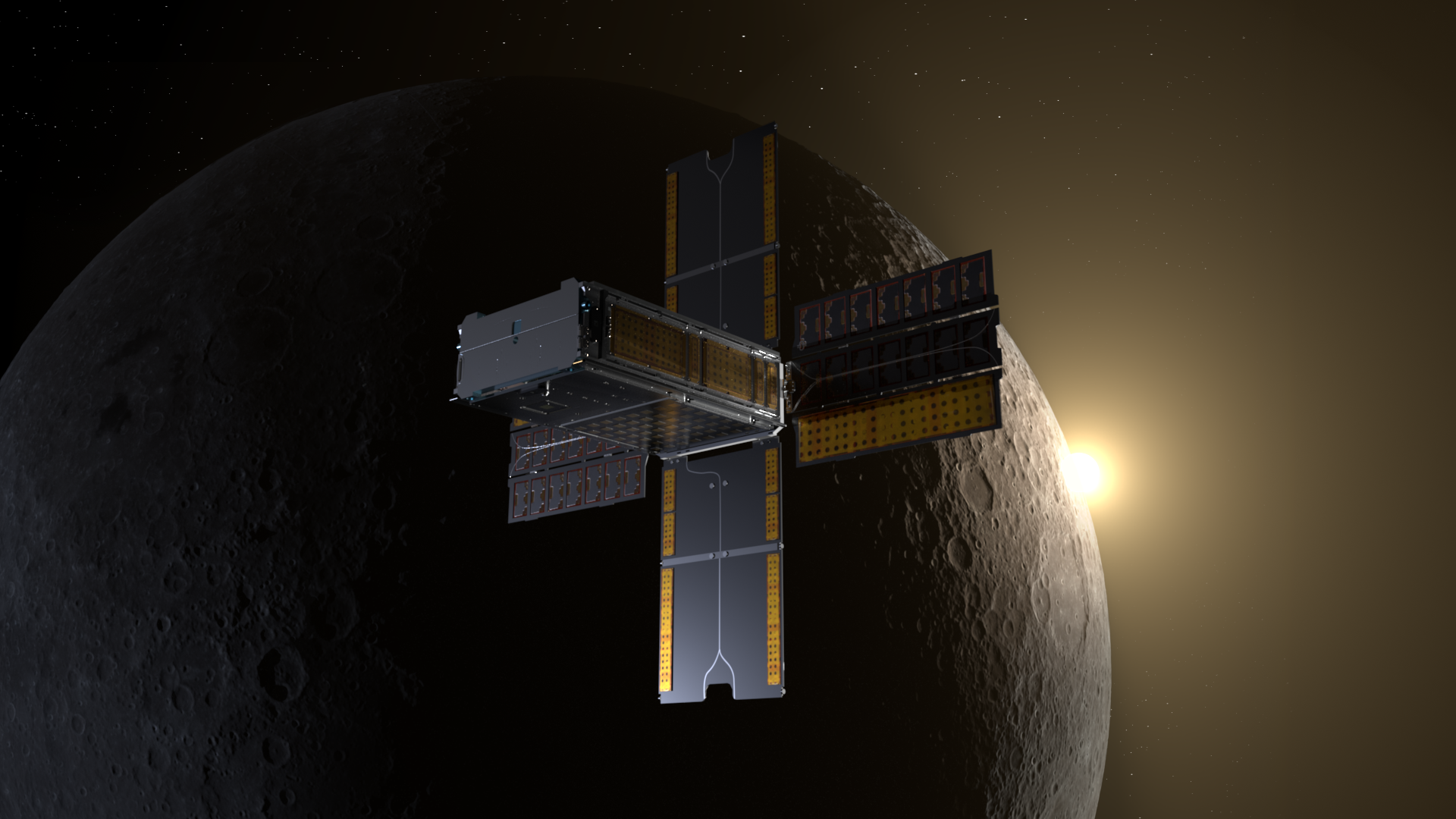
BioSentinel represents a pioneering effort by NASA’s Ames Research Center in California’s Silicon Valley to study the effects of space radiation on living organisms. This experiment ventures further than the ISS, aiming to provide insights critical for future space exploration. Launched as one of ten CubeSats aboard Artemis I, BioSentinel embarked on NASA’s powerful Space Launch System rocket, ultimately orbiting the Sun after a successful lunar flyby.
The core of the BioSentinel mission revolves around the use of yeast, specifically the Saccharomyces cerevisiae species. This organism, familiar to many as the agent responsible for bread rising and beer brewing, serves as an ideal model due to its cellular similarities with human biology. Both yeast and human cells can experience DNA damage from high-energy space radiation, which, if not repaired, can lead to serious health issues. By examining yeast’s response to radiation in deep space, scientists hope to glean insights applicable to human space travelers.
Understanding the Experiment: Yeast in Space
BioSentinel’s mission involves two strains of yeast: one that occurs naturally and another that struggles with DNA repair. By observing these strains under the harsh conditions of space radiation, researchers aim to understand the potential health risks for humans and develop effective strategies to mitigate these risks during long-term space missions.
During the initial phase, which spanned from December 2022 to April 2023, BioSentinel’s BioSensor hardware—a compact biotechnology lab—was tasked with assessing yeast cells’ responses to prolonged radiation exposure. Although the yeast did not grow as anticipated, the mission provided valuable insights. The lack of growth was attributed to the yeast’s expiration due to extended storage prior to launch, not the radiation itself.
Despite this setback, BioSentinel’s onboard radiation detector continues to gather vital data on the space radiation environment. This ongoing collection of information is integral to understanding the challenges posed by radiation beyond Earth’s protective magnetic field.
The Significance of Solar Activity
The mission’s timing coincides with the peak of the Sun’s 11-year cycle, marked by heightened solar activity, including solar flares and coronal mass ejections. These events release significant amounts of energy and charged particles into space, posing potential threats to both satellites and astronauts. As scientists anticipate continued solar activity through 2026, BioSentinel’s data becomes even more critical for planning future deep space missions.
CubeSats: Revolutionizing Space Research
BioSentinel’s success builds upon Ames’ legacy of utilizing CubeSats—compact, cube-shaped satellites—for biological research. Weighing just 30 pounds, BioSentinel houses yeast cells in microfluidic cards, specialized devices designed to manage small liquid volumes, activating and sustaining the yeast. Data on radiation levels and yeast growth are meticulously collected and transmitted back to Earth for analysis.
In the event of a solar particle event, a significant radiation storm from the Sun, a reserve set of microfluidic cards is prepared to activate, ensuring the mission continues to yield valuable insights into the radiation risks faced by future deep space explorers.
Parallel Experiments: Comparing Environments
BioSentinel’s groundbreaking mission is complemented by parallel experiments conducted under various radiation and gravity conditions. These include tests aboard the ISS and on Earth, each offering unique insights into how different environments affect biological processes. By comparing results from these diverse settings, scientists refine their understanding of radiation’s impact on living organisms, paving the way for safer human space exploration.
A Timeline of Achievements
The journey of BioSentinel is marked by notable milestones:
- December 2021: Launch of the BioSentinel ISS Control experiment aboard SpaceX’s 24th commercial resupply services mission.
- January 2022: Commencement of science operations on the ISS.
- February 2022: Ground control science operations begin at NASA Ames.
- June 2022: Completion of ISS science operations, with hardware returning to Earth in August via SpaceX’s CRS-25 Dragon.
- October 2022: Completion of ground control science operations at NASA Ames.
- November 16, 2022: BioSentinel’s launch to deep space aboard Artemis I.
- December 5, 2022: Initiation of science operations in deep space.
- December 19, 2022: Start of ground control science operations at NASA Ames.
- November 16, 2024: Two years of continuous radiation observations in deep space, with BioSentinel over 30 million miles from Earth.
- November 16, 2025: Three years of continuous radiation observations, with BioSentinel now over 48 million miles from Earth.
Collaborative Efforts and Future Prospects
The BioSentinel mission is a testament to collaborative efforts across NASA’s divisions. Led by NASA Ames, the mission involves partnerships with NASA’s Johnson Space Center in Houston and the Jet Propulsion Laboratory in Southern California. Funding is provided by the Mars Campaign Development Division within NASA’s Exploration Systems Development Mission Directorate, with additional support from the Heliophysics Division and the NASA Electronic Parts and Packaging Program.
As BioSentinel continues its journey, the data collected will be instrumental in shaping the future of human space exploration. By enhancing our understanding of space radiation and its effects on living organisms, this mission lays the groundwork for safer and more sustainable journeys to the Moon, Mars, and beyond.
For those interested in learning more about the BioSentinel mission and its groundbreaking research, NASA provides a wealth of resources, including stories, videos, and podcasts. These materials offer a comprehensive look at the mission’s objectives, achievements, and implications for the future of space exploration.
In conclusion, BioSentinel represents a significant step forward in our quest to conquer the challenges of deep space travel. By unlocking the mysteries of space radiation, this mission not only advances scientific knowledge but also brings humanity closer to realizing its dream of exploring the cosmos.
For more Information, Refer to this article.