






























A Decade of Discovery: Students Contribute to Space Crop Research with NASA
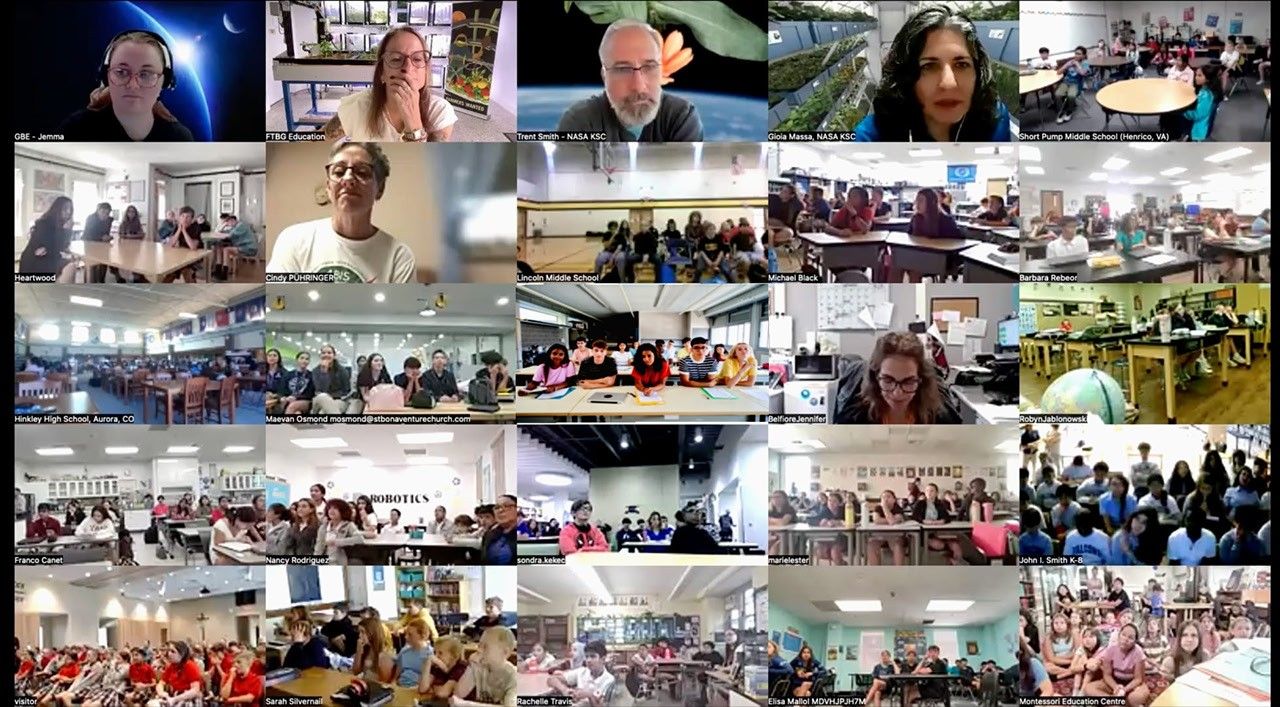
In a remarkable event celebrating the 10th anniversary of the Growing Beyond Earth (GBE) program, approximately 1,250 students from middle and high schools across 71 institutions worldwide participated in an inspiring educational initiative. Hosted by Fairchild Tropical Botanic Garden, this event, known as the Student Launch Chat with the Scientists, connected young learners directly with experts from NASA, marking a significant milestone in the program’s history.
The live session was a collaborative effort with NASA, where students had the opportunity to interact with Dr. Gioia Massa and Trent M. Smith, who are leading figures in NASA’s Space Crop Production team at the Kennedy Space Center. This rare chance allowed students to understand how their experiments conducted in classrooms are playing a crucial role in helping NASA determine the best crops to cultivate for long-duration space missions to the Moon and Mars.
Bridging the Gap Between Classrooms and Space Exploration
One teacher involved in the event expressed the profound impact of this experience on students, highlighting that the knowledge of their data potentially influencing astronaut diets is a powerful motivational tool. This statement underscores the essence of the Growing Beyond Earth program, which has successfully brought genuine NASA research into educational settings, a feat not commonly achieved by typical science programs.
The initiative, steered by Fairchild Tropical Botanic Garden located in Miami, Florida, has been instrumental in fostering a deeper understanding of food production in extraterrestrial environments. Over the past decade, the garden, which spans 83 acres and is renowned for its conservation, education, and research programs, has worked closely with NASA to advance this crucial area of study.
Through the use of specially designed plant growth chambers, students simulate the conditions found in spacecraft environments to evaluate how different crops perform. The valuable data gathered from these experiments is shared with NASA scientists, who utilize the insights to fine-tune ongoing research into space crop production.
A Collaborative Effort with Tangible Results
Since its inception, the Growing Beyond Earth program has seen participation from over 120,000 students in more than 800 classrooms. Together, they have tested upwards of 250 plant cultivars, with five of these student-tested crops having been successfully grown aboard the International Space Station. This accomplishment is a testament to the program’s effectiveness and the meaningful contribution of student research to the field of space exploration.
The initiative aligns perfectly with the mission of NASA’s Science Activation (SciAct) program. Through SciAct, NASA Science is made accessible to people of all ages and backgrounds, encouraging active participation in the advancement of human knowledge. The ultimate vision is to increase learners’ engagement in scientific discovery, and projects like GBE are pivotal in achieving this goal. By involving students in cutting-edge research, GBE not only advances NASA’s objectives but also nurtures curiosity, creativity, and confidence among the next generation of scientists and explorers.
A Celebration of Impact and Unity
This year’s GBE Student Launch Chat was a celebration of the program’s impact, showcasing how student research from classrooms worldwide is contributing to the future of space exploration. Dr. Massa commented on the transformative effect of students perceiving themselves as integral to NASA’s mission, emphasizing that science becomes more tangible and achievable when students see their role in it.
Espy Rodriguez, a teacher from Hialeah Senior High School, shared her observations of the event’s influence on her students, noting that it imbued their projects with significant meaning. The event fostered a sense of community among the students, highlighting the unifying power of a shared scientific mission. By engaging in activities such as growing plants, analyzing data, and sharing results with NASA, these students are playing an active role in preparing humanity for life beyond Earth. This initiative demonstrates that the seeds of tomorrow’s discoveries are being planted in today’s classrooms.
Support and Future Endeavors
The Growing Beyond Earth project is supported by NASA under cooperative agreement award number 80NCCS2M0125 and is part of NASA’s Science Activation Portfolio. To learn more about how Science Activation connects NASA science experts, real content, and experiences with community leaders, visit NASA’s Science Activation page.
The partnership between Fairchild Tropical Botanic Garden and NASA exemplifies how collaboration and education can drive scientific progress. As students continue to contribute to this groundbreaking research, the future of space exploration looks promising, with young minds actively participating in the quest to sustain human life beyond our planet.
For more information about the Growing Beyond Earth program, visit the Fairchild Tropical Botanic Garden’s dedicated GBE page.
For more Information, Refer to this article.







