Sentinel-6B: A New Era of Ocean Monitoring
The recent launch of Sentinel-6B in November has marked a significant milestone in the realm of ocean monitoring. This satellite, the result of a collaborative effort between NASA and its U.S. and European partners, is set to advance our understanding of ocean height with remarkable precision. This mission is not just about collecting data; it’s about transforming how we predict marine conditions, enhance national security, and support global communities. Here’s a closer look at what Sentinel-6B aims to achieve and how it’s set to impact various sectors.
Understanding Sentinel-6B’s Mission
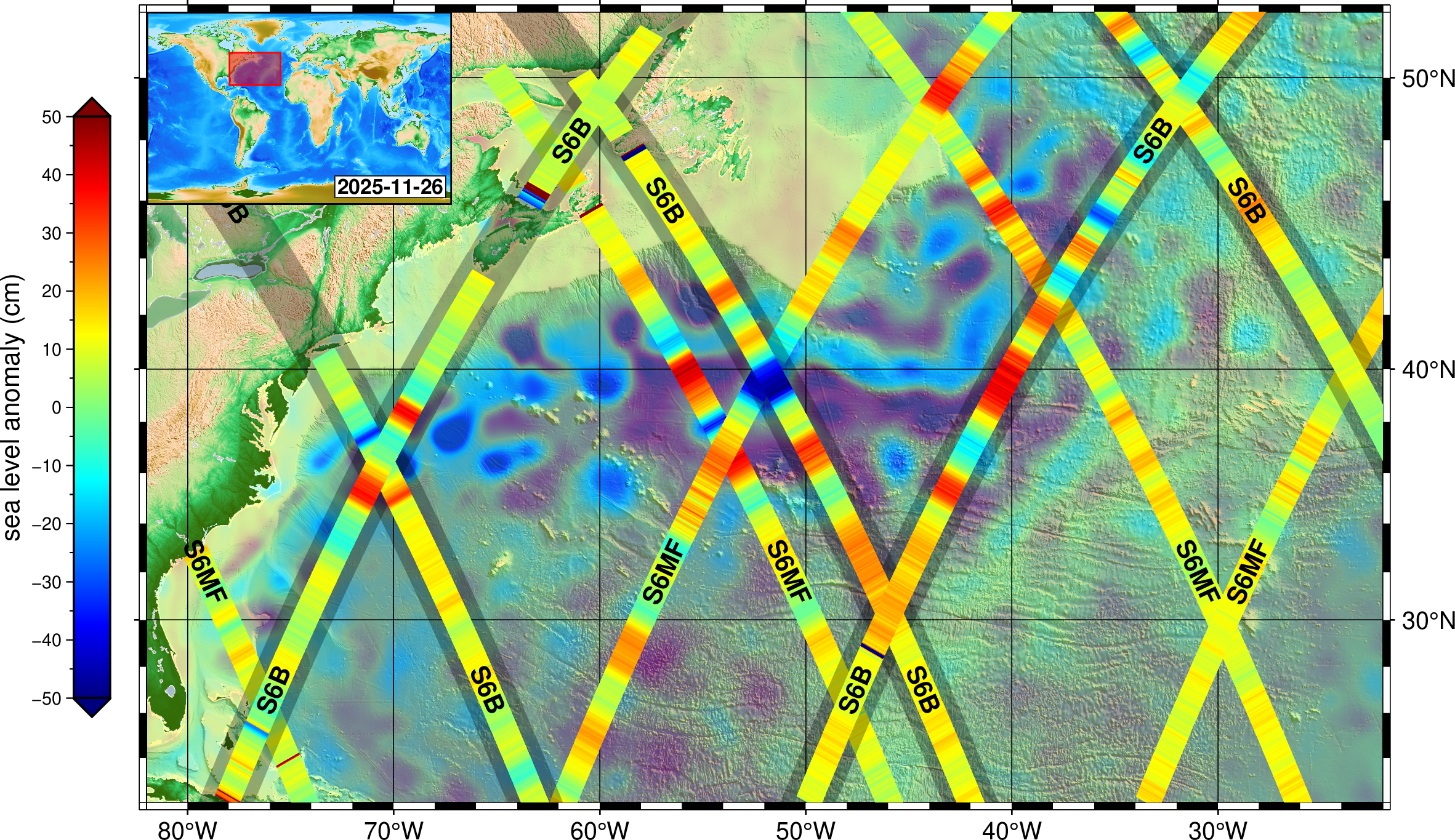
Sentinel-6B is a part of a mission designed to survey approximately 90% of the world’s oceans. Since its launch, this satellite has already begun transmitting its initial measurements back to Earth. A newly released map from these datasets illustrates the varying sea levels along the Eastern Seaboard and the Atlantic Ocean, offering new insights into marine dynamics.
In terms of its physical attributes, Sentinel-6B is roughly the size of a pickup truck. It continues a long-standing initiative pioneered by the United States and Europe to monitor ocean height with extreme accuracy, down to fractions of an inch. The technology employed is known as radar altimetry, which involves bouncing radar waves off the ocean surface and measuring the time it takes for the signal to return. This method allows scientists to calculate sea surface height with precision.
Once the instruments and algorithms on Sentinel-6B are fully calibrated, it will provide invaluable data to maritime crews, weather forecasters, and national security agencies. This information will also benefit the millions of people residing near coastlines by providing early warnings and data crucial for disaster preparedness.
Insights from NASA
Nicky Fox, the Associate Administrator at NASA’s Science Mission Directorate, emphasized the importance of space-based science in delivering critical data to decision-makers. This data is crucial for managing storms, navigation, and flooding, among other applications. According to Fox, the initial ocean measurements collected by Sentinel-6B are already proving beneficial, offering key insights that can help ensure the prosperity and security of coastal communities worldwide.
Alongside sea level measurements, Sentinel-6B is equipped to gather data on wind speeds, wave heights, atmospheric temperature, and humidity. Such comprehensive data collection enables organizations like the NASA Engineering and Safety Center to refine atmospheric models. These models are essential for planning the safe re-entry of astronauts, particularly those involved in future Artemis missions.
Ensuring Optimal Performance
In recent weeks, mission teams have been busy confirming the health and functionality of Sentinel-6B and its suite of instruments. These include the Poseidon-4 Synthetic Aperture Radar altimeter, the Advanced Microwave Radiometer for Climate, the Global Navigation Satellite System – Radio Occultation, and the Precise Orbit Determination Package. The successful validation of these instruments is a crucial step in ensuring the accuracy and reliability of the data collected.
The visualization accompanying the data captured on November 26 illustrates the path of Sentinel-6B as it orbits Earth. This image also includes data from its predecessor, Sentinel-6 Michael Freilich, launched in 2020. The crisscrossing bands in the visualization represent the paths of these satellites, with red areas indicating higher water levels and blue areas showing lower levels. Although the data is still preliminary due to ongoing calibration, it is already showing promising results.
The Copernicus Sentinel-6/Jason-CS Mission
Sentinel-6B and Sentinel-6 Michael Freilich together form the Copernicus Sentinel-6/Jason-CS (Continuity of Service) mission. This initiative is a joint effort by NASA, the European Space Agency (ESA), the European Organisation for the Exploitation of Meteorological Satellites (EUMETSAT), and the National Oceanic and Atmospheric Administration (NOAA).
Karen St. Germain, Director of NASA’s Earth Science Division, highlighted the significance of these initial images from Sentinel-6B. She noted how critical Earth science observations are in providing life-saving data to coastal communities, which host about a third of the world’s population. St. Germain also emphasized the power of international partnerships in advancing our understanding of Earth’s systems and leveraging that knowledge for humanity’s benefit.
Sea Level Rise: A Growing Concern
The Sentinel-6/Jason-CS mission contributes to a continuous dataset on sea level rise that dates back to the early 1990s. Since then, the global rate of sea level rise has doubled, currently averaging about 0.17 inches (4.3 millimeters) per year. This increase varies by location, affecting coastal infrastructure, trade routes, and storm formation in different ways.
Dave Gallagher, Director of NASA’s Jet Propulsion Laboratory, praised the foresight shown over 30 years ago in investing in the technology and expertise that make this mission possible. He expressed pride in continuing these critical measurements into another decade and acknowledged the hard work of the teams behind this milestone.
Operational Details and Future Plans
Sentinel-6B orbits Earth at an altitude of 830 miles (1,336 kilometers), trailing its twin, Sentinel-6 Michael Freilich, by about 30 seconds. Eventually, Sentinel-6B will assume the role of the official reference satellite for sea level, while Sentinel-6 Michael Freilich will shift to a different orbit.
About Copernicus Sentinel-6/Jason-CS
The Copernicus Sentinel-6/Jason-CS mission was developed through a collaboration involving ESA, EUMETSAT, NASA, and NOAA, with additional funding from the European Commission and technical support from the French space agency CNES. The mission commenced with the launch of Sentinel-6 Michael Freilich, which marked the first international partnership within Copernicus, the European Union’s Earth Observation Programme.
NASA’s Jet Propulsion Laboratory, managed by Caltech in Pasadena, contributed three science instruments for each Sentinel-6 satellite. These are the Advanced Microwave Radiometer, the Global Navigation Satellite System – Radio Occultation, and the laser retroreflector array. NASA also provided launch services, ground systems to support the operation of its science instruments, and data processors for two of these instruments. Additionally, NASA supports the international ocean surface topography community by providing data and insights.
Conclusion
The launch of Sentinel-6B is a testament to the power of technological advancement and international collaboration in addressing global challenges. By providing precise data on ocean dynamics, this mission will play a crucial role in enhancing marine forecasting, supporting coastal communities, and informing policies related to climate change. As Sentinel-6B continues to transmit data, its contributions will undoubtedly become a cornerstone in the ongoing efforts to understand and mitigate the impacts of a changing climate.
For more detailed information and updates about Sentinel-6B, interested readers are encouraged to visit the official NASA website at [Sentinel-6B Mission Page](https://science.nasa.gov/mission/sentinel-6B/).
For more Information, Refer to this article.