
























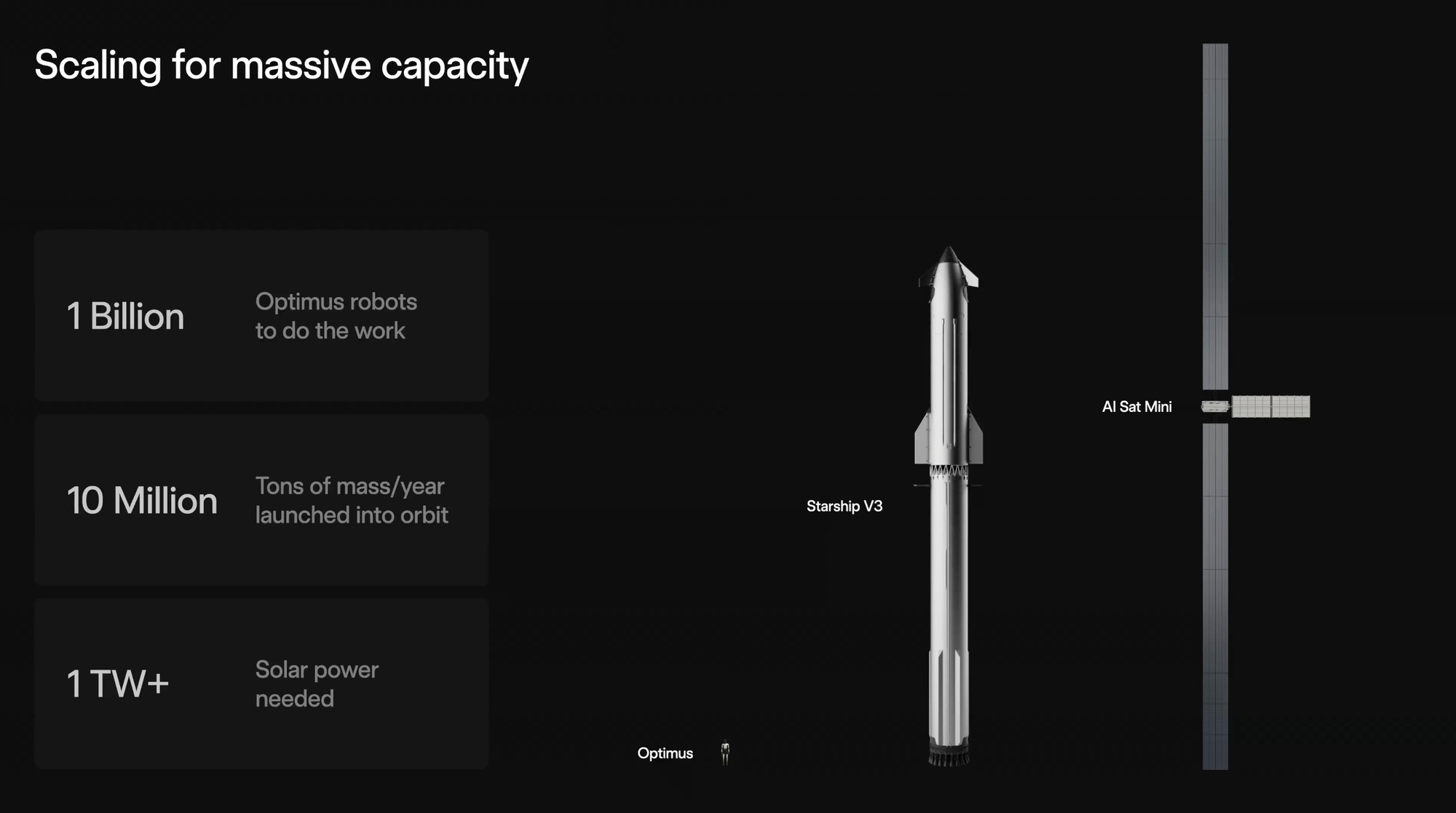
SpaceX CEO Elon Musk recently shared more technical details about the company’s ambitious plan to launch an orbital data center constellation. This initiative, known as the Terafab project, aims to significantly increase the production of high-end computer chips for use in both terrestrial and space applications. Musk, along with Tesla and xAI, plans to produce one terawatt of processors annually, a production rate 50 times higher than current manufacturers of advanced chips for AI applications.
The key component for SpaceX’s orbital data center constellation is the development of high-powered processors, which Musk referred to as the “missing ingredient” for the project. Without these chips, the deployment of a large satellite constellation to serve as an orbital data center would not be feasible. To address this challenge, SpaceX is embarking on the Terafab project to produce the necessary chips in-house.
In a recent event in Austin, Texas, Musk showcased an illustration of an “AI Sat Mini,” a satellite that will be initially used in the constellation. Each satellite is designed to provide 100 kilowatts of power for AI processors onboard. The AI Sat Mini features large solar arrays and a significant radiator to dissipate heat generated by the processors. Musk emphasized that SpaceX has expertise in managing heat rejection in space, with plans to scale up to larger satellites with a megawatt of power in the future.
SpaceX’s application to the FCC for a constellation of up to one million satellites highlights the company’s vision for an advanced orbital data center for AI applications. The technical details of the satellite constellation, including the size and design of the satellites, were not fully disclosed in the initial application. However, Musk’s presentation shed light on the AI Sat Mini’s design and capabilities, showcasing SpaceX’s innovative approach to space-based data processing.
One of the key advantages of deploying data centers in space, according to Musk, is the cost-effectiveness compared to terrestrial data centers. With abundant solar power and minimal real estate constraints in space, Musk believes that placing AI processing capabilities in orbit will become increasingly attractive in the coming years. The Terafab project will kick off with an Advanced Technology Fab in Austin, focusing on producing chips optimized for space applications.
While Musk did not provide specific timelines or costs for the Terafab initiative or the orbital data center constellation, he highlighted the potential benefits of leveraging space-based computing resources. Advanced chip fabrication facilities can entail significant investments, as seen with TSMC’s multi-billion dollar plans for chip fabs in the United States. Musk’s long-term vision includes building data center satellites on the moon and launching them using electromagnetic mass drivers to achieve petawatt-scale computing capabilities in space.
The development of SpaceX’s orbital data center constellation represents a significant leap forward in space-based computing and data processing. By harnessing the power of high-end processors and innovative satellite designs, SpaceX aims to revolutionize the way AI applications are deployed and managed in orbit. As the Terafab project takes shape, the prospect of establishing a robust space-based data infrastructure becomes increasingly tangible, paving the way for future advancements in satellite technology and computing capabilities.
For more Information, Refer to this article.