

















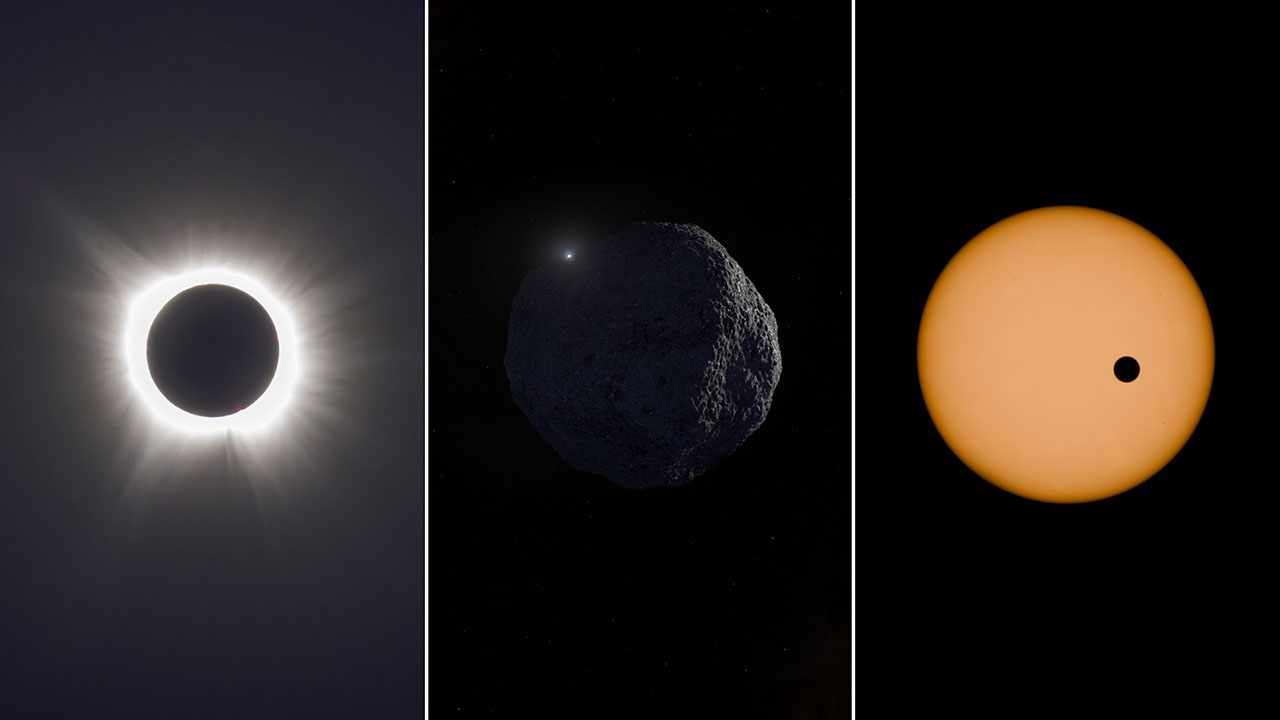
The captivating phenomenon of celestial objects casting shadows as they align in space, known as eclipses, occultations, and transits, has long fascinated astronomers and scientists alike. These rare events provide unique opportunities to study distant objects, measure sizes, shapes, detect atmospheres, and refine orbits. Thanks to the Science Through Shadows project, funded by NASA’s Science Activation program and led by Fiske Planetarium at the University of Colorado Boulder, the science behind these shadow-based events is being explored and shared through a series of informative videos.
The project aims to educate viewers on the intricacies of eclipses, occultations, and solar observations, highlighting the contributions of students, educators, and volunteer citizen scientists in making these discoveries possible. The videos, available in both English and Spanish, are designed for classrooms, libraries, planetariums, and informal learning environments. They come in 2D formats for streaming and classroom use, as well as fulldome formats for planetariums worldwide.
One of the focal points of the project is the annular solar eclipse that occurred on October 14, 2023, across North America. During an annular eclipse, also known as a “ring of fire,” the Moon passes in front of the Sun but appears slightly smaller, creating a bright ring of sunlight around its edges. The video explains the differences between annular and total solar eclipses, delves into the science behind these events, and emphasizes safe viewing practices.
Another significant event covered by the project is the total solar eclipse that took place on April 8, 2024. This rare astronomical event allowed millions of people across North America to witness the Moon completely blocking the Sun, revealing the Sun’s faint outer atmosphere, known as the corona. The video explores the unique experience of a total solar eclipse, the importance of traveling to the path of totality, and how scientists use these events to study the Sun’s atmosphere.
In addition to solar eclipses, the project also sheds light on the science behind eclipses in general. Viewers are guided through the orbital mechanics that produce eclipses, clarifying the differences between solar and lunar eclipses and addressing common misconceptions surrounding these celestial alignments.
The project also covers the Lucy occultation campaign, where astronomers and citizen scientists observed the Trojan asteroid Polymele passing in front of a distant star. This occultation provided valuable insights into the asteroid’s size, shape, and environment, aiding scientists in better understanding it before NASA’s Lucy mission flyby.
Furthermore, the videos explore NASA’s Parker Solar Probe, which is studying the Sun closer than ever before. The spacecraft’s close approach to the Sun on December 24, 2024, at speeds exceeding 430,000 miles per hour, is enabling scientists to investigate long-standing questions about the solar corona and solar wind.
NASA’s PUNCH mission, consisting of four satellites in low-Earth orbit, is providing new insights into how the Sun influences space throughout the inner solar system. By creating global, three-dimensional observations of the region between the Sun and Earth, PUNCH is helping scientists understand the formation and evolution of the solar wind and solar storms.
The project also highlights the role of citizen science during recent solar eclipses, showcasing collaborative projects like the Nationwide Eclipse Ballooning Project and Citizen CATE 2024. These initiatives involve students, educators, and volunteers in collecting atmospheric and solar data during eclipses, contributing to real scientific discovery.
To access the videos and learn more about the Science Through Shadows project, viewers can visit Fiske Planetarium’s YouTube channel for 2D versions in English and Spanish. Downloadable versions are also available through the project’s distribution page, with fulldome masters for planetariums worldwide.
Through projects like Science Through Shadows, NASA’s Science Activation program aims to connect people with NASA science content, experts, and opportunities to participate in scientific research. Whether observing an eclipse, tracking an asteroid’s shadow, or studying data from a spacecraft, these moments of alignment offer powerful opportunities for exploration and engagement in the process of discovery.
Moreover, NASA Citizen Science projects welcome participation from individuals worldwide, providing opportunities to collaborate with professional scientists, conduct cutting-edge research, and make real discoveries across various scientific fields. To explore available projects and get involved, visit NASA’s Citizen Science website.
In conclusion, the Science Through Shadows project is not only informing and educating viewers about the fascinating world of eclipses and occultations but also inspiring engagement and participation in scientific research. By demystifying complex astronomical phenomena and showcasing the contributions of citizen scientists, the project is fostering a deeper understanding of the universe and our place within it.
For more Information, Refer to this article.