Tropical Cyclone Narelle recently made headlines as it carved a destructive path across the northern edge of Australia, unleashing damaging winds and heavy rainfall in areas already saturated with precipitation. The cyclone made a total of three separate landfalls in different states and territories between March 20 and 23, 2026.
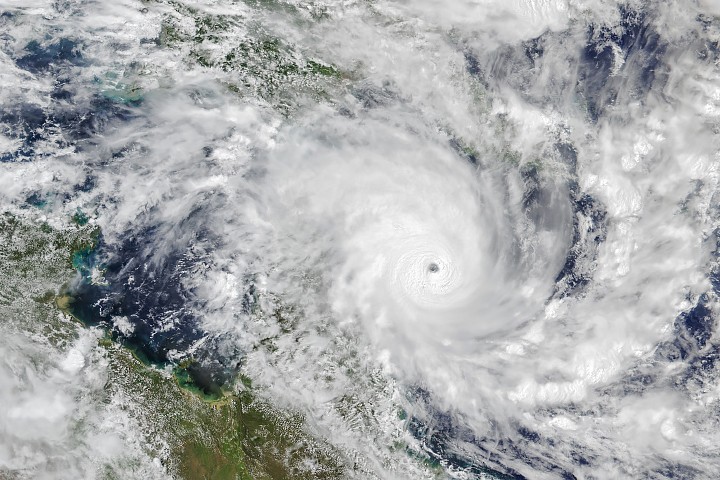
Satellite images captured Narelle at its peak intensity on March 19, showing the storm poised to make its first landfall after intensifying over the Coral Sea. Experts noted that the sea surface temperatures along Narelle’s path were higher than average, fueling its rapid intensification.
As Narelle approached Queensland, it intensified to a category 5 cyclone with maximum sustained winds reaching 225 kilometers per hour, equivalent to a category 4 hurricane on the Saffir-Simpson wind scale. Despite its compact structure, the storm brought damaging winds to the Cape York Peninsula in northern Queensland.
After crossing the peninsula, Narelle weakened but continued its journey, making a second landfall in the Northern Territory on March 21. The storm brought heavy rainfall, with more than 100 millimeters of rain falling across the region. The Bureau of Meteorology warned of potential flooding in several rivers, exacerbating an already severe wet season in the area.
Narelle then moved on to the northern Kimberley region of Western Australia as a tropical low on March 23. Despite its multiple landfalls, the storm was not done yet. The Bureau of Meteorology stated that Narelle could re-intensify into a tropical cyclone off the coast of Western Australia and track towards Perth.
While cyclones with multiple landfalls on mainland Australia are rare, they are not unprecedented. In 2005, Tropical Cyclone Ingrid followed a similar path to Narelle, making landfall as a category 3 cyclone or higher each time.
The impact of Tropical Cyclone Narelle serves as a reminder of the destructive power of these natural phenomena and the importance of preparedness and resilience in the face of extreme weather events. Stay informed, stay safe, and stay prepared as we navigate through the complexities of our changing climate.
References:
– Australian Broadcasting Corporation (2026, March 17) “Cyclone Narelle could be the first storm in 21 years to make landfall three times”. Accessed March 23, 2026.
– Bureau of Meteorology, via YouTube (2026, March 23) “Severe Weather Update 23 March 2026: Ex-Tropical Cyclone Narelle impacting WA this week”. Accessed March 23, 2026.
– The Conversation (2026, March 19) “Cyclone Narelle: ‘compact’, dangerous and unusually predictable”. Accessed March 23, 2026.
– The Guardian (2026, March 22) “Saturated NT braces for Tropical Cyclone Narelle to dump another 300mm of rain”. Accessed March 23, 2026.
– The New York Times (2026, March 19) “Remote Part of Australia Braces for ‘Significant’ Tropical System”. Accessed March 23, 2026.
– Weather Underground (2026, March 23) “Tropical Cyclone Narelle”. Accessed March 23, 2026.
For more Information, Refer to this article.