

















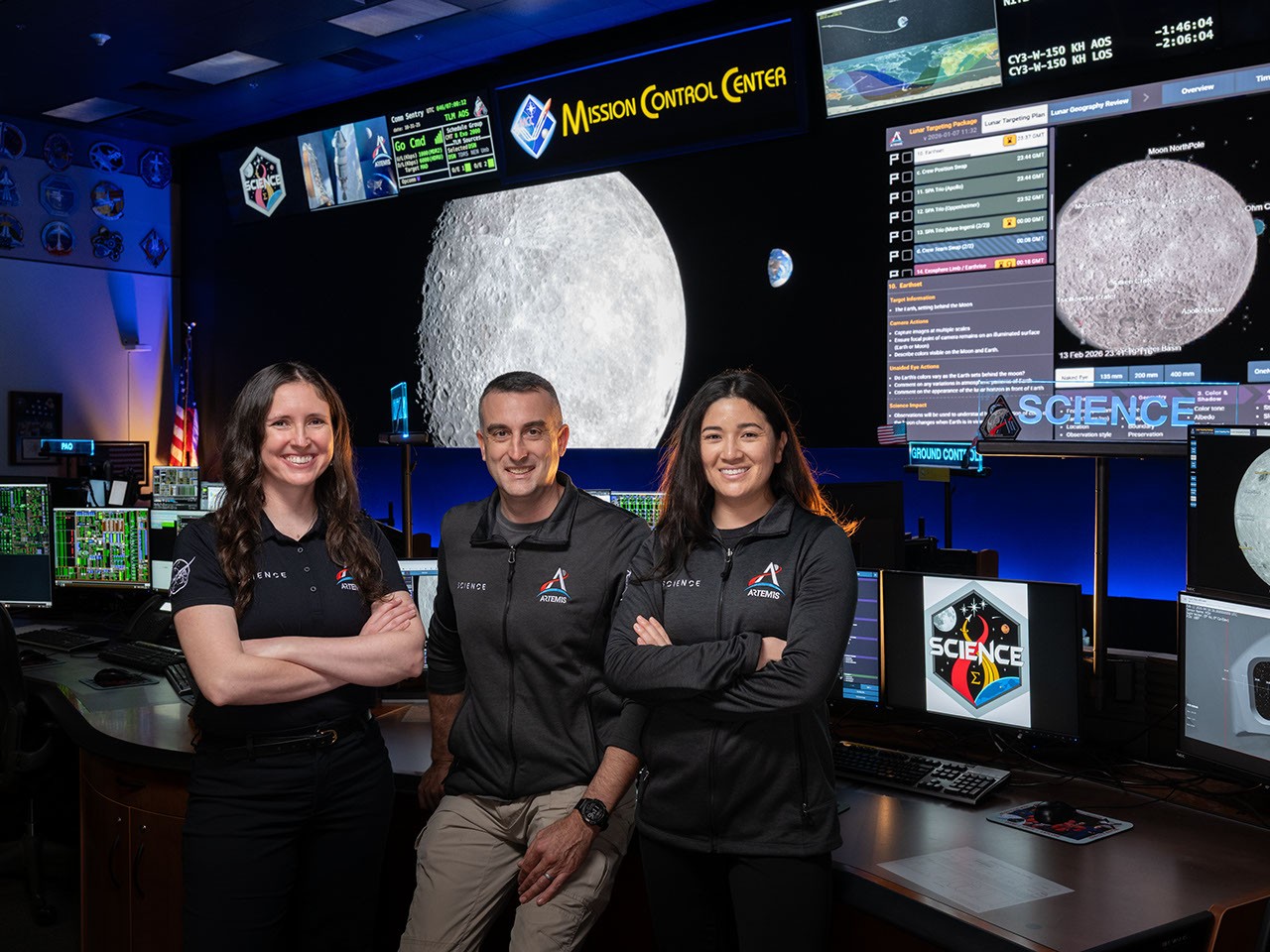
The world of NASA is not just about space exploration but also about scientific discovery. Recently, NASA certified its first Artemis II science officers, Kelsey Young, Trevor Graff, and Angela Garcia, who will be responsible for lunar science and geology objectives during Artemis missions. This new dedicated position in NASA’s Mission Control marks a significant evolution in how science is integrated into mission operations.
The role of a science officer is crucial during Artemis missions as they are responsible for ensuring that NASA’s lunar science objectives are seamlessly integrated into mission execution. This means that the science officer works closely with other disciplines in Mission Control and plays a key role in guiding the crew to achieve scientific goals during the mission.
The training and certification process for becoming a science officer are rigorous and include months of simulations and testing in Mission Control. The simulations are designed to mimic real-life mission scenarios, allowing the candidates to test their skills and knowledge under pressure. This training also involves working closely with astronauts and conducting geology and lunar observation exercises to prepare for the mission.
One of the most exciting parts of the training process is the simulations that involve the Artemis II astronauts. These simulations cover the lunar flyby portion of the mission, during which the crew will take photographs of the Moon and record audio observations. The astronauts have undergone extensive training in lunar geography and geology to ensure they can capture as much information as possible during their pass around the far side of the Moon.
The observations made by the astronauts will be relayed to two science back rooms at NASA Johnson, where experts will analyze the data in real time and provide guidance to the science officer in Mission Control. This real-time data analysis is a crucial component of Artemis II as it refines science mission operations and paves the way for future lunar science missions.
While Artemis II will not land on the lunar surface, the observations made by the astronauts are expected to contribute significantly to our understanding of the Moon. Human eyes and brains are adept at recognizing subtle changes in surface characteristics, and having astronaut eyes observe the lunar surface directly may lead to new discoveries and a deeper appreciation of the Moon’s features.
Overall, the integration of science into human spaceflight has a long history, and the role of science officers in Artemis missions represents a new chapter in this evolution. The lessons learned during Artemis II will help shape future lunar science missions and expand our knowledge of our nearest neighbor in space.
The astronauts and science officers involved in Artemis II are dedicated to the mission and are excited to contribute to our understanding of the Moon. Their work represents a significant step forward in human space exploration and scientific discovery, and they hope to inspire people around the world with their efforts to explore and learn more about our celestial neighbor.
For more Information, Refer to this article.