
























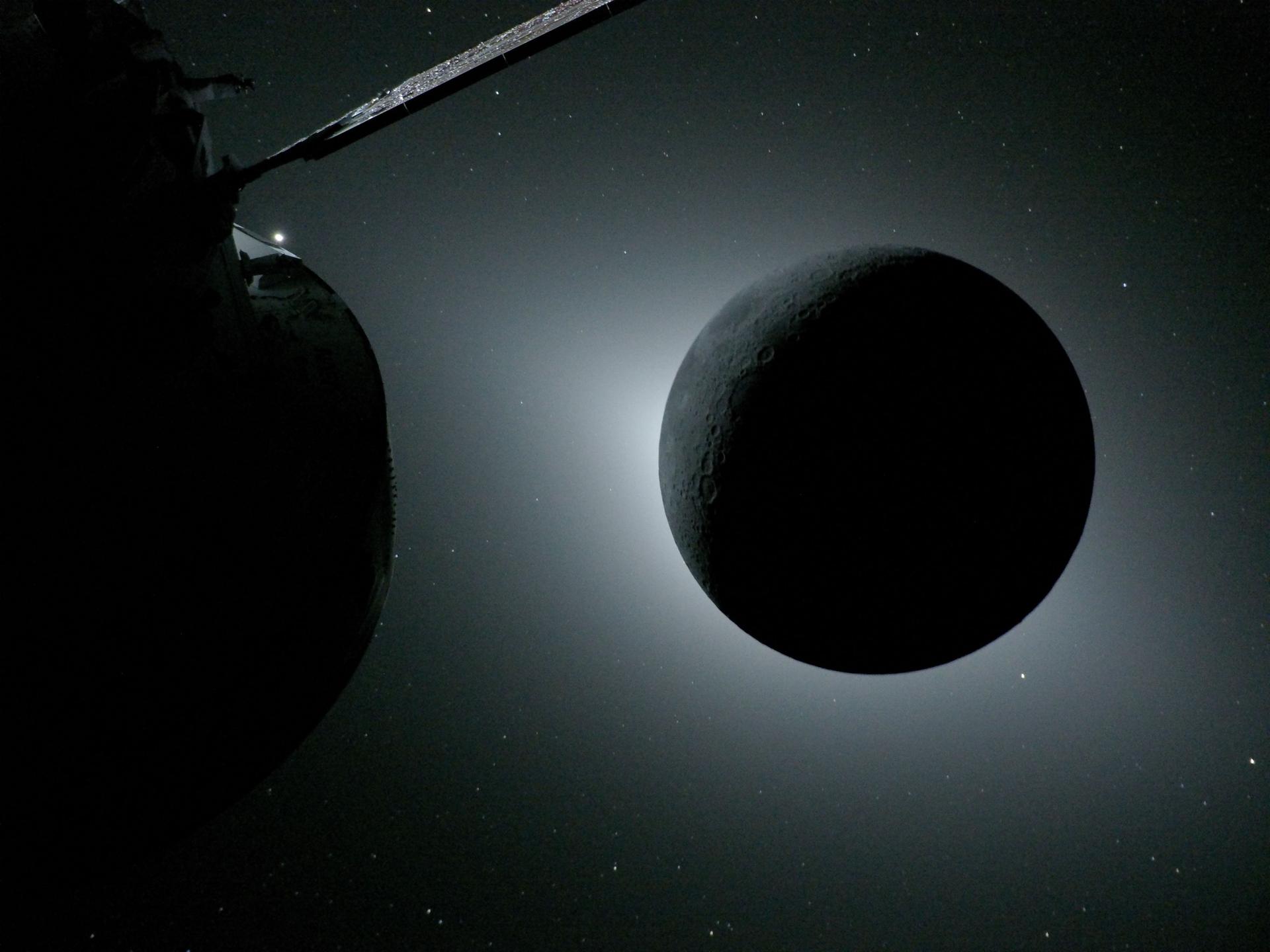
Nasa’s Artemis II Astronauts Capture Historic Lunar Flyby Images
Nasa’s Artemis II mission has successfully returned stunning images from its lunar flyby, showcasing regions of the Moon that have not been seen by human eyes. During the mission on April 6, astronauts captured breathtaking views, including a rare in-space solar eclipse, as they embarked on a seven-hour journey around the Moon’s far side. This mission marks a significant step in humanity’s return to lunar exploration and provides valuable scientific data.
Meet the Artemis II Crew
The Artemis II crew consists of four astronauts: Reid Wiseman, Victor Glover, Christina Koch, and Jeremy Hansen from the Canadian Space Agency (CSA). Equipped with a fleet of cameras, they documented thousands of images during their flyby. Nasa plans to release more images in the coming days as the crew makes their way back to Earth. Dr. Nicky Fox, associate administrator for the Science Mission Directorate at Nasa Headquarters in Washington, expressed excitement about the mission’s achievements, stating that the crew took humanity on an incredible journey and brought back images that will inspire future generations.
Scientific Discoveries from the Flyby
During their lunar flyby, the astronauts captured detailed images of impact craters, ancient lava flows, and surface fractures. These observations are crucial for scientists studying the Moon’s geologic evolution. The crew monitored variations in color, brightness, and texture across different terrains while also documenting an earthset and earthrise from their unique vantage point. Notably, they recorded six meteoroid impact flashes on the dark side of the Moon.
Scientists are currently analyzing these downlinked images and data to refine their understanding of these events and compare them with observations made by amateur astronomers. The new imagery is expected to enhance Nasa’s knowledge of lunar geology and inform future exploration missions aimed at establishing a sustained human presence on the Moon before venturing further to Mars.
Real-Time Insights from the Crew
The excitement surrounding this mission is palpable among Nasa officials. Jacob Bleacher, Nasa’s chief exploration scientist, remarked on how remarkable it was to hear firsthand accounts from the crew about their stunning views during the flyby. Initially, their descriptions seemed disconnected from what was being displayed on screens back on Earth. However, as higher resolution images became available, it became easier to appreciate both their experiences and the scientific value these images provide.
Upcoming Events and Future Missions
Nasa has scheduled Artemis II’s return for 8:07 p.m. EDT (5:07 p.m. PDT) on April 10 off the coast of San Diego. Live coverage will begin at 6:30 p.m., featuring updates until recovery teams assist the crew out of Orion spacecraft and transport them to USS John P. Murtha. Continuous updates about briefings and events related to this mission can be found on Nasa’s YouTube channel and other online platforms.
This mission is part of a broader initiative aimed at pushing boundaries in space exploration. As part of what Nasa describes as a “Golden Age” of innovation and exploration, Artemis aims to send astronauts on increasingly challenging missions to explore more of the Moon for scientific discovery while laying groundwork for future crewed missions to Mars.
What This Means
The successful imaging from Artemis II not only highlights technological advancements but also represents a renewed commitment to lunar exploration that could pave the way for future interplanetary travel. The data collected will aid scientists in understanding our nearest celestial neighbor while also providing critical insights that will inform upcoming missions beyond our Moon. As humanity looks toward Mars and beyond, these findings underscore how each step taken today contributes significantly to our long-term goals in space exploration.
For more information, read the original report here.