




















April brings some exciting celestial events for skywatchers to enjoy. Mercury, the closest planet to the Sun, will be shining at its brightest for the year on April 3rd. This means that it will be easier to spot in the pre-dawn sky, particularly in the eastern direction just above Mars. Mercury will be at its greatest elongation, which is the furthest distance from the Sun as seen from Earth.
Additionally, on April 17th, there will be a great opportunity to catch a glimpse of Comet C/2025 R3, which is expected to be one of the brightest comets of the year. This comet will make its closest approach to Earth on April 27th, coming within 44 million miles of our planet. To view the comet, experts suggest using a telescope or binoculars as it will likely reach a magnitude eight. Look for it in the eastern sky in the constellations Pegasus and above Pisces in the predawn hours from mid-April through the end of April in the Northern Hemisphere, and in the evenings in early May for viewers in the Southern Hemisphere.
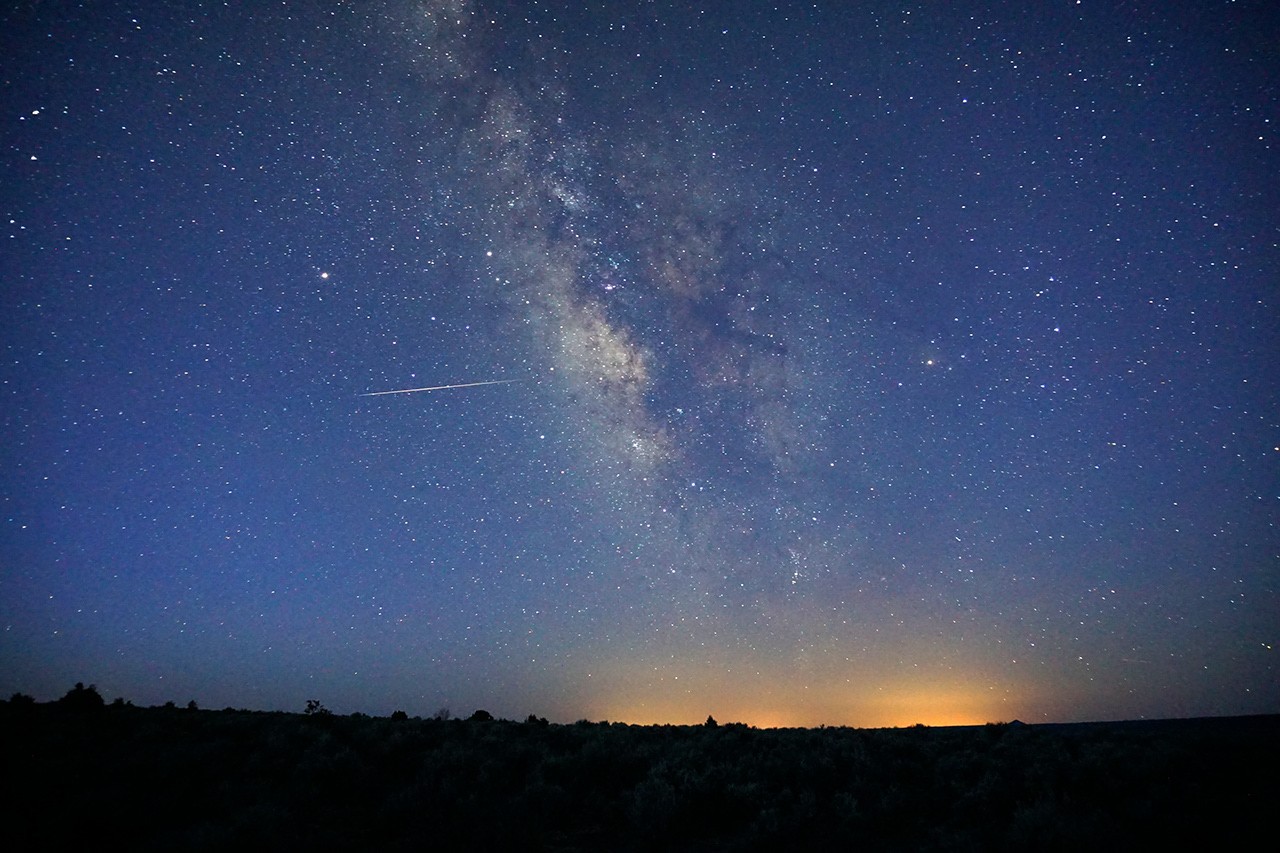
Furthermore, the Lyrid meteor shower will be at its peak on April 21st and 22nd. This meteor shower originates from Comet Thatcher’s debris, which burns up in our atmosphere creating the mesmerizing “shooting stars” that can be seen during the peak. To witness the Lyrid meteor shower, look to the east starting at around 10 p.m. on April 21st and continue watching throughout the night. The meteor shower is located near the star Vega in the constellation Lyra, the Harp.
As an extra treat, April also welcomes a bright new comet into the night sky. Comet C/2025 R3 is expected to provide a dazzling display as it makes its closest approach to Earth on April 27th. Astronomers predict that this comet will be visible in the eastern sky in the constellations Pegasus and above Pisces.
For those interested in tracking the phases of the Moon for April, it is recommended to stay updated on NASA’s missions exploring the solar system and beyond at science.nasa.gov. This month is filled with celestial wonders waiting to be discovered, so be sure to keep an eye on the night sky and enjoy the beauty of the universe.
For more Information, Refer to this article.