





















Potential Satellite Collision Highlights Challenges in Space Traffic Coordination
In the ever-expanding frontier of space, a recent incident involving a Starlink satellite and a newly launched Chinese spacecraft has brought to light the increasing complexities of managing satellite operations and verifying potential near-misses in orbit. This event underscores the necessity for enhanced coordination among global space operators to ensure the safety and sustainability of space activities.
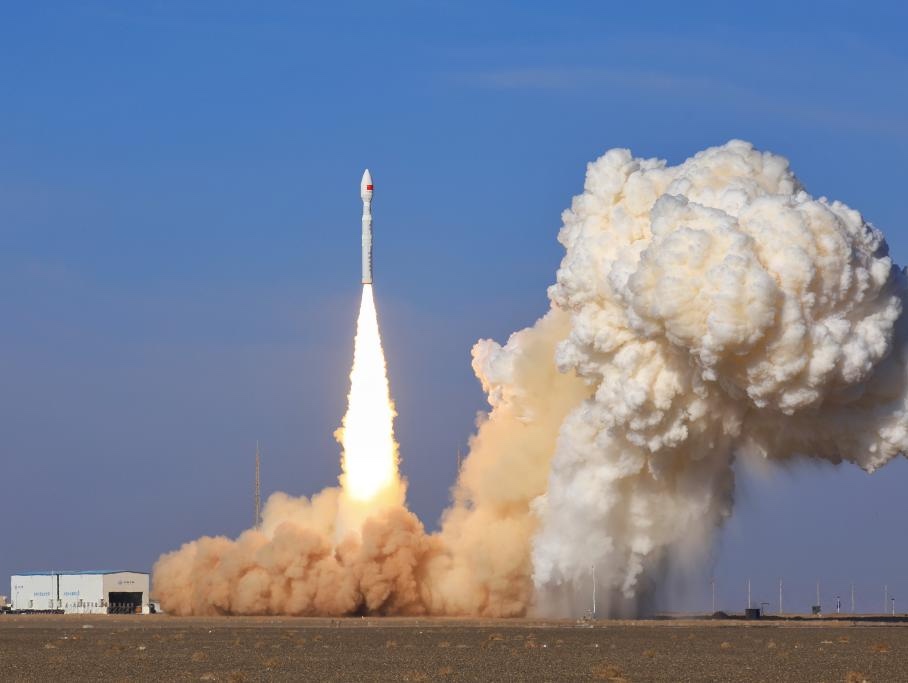
On December 12, Michael Nicolls, the Vice President of Starlink Engineering at SpaceX, took to social media to reveal a close encounter between a Starlink satellite and a satellite launched by China on a Kinetica-1 rocket just two days prior. According to Nicolls, the Chinese spacecraft passed within a mere 200 meters of the Starlink satellite, raising concerns about the lack of coordination efforts from the Chinese side. Nicolls stated that, to his knowledge, no prior arrangements were made to deconflict the launch with existing satellites already operating in space.
The Chinese company responsible for the launch, CAS Space, acknowledged the incident and assured that they were investigating the matter. In their response, CAS Space emphasized that their missions utilize a ground-based space awareness system to select launch windows that avoid collisions with known satellites or debris. However, they highlighted that the close approach occurred nearly 48 hours post-payload separation, suggesting that their accountability for the launch had technically ended by that time.
While neither SpaceX nor CAS Space provided further details about the incident, renowned astrophysicist Jonathan McDowell conducted an analysis of orbital elements. His findings indicated that the Starlink satellite, as mentioned by Nicolls, was indeed in proximity to one of the nine satellites launched, occurring around 1:42 a.m. Eastern Time on December 12. Nonetheless, this data alone was insufficient to precisely determine the exact distance between the two spacecraft.
The satellite from the Chinese launch remains unidentified, currently listed as “Object J” with the NORAD identification number 67001 in the Space-Track database. The launch comprised six satellites for various Chinese entities, alongside scientific and educational satellites from Egypt, Nepal, and the United Arab Emirates.
Several commercial firms specializing in space situational awareness (SSA) have yet to publicly confirm SpaceX’s account of the close approach. LeoLabs, a company operating a network of radars that track objects in low Earth orbit, refrained from providing information about the incident. Similarly, COMSPOC, another SSA provider, indicated that they did not have immediate data, while Slingshot Aerospace did not respond to requests for comments.
This incident highlights the growing challenges of coordinating satellite launches and maneuvers amidst an increasing number of active satellites and space debris. Michael Nicolls, in another social media post, urged satellite operators to share ephemeris data on SpaceX’s platform. This data-sharing initiative would facilitate the screening of potential conjunctions, ensuring better management of satellite trajectories and reducing collision risks.
The incident occurs amidst recent developments indicating an improved willingness on China’s part to coordinate satellite maneuvers with Western operators. At the International Astronautical Congress held in Sydney on October 2, NASA’s space sustainability director, Alvin Drew, mentioned a significant development. The China National Space Administration (CNSA) had contacted NASA regarding a potential conjunction, expressing their intention to maneuver to avoid a collision. This marked a notable shift in communication dynamics, as previous notifications from NASA about potential close approaches often went unanswered by the Chinese side. Drew emphasized that this was the first instance of two-way communication between these two major public space operators.
Other participants at the conference also cited additional instances of improved communication on space safety issues between Chinese and Western operators, including SpaceX and Eutelsat, which operates the OneWeb constellation. Drew suggested that such developments indicated a “signal coming from someone in China” permitting this level of coordination, reflecting a positive step towards enhanced global collaboration in space operations.
In response to the recent incident, CAS Space expressed their commitment to working with the operators of the satellites involved to understand the circumstances that led to the close approach. They highlighted the importance of re-establishing collaborations between the two New Space ecosystems, emphasizing the need for increased transparency and cooperation in future missions.
Michael Nicolls, in his reply to CAS Space’s response, expressed appreciation for their promptness and openness to engage in coordination for future launches. He reiterated the critical importance of establishing data-sharing protocols between all satellite operators to ensure the safety and sustainability of space activities.
This incident serves as a reminder of the pressing need for international cooperation and the establishment of standardized protocols in space traffic management. As the number of satellites and space debris continues to grow, effective communication and coordination among global space operators become paramount to prevent potential collisions and ensure the long-term sustainability of space exploration.
In conclusion, the recent close approach between a Starlink satellite and a Chinese spacecraft highlights the ongoing challenges in space traffic coordination. It underscores the necessity for improved communication and collaboration among international space operators to mitigate collision risks and ensure the safety of space activities. As the space industry continues to evolve, fostering transparency and data-sharing initiatives will play a crucial role in enhancing the sustainability and safety of space operations.
For more information on this topic, you can refer to the original report on SpaceNews here.
For more Information, Refer to this article.