





















Wade Sisler: A Pioneering Visionary at NASA’s Goddard Space Flight Center
Over an impressive 42-year tenure at NASA, Wade Sisler, the executive producer at NASA’s Goddard Space Flight Center located in Greenbelt, Maryland, has observed and contributed to the advancement of human knowledge. His career at NASA reflects a profound commitment to communicating scientific discoveries through evolving visualization tools, making the universe more accessible to audiences around the world.
Reflecting on his career, Sisler remarked, “I’ve spent my career surrounded by people with amazing curiosity and intellect, pursuing questions that could change the way we see the universe, both literally and metaphorically.” His journey began as a student photographer at NASA’s Ames Research Center in California’s Silicon Valley, where he soon transitioned to videography, recognizing the powerful storytelling opportunities it offered.
Sisler’s early career was marked by a decision to move from still photography to video. “The fidelity of the story you could tell with pictures through video was so impactful,” he explained. “It was just pure awe. So I gave up my Hasselblads, trading the sheer beauty of imagery for the much more powerful storytelling tools that came with the emerging field of video — specifically the ability to take the audience with you to experience the mission.” This transition allowed him to convey the wonder of science in a more immersive way.
During the 1980s and 1990s, Sisler worked as a producer on various projects, converting complex scientific research into accessible documentaries and educational broadcasts. His work involved revealing unseen phenomena and illustrating relationships previously unknown to the public. One of his early notable projects involved collaboration with astronaut Mae Jemison on a video project about space frogs, which explored how frog embryos develop in microgravity. Sisler also ventured into early virtual reality systems, producing one of the first videos showcasing the potential of VR technology.
After his time at NASA Ames, Sisler moved to NASA Headquarters in Washington, where he played a crucial role in modernizing NASA TV. He explained, “They were shifting it from just mission-oriented content to a television news feed, exploring ideas to align with national news interests.” One of his pilot projects featured a news package on the Hubble Space Telescope’s observations of the Eagle Nebula, which was widely used and demonstrated the potential of NASA TV.
Sisler’s involvement with IMAX agreements led to new 3D films, including "Mission to Mir" in 1997 and "Space Station 3D" in 2002. His move to NASA’s Goddard Space Flight Center in 1997 as an executive producer marked a new chapter. At Goddard, the communications team was small and inexperienced in visual storytelling, and Sisler was instrumental in nurturing its growth.
In the late 1990s, Sisler collaborated with NASA’s Scientific Visualization Studio and lead visualizer Horace Mitchell to explore new avenues in science storytelling. While NASA was renowned for its space imagery, much of its data involved abstract or invisible phenomena. By assembling teams of scientists, artists, and producers, Sisler helped transform this data into visualizations and animations that captivated wider audiences. “We had to invent ways of visualizing the invisible so meaning was more easily conveyed,” he said. This approach resulted in stories that were not only newsworthy but also visually stunning, showcasing the Earth and universe in unprecedented ways.
A significant breakthrough came in 1998 with an El Niño visualization, which helped enhance public understanding of the phenomenon. Sisler also initiated a program at NASA Goddard to connect scientific experts with news stations globally, aiming to convey the awe of discovery through scientists’ narratives paired with compelling visuals.
Sisler’s storytelling journey continued with ambitious creative partnerships that brought NASA science to new audiences. One such collaboration was “Cosmic Cycles” with the National Philharmonic, which paired live symphony music with high-resolution NASA imagery. “Instead of the NASA Goddard team creating a video to go along with music, the composer drew inspiration from video produced by Goddard,” Sisler explained. This project exemplified the seamless integration of science and art.
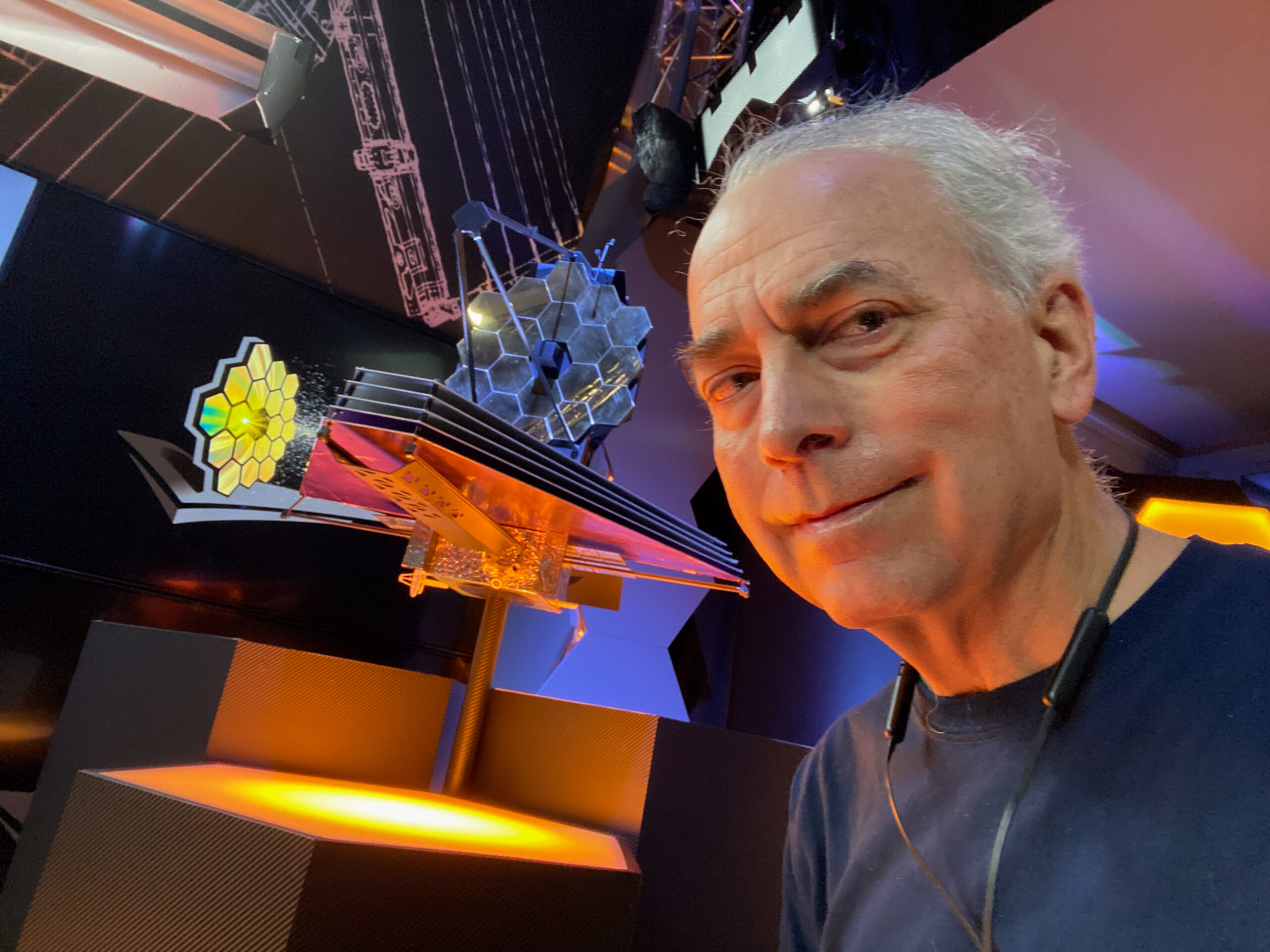
Furthering this fusion of science and art, Sisler was involved in “Beyond the Light,” an art show developed with ARTECHOUSE and James Webb Space Telescope communications lead Laura Betz. This project connected artists with NASA scientists to transform advanced astrophysics into a multisensory gallery experience. Most recently, Sisler championed the documentary “Cosmic Dawn,” offering an in-depth look at the James Webb Space Telescope’s assembly, testing, and launch.
Many of NASA’s flagship communication initiatives can trace their origins to the small teams Sisler helped build and guide. His approach involved hands-on experimentation, idea testing, and empowering others to turn bright concepts into enduring assets for the agency. From science storytelling and media tours to NASA’s audio storytelling, Spanish-language content, and live broadcast programming, Sisler has played a pivotal role in shaping these programs.
Beyond his professional achievements, Sisler takes immense pride in the success of the internship program he has led for NASA Goddard’s Office of Communications. “The thing that stays with me most is seeing where our former interns have landed,” he shared. Many of these interns have gone on to lead their own programs within NASA, driving the next generation of science storytelling. Others have ventured outside NASA, contributing to science and technology literacy through media, education, and public engagement. “It’s been a privilege to help launch so many of these careers. I’ve always believed that when you combine mentorship, meaningful work, and a little creative freedom, you create a ripple effect that lasts for decades.”
Sisler’s own journey with NASA began with a Pathways internship at NASA Ames, while he was studying journalism at Baylor University in Texas. His work there led him into visual storytelling, prompting him to study photography and video at the Rochester Institute of Technology in New York. Alternating between school and NASA Ames, Sisler honed his skills and discovered his passion for visual communication.
As an internship program coordinator, Sisler aimed to provide the next generation of science communicators with similar opportunities. He developed a communication “boot camp” to help interns hone their storytelling skills and identify their areas of interest. “All the interesting stuff happens at the intersections of people’s passions,” he noted. “The best, most powerful thing I think I’ve done in my time at NASA is to help guide the next wave of science communicators. Seeing their success is the gift that keeps on giving.”
Sisler’s career at NASA stands as a testament to his dedication to scientific storytelling and his ability to inspire and mentor future generations. His legacy is not only in the groundbreaking projects he led but also in the countless individuals he mentored, who continue to advance the field of science communication. For more insights, visit NASA’s official website.
For more Information, Refer to this article.