






















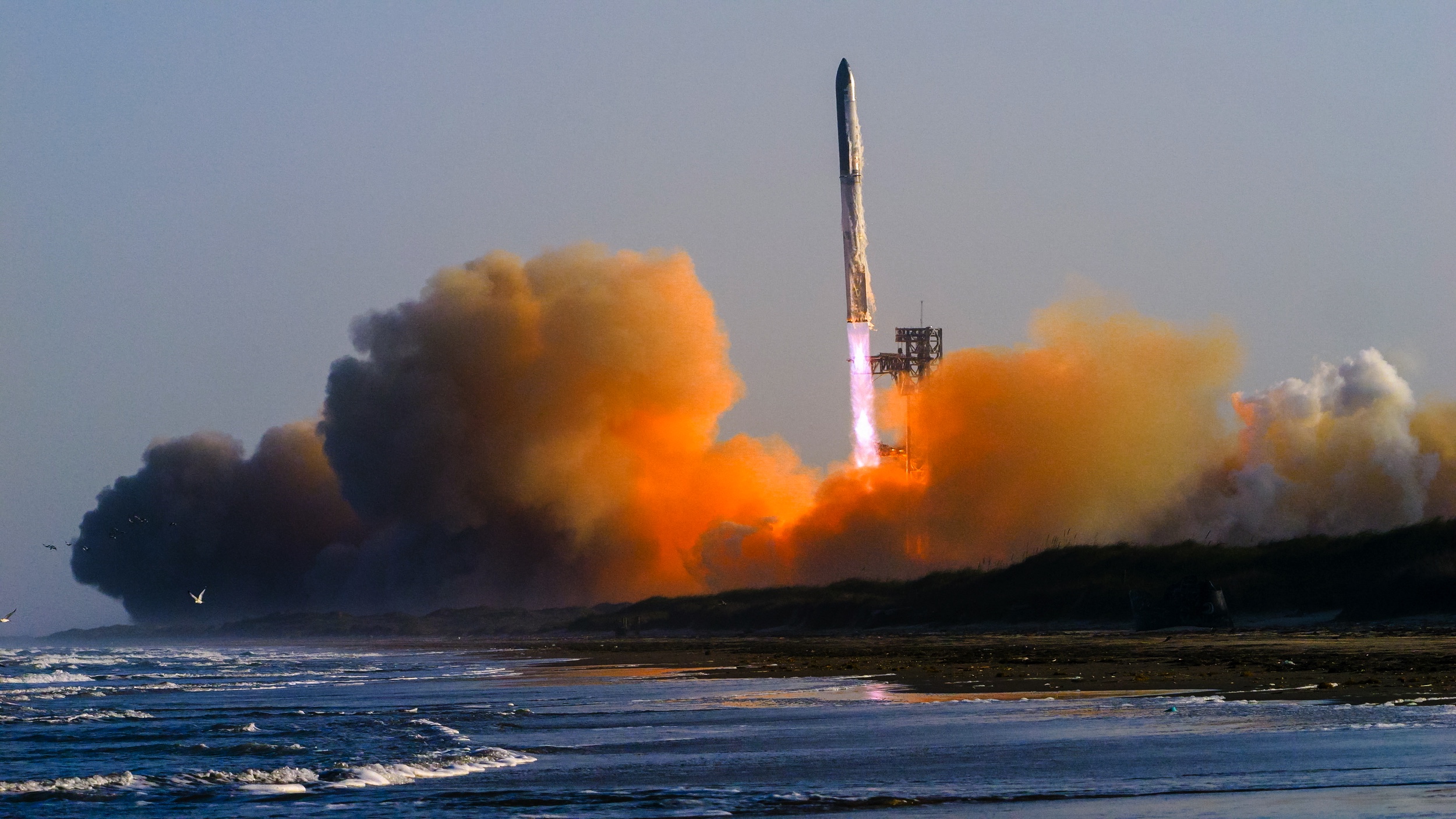
In a recent development, SpaceX has provided insights into the failure of its Starship on its latest test flight, which occurred on March 6. This failure, termed Flight 8, happened under circumstances that seemed similar to a previous incident, Flight 7, but the root causes were distinct. This article will delve into the details of these incidents, the technical adjustments made by SpaceX, and what this means for future Starship missions.
During Flight 8, several of the Raptor engines on the upper stage of the Starship unexpectedly shut down, leading to the vehicle losing stability and ultimately breaking up upon reentry over the Caribbean. SpaceX disclosed that a hardware failure in one of the center Raptor engines triggered an unexpected mixing and ignition of propellants, leading to the engine’s failure. Subsequently, the other two central Raptor engines and one of the three vacuum-optimized engines also shut down, causing the vehicle to lose control.
To mitigate such issues in the future, SpaceX has implemented specific enhancements to the Raptor engines. These include adding more preload to critical joints, introducing a nitrogen purge system, and improving the propellant drain system. Moreover, SpaceX is working on a future version of the Raptor engine designed with increased reliability to prevent a recurrence of the problem seen in Flight 8.
In contrast, the earlier Flight 7 in January faced a different issue. The vehicle experienced a harmonic response that was much stronger than anticipated. This unexpected stress resulted in leaks, which led to a fire in the engine bay. SpaceX had already put measures in place following Flight 7 to address the harmonic response and the flammability of certain sections of the ship, which functioned correctly before the failure of Flight 8.
The release of this information by SpaceX coincided with the Federal Aviation Administration’s (FAA) final approval for the next Starship test flight, Flight 9. This next test flight is slated for no earlier than May 27 at 7:30 p.m. Eastern time. Flight 9 will see a significant change involving the Super Heavy booster, marking the first reflight of this booster. Originally launched in Flight 7, the Super Heavy booster has undergone some component replacements. However, a large majority of the booster remains intact from its initial flight, including 29 of its 33 Raptor engines.
Unlike previous test flights, SpaceX will not attempt to capture the Super Heavy booster using the launch tower at its Starbase facility. Instead, the booster will be put through new flight maneuvers to test its capabilities. These will include controlling its flip for a boostback burn and adopting a higher angle of attack during descent to conserve propellant. SpaceX also plans to experiment with different engine landing profiles.
To ensure the safety of the launch infrastructure at Starbase, these experiments with the Super Heavy booster will be conducted along a trajectory that leads to an offshore landing point. This will involve a planned “hard splashdown” off the coast from Starbase.
The Starship upper stage, on the other hand, will attempt several demonstrations that were planned for previous flights but could not be executed due to earlier failures. These include reigniting a Raptor engine while in space, deploying eight mass simulators representing next-generation Starlink satellites, and testing reentry technologies.
The publication of these technical details and upcoming plans by SpaceX offers a glimpse into the complexities involved in developing and testing advanced spaceflight technologies. It highlights the iterative nature of space exploration, where each failure provides valuable data that drives improvements and innovations.
For those interested in the technical aspects of spaceflight, the Raptor engine is a complex piece of machinery that uses a combination of liquid methane and liquid oxygen as propellants. This combination is relatively novel in the context of rocket engines, which have traditionally used other propellant mixes. The advantage of using methane is that it can potentially be manufactured on Mars, aligning with SpaceX’s long-term goal of enabling human colonization of the Red Planet.
In terms of flight dynamics, the concept of a “harmonic response” refers to the vibrations that occur when certain frequencies are encountered during flight. If these vibrations resonate, they can amplify and cause structural or mechanical failures. SpaceX’s efforts to mitigate such responses are crucial for ensuring the structural integrity of the Starship during its flights.
As SpaceX continues to refine its technologies and processes, the aerospace industry and space enthusiasts worldwide keenly watch its progress. The successes and challenges faced by SpaceX in its Starship program are not only pivotal for the company’s ambitions but also for the broader field of space exploration. The lessons learned from these test flights contribute to a greater understanding of the challenges associated with reusable launch systems and interplanetary travel.
Readers who wish to explore more about these developments can visit the SpaceX website or follow updates from reputable space news sources. As the Starship program progresses, it is expected to bring us closer to a new era of space exploration, where missions to the Moon, Mars, and beyond become more feasible and routine.
For more Information, Refer to this article.