






















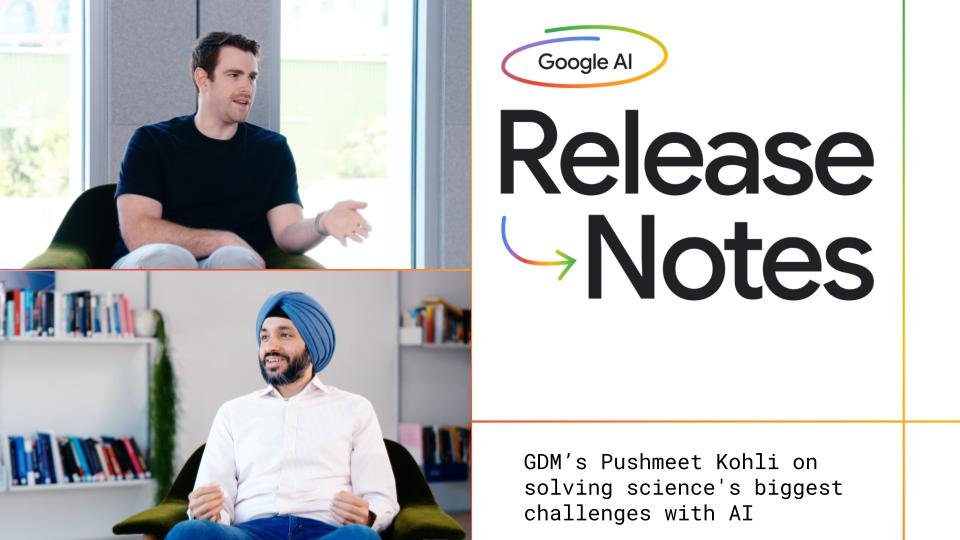
In a recent episode of the Google AI: Release Notes podcast, an insightful discussion unfolds between the host, Logan Kilpatrick, and Pushmeet Kohli, a leading figure at Google DeepMind. Kohli, who heads the science and strategic initiatives team at Google DeepMind, shares compelling insights into the innovative problem-solving framework utilized by his team. This unique approach has paved the way for groundbreaking projects such as AlphaFold and AlphaEvolve. Moreover, new tools like the AI co-scientist are being developed with the aim of making such scientific breakthroughs accessible to a broader audience.
Understanding Google DeepMind’s Innovative Framework
Google DeepMind has been at the forefront of artificial intelligence research, particularly known for its groundbreaking projects that leverage AI to solve complex scientific problems. Pushmeet Kohli elaborates on how his team’s problem-solving framework is structured to foster innovation. This framework is not just about developing AI technologies but also about integrating them into scientific research to tackle real-world challenges.
AlphaFold and AlphaEvolve: A Closer Look
AlphaFold, one of the most notable achievements of Google DeepMind, is an AI system designed to predict protein structures. Understanding protein folding has been a longstanding challenge in biology, crucial for drug discovery and understanding diseases. AlphaFold uses deep learning techniques to predict the 3D structure of proteins from their amino acid sequences. This breakthrough has significantly accelerated biological research by providing insights that were previously unattainable through traditional methods.
In a similar vein, AlphaEvolve represents another stride in AI-driven scientific research. While specifics about AlphaEvolve were not extensively covered in the podcast, it is understood that it builds upon the principles of AlphaFold, aiming to further explore the capabilities of AI in evolutionary biology and genetics.
AI Co-Scientist: Democratizing Breakthroughs
One of the exciting developments discussed in the podcast is the concept of an AI co-scientist. This tool is designed to assist researchers by performing complex simulations and analyses, effectively acting as a digital partner in scientific inquiry. The AI co-scientist aims to democratize access to advanced scientific tools, enabling researchers from various fields to make significant discoveries without requiring extensive computational resources or expertise in AI.
Implications for the Scientific Community
The advancements spearheaded by Google DeepMind have far-reaching implications for the scientific community. By leveraging AI, researchers can now address questions and solve problems that were previously considered insurmountable. The ability to predict protein structures with high accuracy opens new avenues in drug development, potentially leading to the discovery of new treatments for diseases that have long eluded medical science.
Moreover, the introduction of tools like the AI co-scientist could transform how research is conducted across disciplines. By providing access to sophisticated AI models, these tools lower the barrier to entry for scientific exploration, allowing more researchers to participate in cutting-edge studies.
Reactions and Reviews
The reaction from the scientific community to these developments has been overwhelmingly positive. AlphaFold, in particular, has been hailed as a revolutionary tool in the field of biology. Researchers have praised its ability to make accurate predictions that were previously impossible, highlighting its potential to accelerate the pace of scientific discovery.
Industry experts also recognize the potential of the AI co-scientist as a transformative tool. By offering researchers a digital assistant capable of performing complex analyses, it empowers scientists to focus on creative problem-solving rather than computational challenges.
Future Prospects
Looking ahead, the future prospects for AI in scientific research appear promising. Google DeepMind’s continued efforts to enhance its AI models and develop new tools signify a commitment to advancing the field of artificial intelligence and its applications in science. As these technologies become more accessible, we can expect to see a surge in innovative research across various domains.
These developments also raise important questions about the ethical use of AI in science and the need for guidelines to ensure that AI technologies are used responsibly. As AI becomes an integral part of scientific research, it is crucial to establish frameworks that promote transparency, accountability, and fairness.
Conclusion
The Google AI: Release Notes podcast episode featuring Pushmeet Kohli provides a fascinating glimpse into the world of AI-driven scientific research. Through innovative frameworks and groundbreaking tools like AlphaFold and the AI co-scientist, Google DeepMind is pushing the boundaries of what is possible in science. These advancements not only enhance our understanding of complex biological processes but also democratize access to cutting-edge research tools, paving the way for a new era of scientific exploration.
For those interested in delving deeper into this topic, the complete conversation is available on popular platforms like Apple Podcasts and Spotify. As we continue to witness the transformative impact of AI in various fields, it becomes increasingly important to stay informed about these developments and their implications for the future of science.
For more details, you can listen to the full episode of the Google AI: Release Notes podcast on Apple Podcasts or Spotify.
For more Information, Refer to this article.